EconomyGlobal
Reserve Bank of Australia raises rates to 4.85%, highest since 2008, in a split 6-3 vote
The Melbourne Cup day increase is the fifth of 2026. The board said inflation is still elevated and broadly based, but stopped short of signalling more rises.
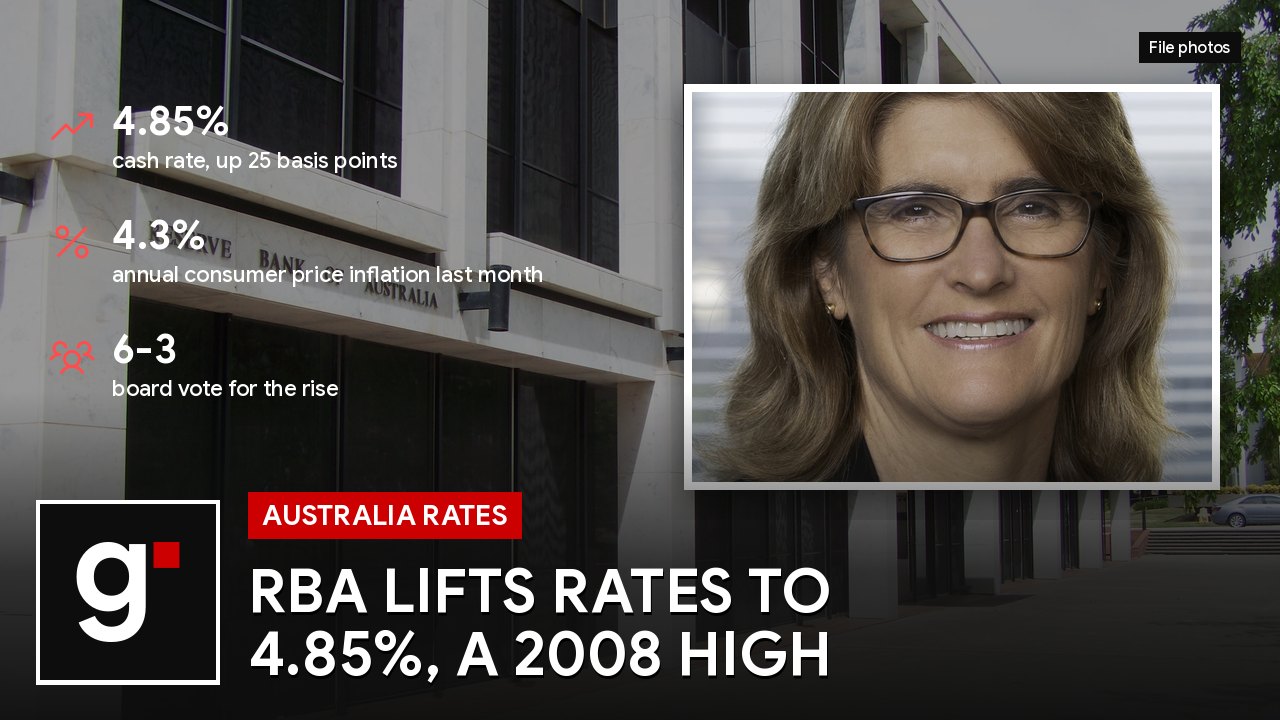
Key points
- The RBA lifted its cash rate by 25 basis points to 4.85%, the highest since November 2008.
- Six board members voted for the rise and three wanted to hold at 4.60%.
- The bank now sees inflation staying above 3% over the coming year.
The Reserve Bank of Australia raised its cash rate by 25 basis points to 4.85% on Tuesday, its highest level since November 2008, as it tries to pull down inflation that is running well above its target.
It is the fifth increase of 2026, adding 125 basis points to home loan costs since January, and came on Melbourne Cup day after the bank held rates in June and August to see whether earlier rises were working. All four major banks and most economists had expected the move.
The decision was not unanimous. Six board members voted for the rise and three wanted to keep the rate at 4.60%. In its statement the board said “inflation remains elevated and broadly based”. It now expects inflation to stay above 3% over the coming year and to reach the top of its 2 to 3% target band only in late 2027, about three quarters later than it forecast before. It also sees unemployment climbing further than it expected in August.
Consumer prices rose 4.3% in the year to last month, pushed up by construction, electricity and petrol costs.
The board did not promise further rises. It said only that it will “do what is necessary to return inflation sustainably to target”, language that may limit any jump in the Australian dollar.
For home buyers the squeeze is already showing. The median house price has fallen 2.8% over the past year, according to Cotality. “The immediate effect will likely be on buyer demand and sales activity,” said Mathew Tiller of LJ Hooker, who expects lenders to pass on the rise and cut how much people can borrow.
Governor Michele Bullock is due to explain the decision at a press conference later on Tuesday.