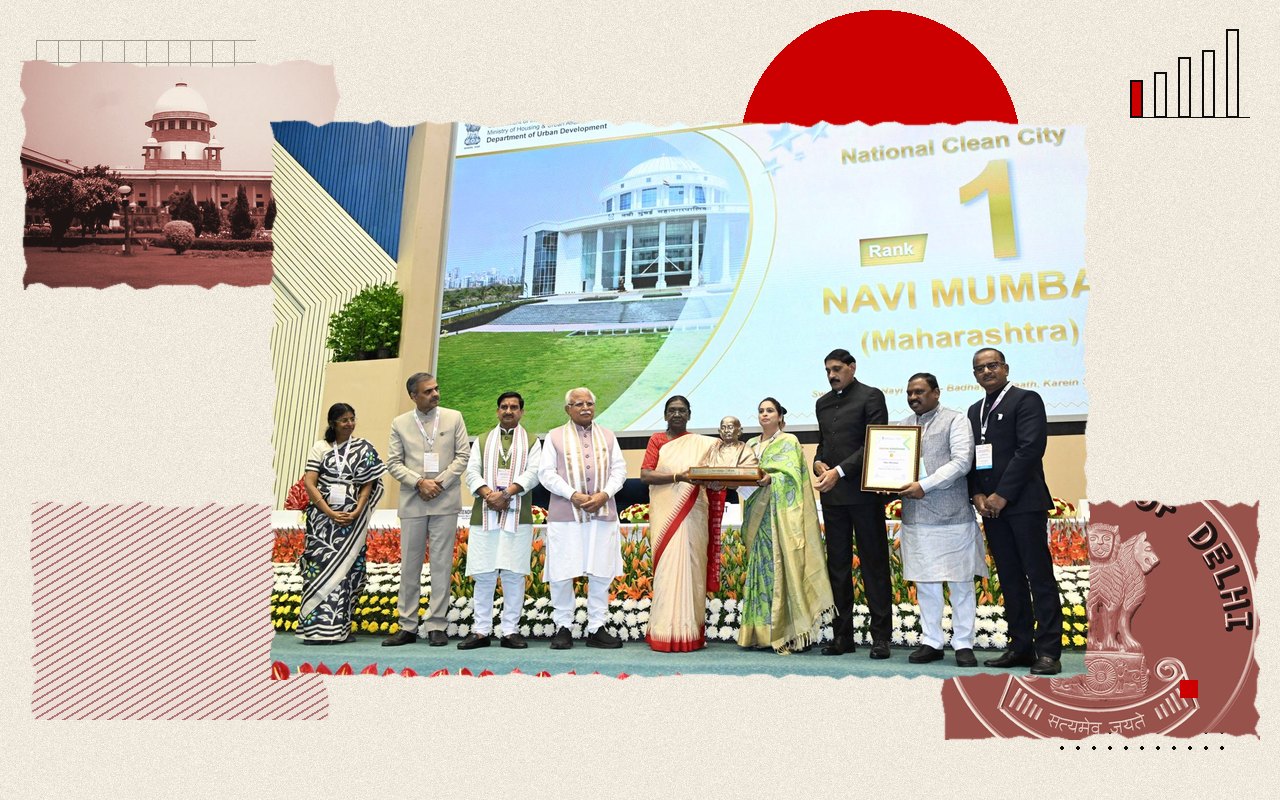
On Wednesday President Droupadi Murmu handed out 60 national awards at Vigyan Bhawan, closing the tenth Swachh Survekshan. Greater Visakhapatnam, Jabalpur and Lucknow were named the top three cities of 10 lakh people or more. The survey, the Ministry of Housing and Urban Affairs says, assessed 4,751 cities on 43 indicators, with more than 3,000 trained assessors, and heard from 2.70 crore citizens.
That is a large exercise and the winners deserve their trophies. The question for the other 4,700 is what they do with the result, and for that the public needs more than a list of champions.
What the release leaves out
The ministry’s own release says it does not name the winners in four of the survey’s population categories, and does not list the 30 cities given the State First award. It does not rank the top three million-plus cities against one another. It says more than 350 urban bodies climbed over 500 ranks and that 1,700 small cities improved. A reader cannot check any of that, because a climb of 500 ranks only means something next to the starting rank and the score.
Cleanliness is not an abstract virtue. It is how often garbage is collected from a lane, whether wet and dry waste are kept apart, whether a public toilet has water, and whether a complaint is answered. A resident can judge her own street. She cannot judge her city’s rank unless she can see how it was scored.
The claims worth testing
Minister Manohar Lal said urban waste processing has risen from 16% to 80% since 2014, and that door-to-door collection now covers more than 96% of households, up from 44%. If true, it is a real gain. But a national figure hides the difference between a city that processes most of what it collects and one that moves its waste to a larger dump. The ministry also says 11,000 acres once held by legacy dumpsites have been freed. Residents near a dump should be able to find out what happened to theirs.
The fair objection
Rankings drive improvement, and the survey’s design has changed through ten editions. Releasing every indicator for every city invites misreading: a city may score poorly on one indicator for reasons that are not its fault, and officials may fear being blamed. Cities also differ in size, climate and money.
That is a case for explaining the data, not for withholding it. A ranking that only tells a city that it is 37th is less useful than one that tells it where it lost points.
What the ministry should do
First, publish one searchable table with every city’s total score, its score on each indicator and last year’s rank, so anyone can compare.
Second, publish the assessors’ method: how cities were sampled, how GPS-tracked visits were used and how citizen feedback was weighted.
Third, report processing and landfill figures city by city, with a distinction between waste actually treated and waste merely collected.
Fourth, include sanitation workers’ safety as a published indicator. The ministry says about 17 lakh SafaiMitras attended more than 33,000 camps. The public should also see how many workers have protective equipment, and how many were injured or killed on the job.
Fifth, the two announcements made on Wednesday, pairing 70 mentor cities with 191 mentees and building 50 Model Clean Cities under PRAGATI-50, came with no timeline. Give them one, and say which cities are in each.
Clean cities are built by councillors, contractors and workers on lanes nobody photographs. An award night is a good day for them. A published table would make every other day count.
The documents
- Swachh Survekshan Awards 2025-26Press Information Bureau, Ministry of Housing and Urban Affairs, November 11, 2026
- President of India to Confer 10th Edition Swachh Survekshan 2025-26 AwardsPress Information Bureau, November 9, 2026