OpinionOur view
Devaragattu's stick fight kills someone almost every year. Andhra must regulate it, not just police it
A 28-year-old man died and more than 100 people were hurt at this year's Banni Utsav in Kurnool. Orders and awareness drives have not stopped the fight. Rules agreed with the villages that hold it might make it safer.
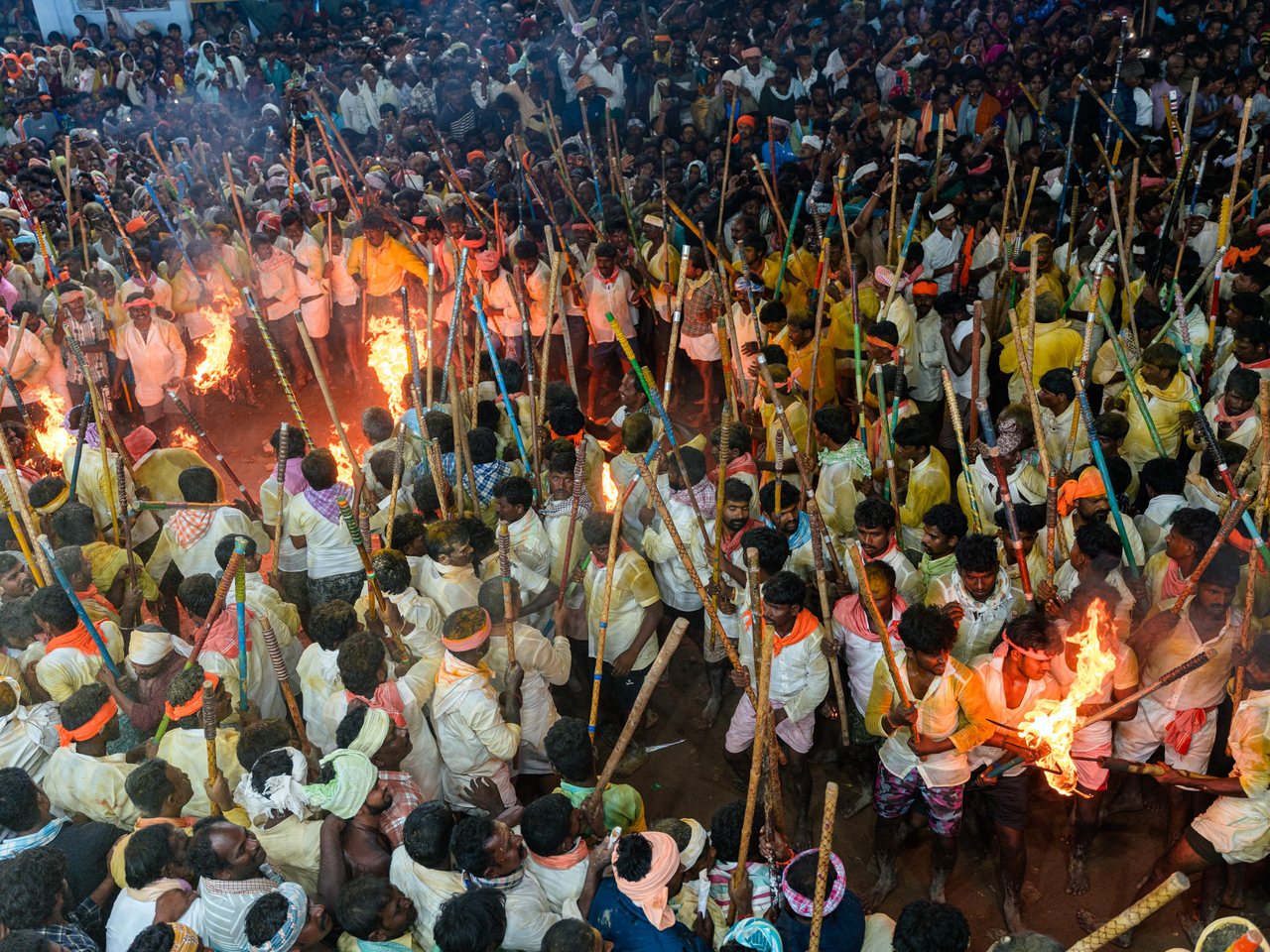
Every year on the night of Dussehra, thousands climb the hill at Devaragattu in Andhra Pradesh’s Kurnool district with long sticks and flaming torches. After the midnight wedding of Mala Malleswara Swamy, groups from the surrounding villages fight over the deity’s idols, which they believe bring prosperity to whoever carries them. By dawn the procession comes down the hill in blood-stained shirts.
This year a 28-year-old man from Alur, Potaraju, did not come down. More than 100 people were hurt, about 10 of them critically. More than 1,000 police personnel were on the hill. Villagers went ahead in defiance of police orders.
A death that was expected
Nobody who follows the Banni Utsav can call this a surprise. Last year two people died and 90 were injured, despite drones, 1,000 police and 32 awareness campaigns in 16 villages. In 2023 two people were killed when a tree branch, overloaded with spectators who had climbed it to escape a thrown torch, gave way beneath them. In 2022 a teenager from Karnataka died. Every year the injured number in the dozens, and every year the officials say the arrangements were adequate.
The authorities have also tried simply forbidding it. In 2020, with Covid at its height, the festival was cancelled and prohibitory orders imposed. “It has been cancelled,” the district police chief said. Thousands came anyway, about 50 were injured, and because no medical camp had been set up, treating them was harder than usual.
The lesson is plain. Bans announced from the district headquarters do not work at Devaragattu. Neither does a large police presence that stands back once the sticks come out.
The fair objection
The defenders of the festival have a point. This is a long-held ritual with real religious meaning for the people who take part. Participants keep vows of fasting and celibacy beforehand. Most are adults who know the risks and accept them, and outsiders who sneer at the custom from a distance rarely understand it. A state that tries to abolish it by force will lose, and will deepen distrust in the bargain.
But consent does not cover everyone on the hill. The two men killed in 2023 were spectators standing under a tree. The dead and injured include people from other districts and other states. A ritual that reliably kills someone is no longer only the participants’ business.
Regulate, do not pretend
Tamil Nadu faced a similar choice over jallikattu and chose to regulate the sport by law rather than pretend it could be stopped. Andhra Pradesh should take the same approach at Devaragattu.
First, the district should sit down well before next Dussehra with the temple committee and the elders of the participating villages and agree written rules: limits on the size of sticks, no torches thrown into crowds, and a fixed path and time for the procession.
Second, spectators must be kept apart. The hillside needs barricaded viewing areas, and trees and rocky ledges used as vantage points should be closed off.
Third, a properly staffed medical camp with ambulances should sit at the foot of the hill every year, whether or not the festival is officially “allowed”. Withdrawing medical help to discourage people, as happened in 2020, only adds to the harm.
Fourth, the administration should publish a full account each year of the dead and injured and the measures taken, so that progress, or the lack of it, can be judged.
Finally, deaths must be investigated like any other death. Police have not yet said whether a case has been registered over Potaraju’s death. Tradition is not a reason to stop asking how a young man was killed.
Devotion at Devaragattu will continue. The question for the state is whether next year’s festival ends with another name on this list.
The reporting behind this view
- 1dead and 100+ injured at the Banni Utsav on the night of 21-22 October 2026
- 2dead and 90 injured in 2025, despite drones and 1,000 police
- 2020the year the festival was officially cancelled, and went ahead anyway