EconomyTax
GST authorities plan retail e-invoicing pilot from April 2027 to track shop bills
A voluntary trial would put invoices issued to ordinary customers on a government system in select sectors, with restaurants among those being considered, officials said.
Key points
- GST authorities plan a retail e-invoicing pilot from 1 April 2027, officials said.
- The trial would be voluntary at first, but evasion-prone sectors could later be made to join.
- Banks, insurers and NBFCs, now exempt from B2B e-invoicing, are not part of the pilot.
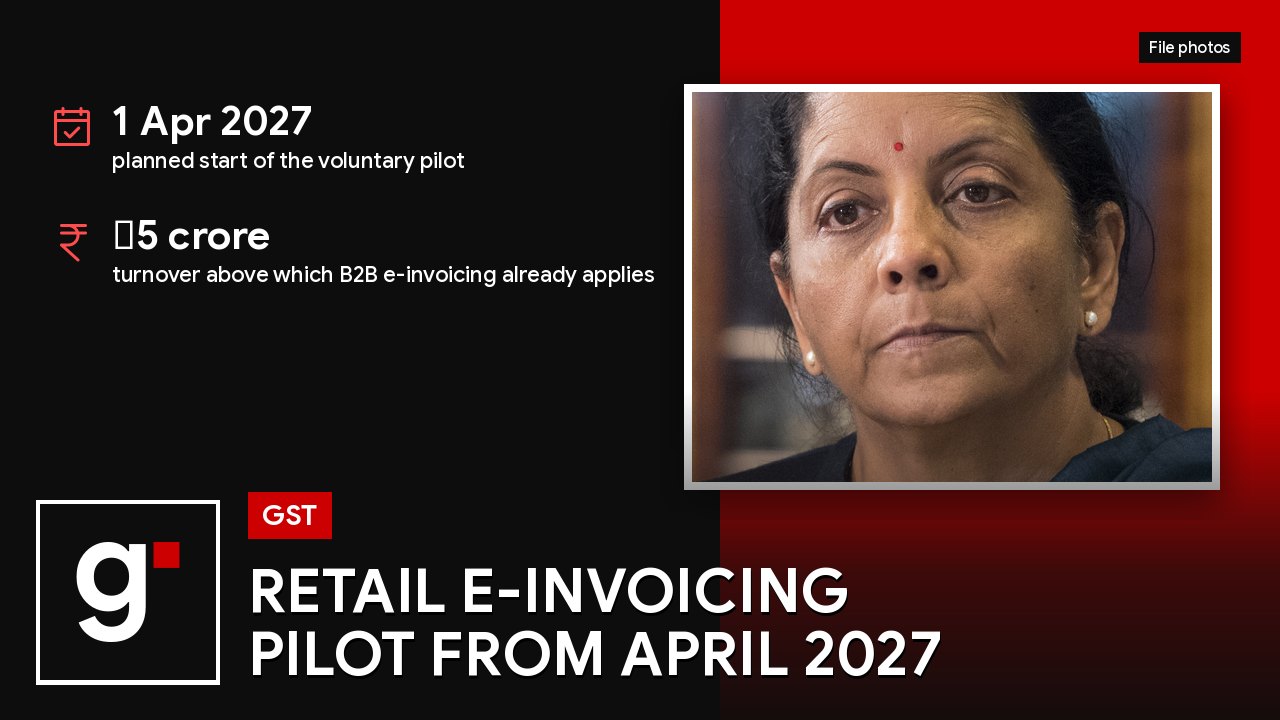
India’s GST authorities are preparing a pilot to e-invoice retail bills from 1 April 2027, under which invoices that shops and businesses issue to ordinary customers in select sectors would be recorded on a government system, two officials said.
The trial would begin as a voluntary scheme. Sectors seen as prone to tax evasion could later be made to join, according to the minutes of the GST Council. Restaurants have been named as one possible sector.
The next step after B2B
Businesses with annual sales of more than ₹5 crore already file B2B invoices on a government portal, with some exemptions. Officials see consumer bills as the natural next step: once retail invoices are logged, tax officers can match shop-counter transactions against the GST returns businesses file.
The idea is not new. The GST Council, chaired by Finance Minister Nirmala Sitharaman, recommended a voluntary trial at its 54th meeting in September 2024, for select sectors and states. A third official said the rollout had been held up by the sheer number of small-value transactions, which needs far more server capacity.
Supporters say customers would get bills on their phones, paper invoices would shrink and foreign tourists could find it easier to claim GST refunds. Prashanth Agarwal, a partner at PwC India, said e-invoicing could push buyers to ask for proper GST invoices and nudge the unorganised sector towards formalisation.
Banks, insurers and NBFCs, now exempt from B2B e-invoicing, may be brought in later, but are not part of the pilot. Divyesh Lapsiwala, a tax partner at EY India, said these sectors would need enough time to adapt because of their high volumes and bespoke billing systems.
Officials said the government is also studying e-invoicing systems in Brazil and Chile. The Finance Ministry has not commented on the plan.