Key points
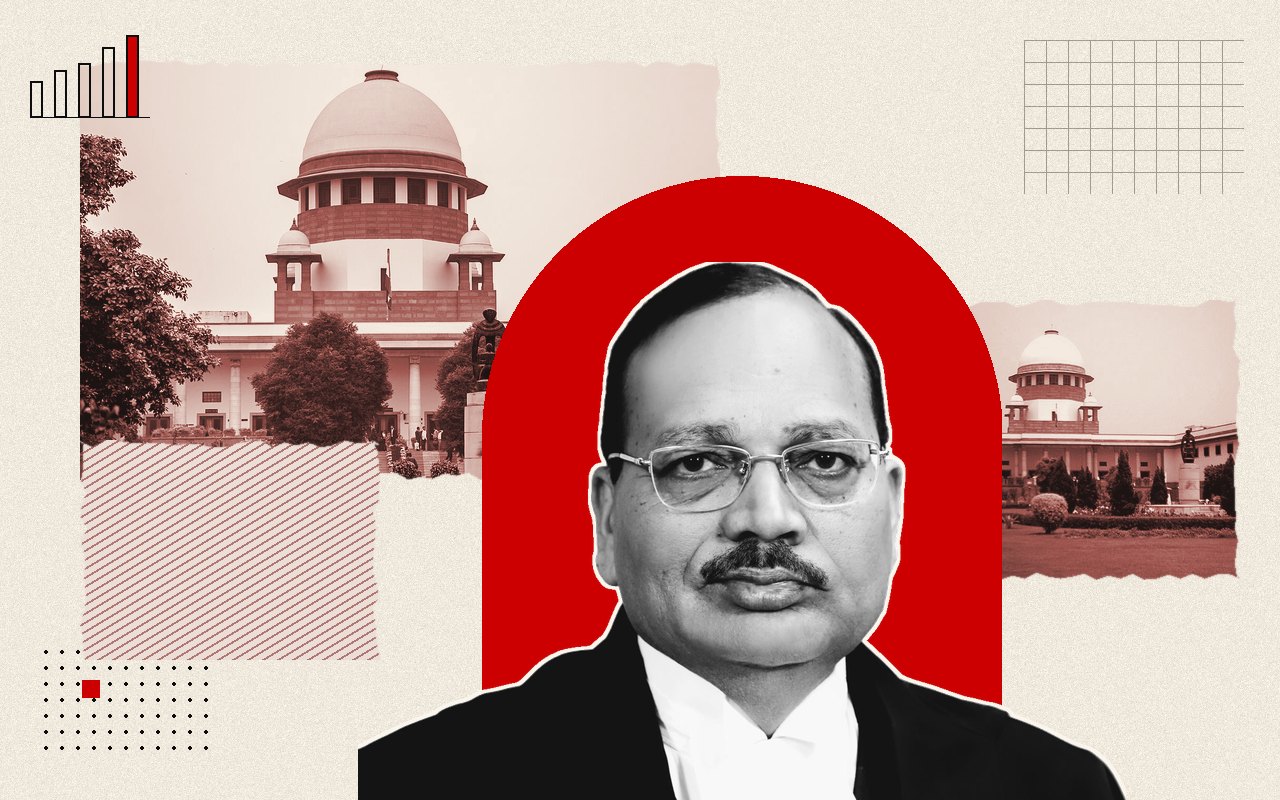
- Chief Justice Surya Kant recused himself on November 23, saying one applicant was "incidentally known" to him.
- He said a special bench would be constituted; its members and date were not stated in the court.
- The matter follows the February 5 judgment that upheld NBCC's takeover of 16 stalled projects and barred courts from stalling its work.
Chief Justice of India Surya Kant recused himself from the Supertech homebuyers’ matter in the Supreme Court on Monday, November 23, 2026, telling the court that one of the applicants was known to him. He said a special bench would be constituted to hear the case. No member names or hearing date were given in court, according to reports.
“One of the applicants was incidentally known to me,” the Chief Justice said, adding that the acquaintance was remote: not a client or a relative, but someone he knew. He also remarked that there were “hundreds of applicants” in the matter and that someone should have realised the difficulty before joining as a party. The matter is the long-running litigation that grew out of the insolvency of the Noida-based developer Supertech Ltd., and it carries the case number Civil Appeal No. 2626 of 2025, Apex Heights Pvt. Ltd. v. Ram Kishor Arora, according to reports of the hearing.
No order on the merits was passed on Monday. Homebuyers, their associations and other stakeholders have all filed applications in the case, and the recusal means none of them will be heard by the Chief Justice’s bench until the special bench sits.
What the Court has already ordered
The matter does not start from scratch. On February 5, 2026, a bench of Chief Justice Surya Kant and Justice Joymalya Bagchi dismissed the appeals against an NCLAT judgment of December 12, 2024, and upheld the tribunal’s decision to hand the unfinished projects to the state-owned builder NBCC (India) Ltd. The order, which we have read in full on the Supreme Court’s website, says: “The primary consideration before the NCLAT and this Court is to protect the interests of home buyers.”
The Court called bringing in NBCC “neither unfair nor contrary to any express provision of the IBC.” NBCC was directed to complete the residential projects and the integrated non-residential projects, not Supertech, and had given an assurance of work “on a war footing”. Claims of secured creditors, operational creditors and land authorities were made secondary for the time being, to be decided later.
The directions that matter most to buyers were these:
- No tribunal or court, including a High Court, may pass an interim order stalling NBCC’s projects. Anyone aggrieved must come to the Supreme Court directly.
- Statutory authorities had four weeks to comply, including renewing expired sanctions.
- Senior Advocate Rajiv Jain and Advocate Amarendra Kumar were appointed amici curiae to assist the tribunal and an Apex Court Committee.
- NBCC could apply to the NCLAT for clarification on any terms it considered unviable, on which the Court expressed no view.
- Applications about projects outside the 16 were disposed of, with liberty to approach the NCLT or NCLAT.
The NCLAT’s own terms, summarised in the order, included a project management fee of 8% (including a 1% marketing fee), a ₹100 crore finance commitment to a dedicated account, and no cost escalation for buyers with subsisting allotments beyond their agreement dues.
How the case got here
Union Bank of India’s insolvency plea under Section 7 of the IBC against Supertech was admitted by the NCLT on March 25, 2022. The NCLAT’s December 12, 2024, judgment set NBCC to start awarding work before March 31, 2025, and begin construction from May 1, 2025. The Supreme Court stayed that judgment on February 21, 2025, and then upheld it with the modifications above a year later.
The 16 projects are in Uttar Pradesh, Uttarakhand, Haryana and Karnataka and include Sports Village, Hilltown, Romano, Rivercrest in Rudrapur, Meerut Sports City, Eco Village 1, 2 and 3, Micasa in Bengaluru, Czar Suites, Eco-Citi, Capetown and North Eye. The February order records that the unit count is disputed: about 40,000 according to Supertech’s management and over 51,000 according to homebuyers’ counsel. Reports of the later hearings put the number of buyers still waiting at about 27,000, and the appellants told the Court that about 25,000 units had been handed over and about 20,000 remained.
Not every party was content in February. The Yamuna Expressway Industrial Development Authority said it would take back its land and develop projects itself, and Supertech had proposed a one-time settlement that some banks said might yield a better result. Neither was decided in the order.
Why it matters
For buyers of the 16 projects, the question is speed. NBCC’s work, the sanctions from authorities and the funding all run under the February order, and every hearing that is deferred pushes back the Apex Court Committee’s decisions. A change of bench does not alter the February directions, which bind courts and tribunals below.
The recusal also leaves the application list crowded. The Chief Justice’s remark about hundreds of applicants points to the main difficulty: a case that began as a bank’s insolvency claim now has an open-ended list of parties, all competing for time on the same few projects.
What happens next
The Chief Justice said a special bench would be set up. Its composition and the date of its first hearing were not announced in court on Monday. Readers can check the Supreme Court’s website for the notified bench and cause list. Until then the February 5 order stands, including its bar on interim orders from other courts.
CJI steps aside, special bench next
- December 12, 2024NCLAT directs NBCC to complete the projects
- February 21, 2025Supreme Court stays that order
- February 5, 2026Supreme Court upholds it with directions
- November 23, 2026CJI recuses, special bench promised
Source: Supreme Court order, February 5, 2026; hearing, November 23, 2026
The documents
- Apex Heights Pvt. Ltd. v. Ram Kishor Arora, C.A. No. 2626 of 2025, order of February 5, 2026Supreme Court of India, February 5, 2026