Key points
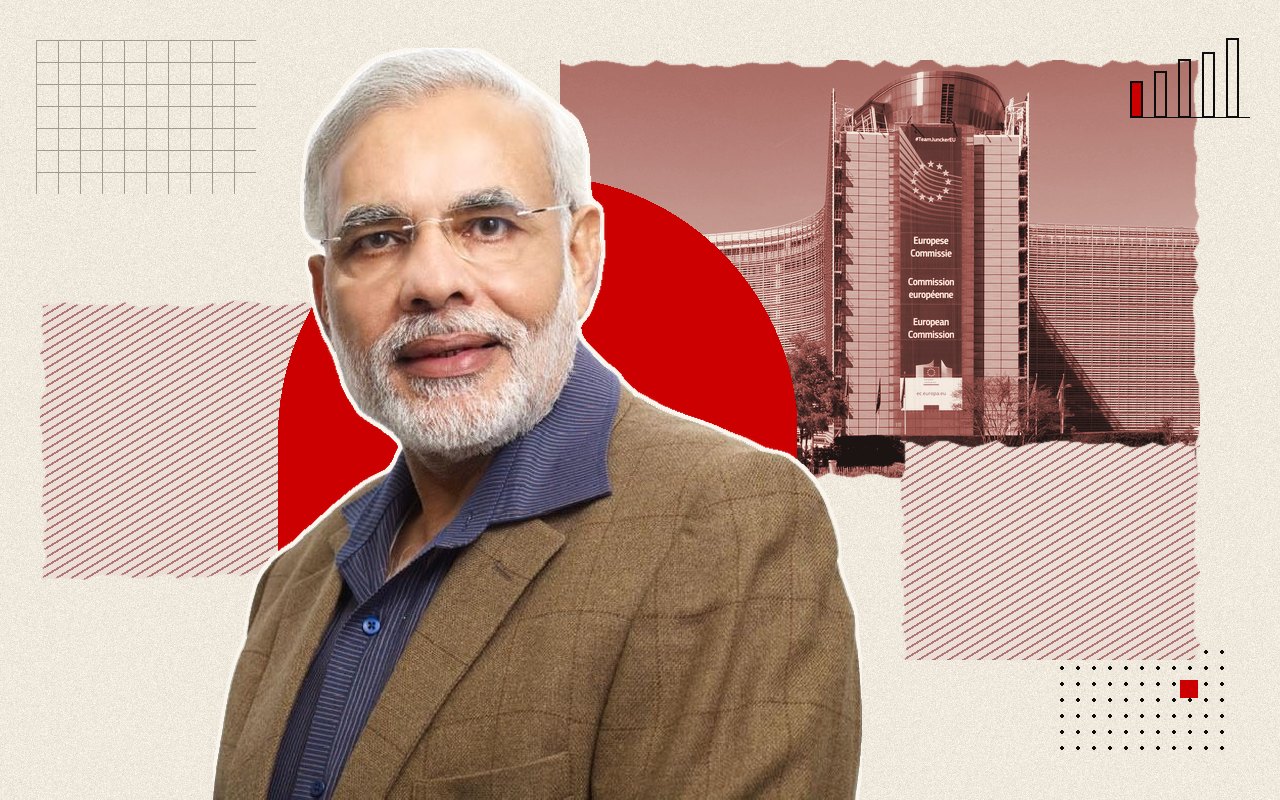
- PM Narendra Modi and Chancellor Friedrich Merz spoke by telephone on November 24, 2026, as India and Germany mark 75 years of diplomatic relations.
- They committed to deeper cooperation in defence and advanced technologies.
- They said the India-EU free trade agreement would open new opportunities for trade and investment.
Prime Minister Narendra Modi spoke by telephone on Tuesday, November 24, 2026, with German Chancellor Friedrich Merz, and the two leaders reaffirmed their commitment to strengthening the India-Germany Strategic Partnership, according to a release from the Prime Minister’s Office issued at 6:07 pm. They noted that the India-EU Free Trade Agreement would unlock new opportunities for bilateral trade and investment.
What the release says
The PIB release says Modi “received a telephone call” from Merz, and that the two leaders reviewed progress in the Strategic Partnership and expressed satisfaction at the sustained momentum in bilateral engagements. India and Germany celebrate 75 years of diplomatic relations this year, and the leaders committed to further cooperation across key sectors, “including defence and advanced technologies”.
On trade, the release is brief. The leaders “noted that the India-EU Free Trade Agreement would unlock several new opportunities for expanding bilateral trade and investment.” It gives no figures, dates or deal names.
The two also “exchanged views on regional and global developments of mutual interest” and agreed to work closely to promote global peace, stability and a rules-based international order. They stressed continued cooperation at multilateral forums on contemporary global challenges. The release names no specific conflict or country. We could not find an MEA or German government readout that adds detail.
Where the partnership stands
India and Germany established diplomatic ties on March 7, 1951, according to the Ministry of External Affairs, which says India was among the first countries to do so with the Federal Republic after the Second World War. A Strategic Partnership dates from 2000 and completed 25 years in 2025.
The leaders have been in regular contact since Merz took office on May 6, 2025. Modi spoke to him on May 20, 2025, met him at the G7 summit in Kananaskis, Canada, on June 17, 2025, and again at the G20 summit in Johannesburg on November 22, 2025, the MEA brief records.
Merz then made his first official visit to India as Chancellor on January 12 and 13, 2026, his first trip to Asia in the job. In Ahmedabad he held delegation-level talks with Modi, joined a CEO Forum with 23 German chief executives and flew kites with Modi at the International Kite Festival, before going on to Bengaluru. The visit produced 27 outcomes, 19 memoranda and joint declarations plus eight announcements, among them a declaration of intent on a defence industrial cooperation roadmap for co-development and co-production of military equipment, a critical minerals partnership and a semiconductor ecosystem agreement. Germany also announced a visa-free transit facility for Indian passport holders and a fresh €1.24 billion commitment under the Green and Sustainable Development Partnership.
Modi and Merz contacts
- May 20, 2025Modi telephones Merz after he takes office
- June 17, 2025Meeting at the G7 summit in Kananaskis, Canada
- November 22, 2025Meeting at the G20 summit in Johannesburg
- January 12-13, 2026Merz visits Ahmedabad and Bengaluru
- January 27, 2026India-EU FTA concluded at the 16th summit
- November 24, 2026Telephone call on 75 years of ties
The numbers behind the trade pledge
The MEA brief, which draws on German statistics, puts bilateral trade in goods and services at $51.23 billion in FY2024-25 and at a record $52.13 billion in calendar 2025. Goods trade in 2025 was $35.37 billion, with Indian exports of $16.95 billion and imports from Germany of $18.43 billion, so the balance favours Germany. Services trade was $16.76 billion, with Indian services exports of $10.36 billion.
Germany was India’s 8th largest trading partner in 2024-25, and its largest in the EU. It accounts for about 2.37% of India’s foreign trade, while India makes up about 1% of Germany’s.
Investment is where the MEA itself says the relationship falls short. Germany is the 10th largest foreign direct investor in India, with $15.50 billion cumulative from April 2000 to December 2025. Inflows in FY2024-25 were $469 million, down from $505 million the year before and $547 million in FY2022-23. The brief says these flows “fall short of the potential” and counts more than 2,000 German companies active in India.
The EU deal
The India-EU Free Trade Agreement was concluded on January 27, 2026, at the 16th India-EU Summit. The MEA says it gives more than 99% of Indian exports by value access to the EU market, and covers services, rules of origin, digital trade and a mobility framework for skilled professionals. It adds that the deal drew broad support across German politics and business, because it leaves out sensitive farm products and appeals to German carmakers and machine builders. At the time of the January visit, Merz had said a conclusion by the end of that month was possible.
The deal has since moved towards signature. As we reported on November 9, the European Commission sent the agreement to the Council for signature in September, senior officials held their seventh strategic review in New Delhi, and European Council President Antonio Costa has said Modi will travel to Brussels in December to sign it. A Brussels stop is also expected on a tour that includes Canada on December 11 and 12 and the G20 summit in the United States. Neither date is confirmed in the release.
What happens next
The release sets no date for the next meeting or visit. The next marker is the planned signing of the India-EU agreement in December, which is not yet confirmed by either government in the sources we read. Germany’s FDI inflows into India, which fell for three straight years to FY2024-25, are the figure the MEA itself flags as short of potential.
The documents
- Prime Minister receives a telephone call from the Chancellor of the Federal Republic of GermanyPress Information Bureau, Prime Minister's Office, November 24, 2026
- India-Germany Bilateral Relations (brief)Ministry of External Affairs, July 14, 2026