PolicyDefence
India and US end Tiger Triumph 2026, a six-day disaster-relief exercise at Visakhapatnam
The fifth edition of the tri-service humanitarian exercise ended with a closing ceremony on Thursday, after a staff phase and a tabletop drill on joint relief operations.
Key points
- Tiger Triumph 2026 ran from October 31 to November 5 and ended with a closing ceremony at Visakhapatnam.
- It is the fifth edition of the India-US tri-service humanitarian assistance and disaster relief exercise, first held in 2019.
- The six days were a staff exercise and a tabletop drill, with emphasis on combined amphibious operations.
India and the United States have wrapped up the fifth Tiger Triumph exercise, a bilateral drill in which the armed forces of both countries rehearse how to respond together to a natural disaster. The six-day exercise ran from October 31 to November 5, 2026, and ended with a closing ceremony at Visakhapatnam, according to a Ministry of Defence statement.
Tiger Triumph is a tri-service humanitarian assistance and disaster relief (HADR) exercise, meaning the Army, Navy and Air Force of both countries take part. It was first held in 2019. This year’s aim was to improve interoperability and mutual understanding in planning and carrying out joint relief missions, with a particular focus on combined amphibious operations.
What the six days covered
The first phase was a Staff Exercise, in which officers from both sides worked on operational planning, held academic sessions and swapped expertise through subject matter expert exchanges. Cyberspace and medical operations were among the topics.
The second phase was a Tabletop Exercise. Participants took the plans from the staff phase and tested them in a simulated operational setting, working through the likely problems, the coordination needed and the procedures for a joint HADR mission.
Who was there
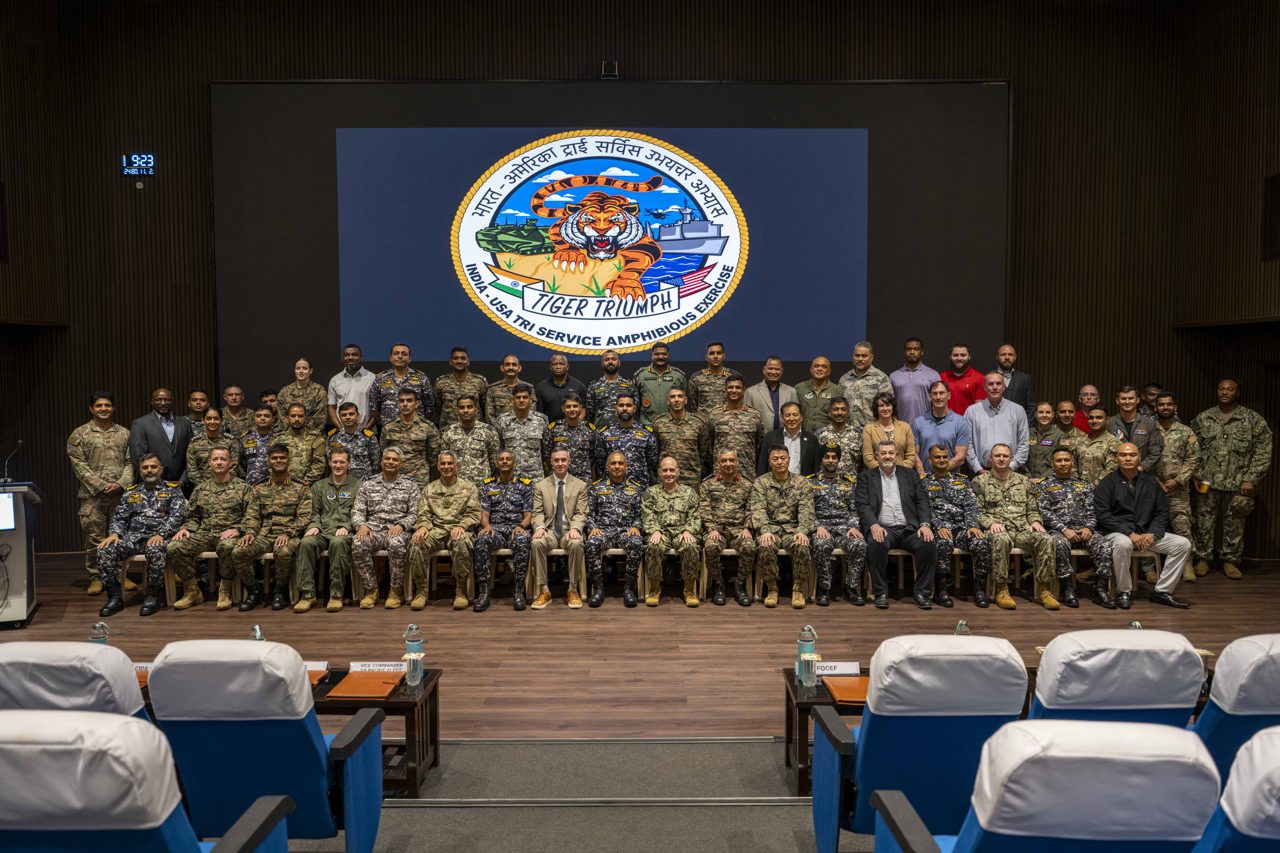
The closing ceremony was attended by Rear Admiral Vishal Bishnoi, Flag Officer Commanding the Eastern Fleet of the Indian Navy, and Rear Admiral Joaquin J. Martinez de Pinillos, Vice Commander of the US Pacific Fleet. Senior officers and other dignitaries from both countries were also present.
Why amphibious skills matter
The Indo-Pacific is prone to cyclones, tsunamis, floods and earthquakes. Ships that can land people, relief supplies and medical aid on coasts and islands where roads or airports may be cut off are central to the response, which is why both sides have kept amphibious work at the centre of the series. The statement did not give figures for the personnel, ships or aircraft involved.