Key points
- Delhi's AQI was 366 (very poor) at 6:30 am on Monday, November 9, after 376 on Diwali day.
- ITO reached 406 at 4:20 am and seven stations were severe, led by Vivek Vihar at 441 and Jahangirpuri at 439.
- The early warning system expects severe air from Monday for several days, with GRAP Stage III in force.
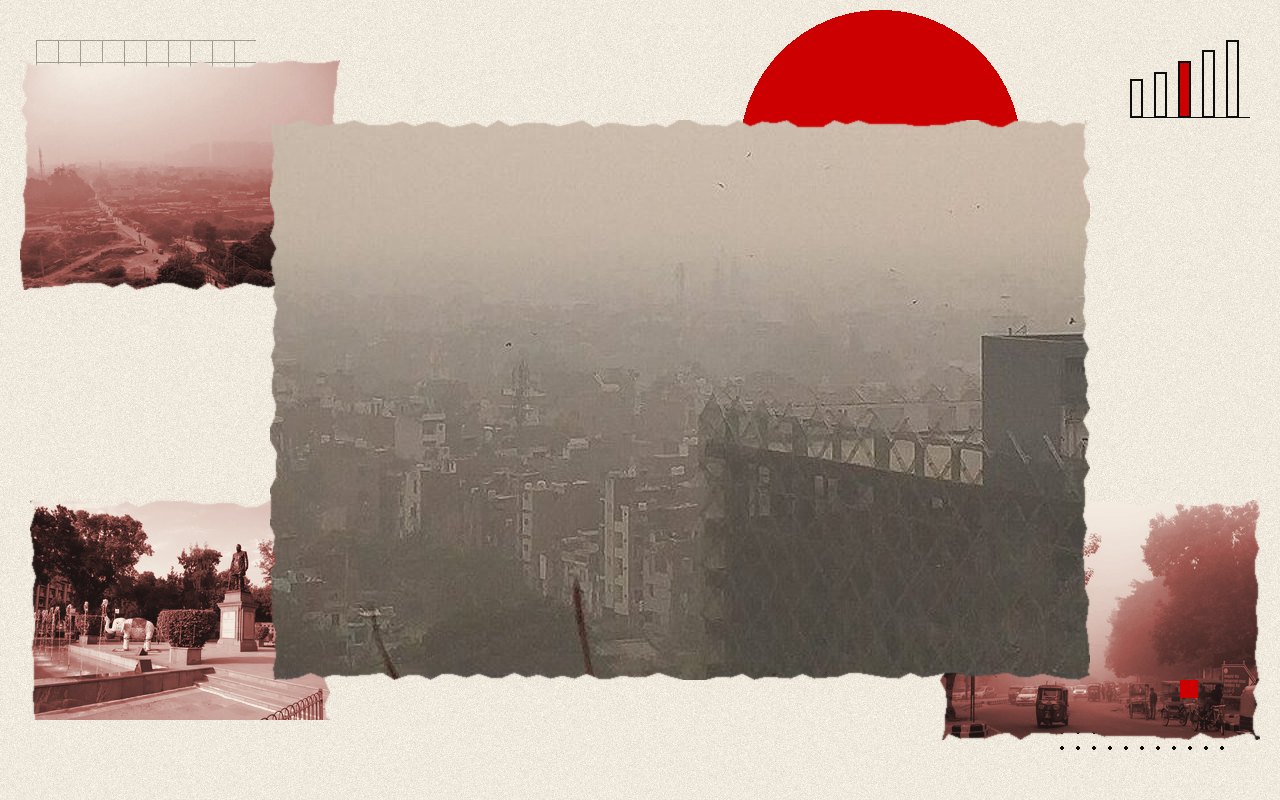
Delhi woke up on Monday, November 9, to a grey blanket of smog the morning after Diwali. The city’s Air Quality Index (AQI) stood at 366 at 6:30 am, in the “very poor” band, after a Diwali-day average of 376, according to Central Pollution Control Board (CPCB) data. Air in parts of the capital had already crossed into the severe zone in the early hours.
The sharpest reading came from ITO, which touched 406 at 4:20 am, according to CPCB data. Dense smog cut visibility in several areas, including Inderlok, and levels eased a little by dawn.
What the stations showed
The 6:30 am list shows seven stations above 400, the severe mark. Vivek Vihar was highest at 441, followed by Jahangirpuri at 439, Rohini at 435, Chandni Chowk at 418, Mundka at 413, Punjabi Bagh at 408 and ITO at 404.
Most of the rest of the network was very poor: Alipur 391, Pusa 383, Narela 382, Aya Nagar 378, Burari 373, Jawaharlal Nehru Stadium 373, Lodhi Road 370, Wazirpur 368, RK Puram 367, Dwarka Sector 8 and IIT Delhi both 361, Okhla Phase-2 351, JNU 349, Najafgarh 343, Anand Vihar 337 and Ashok Vihar 312. Only IGI Airport (Terminal 3) at 297 was in the poor band. Earlier in the night, Rajiv Chowk recorded 381 at 1:30 am and South Extension 360 at 4 am.
How Diwali day went
Sunday’s citywide average was 376, up from 369 on Saturday but below 382 on Friday, which means the week has hovered a few points short of the 400 line without a clean break either way. At 7 pm on Sunday the instantaneous city reading was 371, and Jahangirpuri recorded 460, the worst in the network at that hour. PM2.5 was the main pollutant, with firecracker smoke adding to it.
The Decision Support System put transport at about 19% of Sunday’s pollution load, and stubble burning at about 3.5% on Sunday, projected at about 2.99% on Monday. Experts point to weak winds and poor ventilation: the Air Quality Early Warning System treats a ventilation index below 6,000 square metres per second and wind speed under 10 km/h as unfavourable for dispersal, and both conditions were present on Sunday.
The curbs in force
The Graded Response Action Plan (GRAP) Stage III, ordered by the Commission for Air Quality Management (CAQM), applies across the National Capital Region. Under it, diesel vehicles of BS-IV or lower and petrol vehicles of BS-III or lower may not operate in Delhi, whether or not they are registered there. Diesel heavy goods vehicles and light commercial vehicles of BS-IV or lower are also barred. Schools up to Class 5 run in hybrid mode, and dust-generating construction and demolition faces strict curbs. The vehicle and school rules also cover Noida, Ghaziabad, Faridabad, Gurugram and Sonipat.
The restrictions came in on Friday, November 6, as a precaution before Diwali, when the city average was 382. The Supreme Court had allowed only certified green crackers on November 7 and 8.
Politics of the smog
Delhi minister Kapil Mishra has accused Aam Aadmi Party leader Arvind Kejriwal of running a campaign against Diwali and Sanatan Dharma under the pretext of pollution. The allegation is Mishra’s; there was no response from the AAP in the material available at the time of writing.
What happens next
The Early Warning System expects air quality to reach the severe level from Monday and stay there for several days. GRAP Stage III stays in force across the region, and the hybrid-class order continues for pupils up to Class 5. The day’s average will show whether Monday’s readings, which began severe at some stations, settle back into the very poor band or climb past 400 across the city.