Key points
- Iran says three oil tankers caught fire after hitting mines in and east of the Strait of Hormuz on Saturday, November 14.
- The Guards also claim a second US Predator drone shot down in two days, over Qeshm Island; the US has not responded.
- No ship name, flag or casualty figure has been given, and none of it has been independently confirmed.
- India's November Gulf crude imports of 2.1 million barrels a day pass through Hormuz, and Brent closed Friday at $95.89.
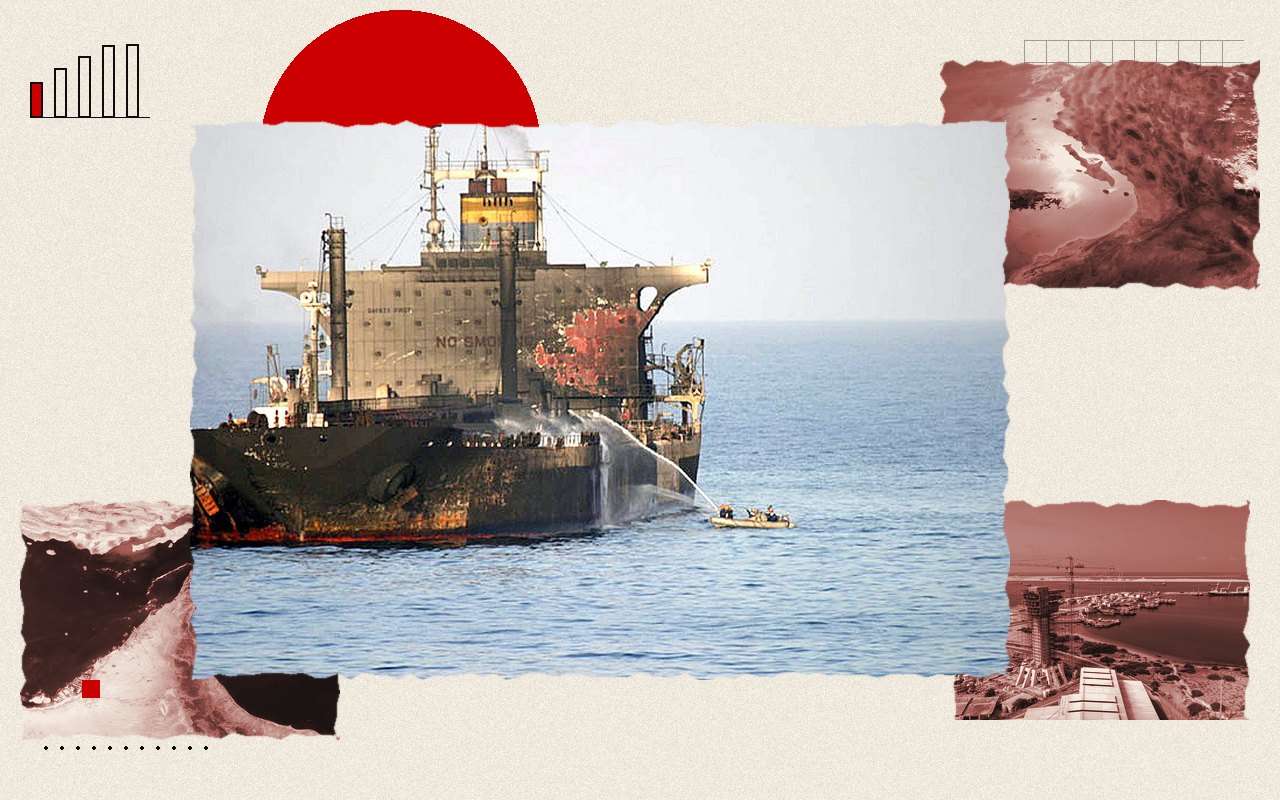
Iran’s navy and Revolutionary Guards said on Saturday, November 14, that three oil tankers caught fire after hitting mines in and east of the Strait of Hormuz, the latest in a run of such claims this week. The Guards added that a new air-defence system had shot down a US MQ-1 Predator drone over Qeshm Island. None of it has been independently confirmed, and the US military had not commented on the drone claim when the reports came out.
What Iran says happened
The Guards’ navy said two of the tankers, one of them a supertanker, had switched off their radar and positioning systems and were “secretly attempting to transit” an unauthorised route in the southern part of the strait when they exploded and caught fire. Iran’s regular navy said separately that a third tanker, also with its tracking and identification systems off, hit a mine in what it calls an “unsafe and prohibited zone” east of the strait, caught fire and stopped.
The statements give no names, flags, owners or crew details for any of the ships, and no casualty figures. The accounts also differ on timing. One report has the eastern tanker hit on Saturday morning and the other two later in the day; another says the incidents were overnight. Iran has not shown independent evidence, and shipping-risk firms had not confirmed the identity of any vessel by Sunday morning.
The drone claim
The Guards said the Predator was brought down over Qeshm Island, the largest island in the strait, and called it the second Predator downed in two days and the 17th US drone of the war. The US struck Qeshm earlier this month, as we reported in our account of the strikes on the island. On Friday, US Central Command rejected an Iranian claim of a strike on a radar site in Bahrain, saying two Iranian attack drones had been intercepted with no injuries or damage, as in our report on that exchange.
How we got here
Tehran has required ships to get its permission before crossing Hormuz since the war with the US began in February, and has attacked vessels that do not comply. Washington has imposed a naval blockade on Iranian ports, gives military support to tankers using the waterway and says it has cleared the main routes of mines; our report on the commander’s briefing has the detail.
The Saturday claims follow two others in as many days. On Thursday the Guards said two supertankers carrying more than four million barrels had burned after taking the southern route. On Friday they released footage of smoke from a vessel they said was a liquefied gas carrier that had hit a mine, which we covered in the story on the five Gulf states’ request to Washington.
Talks and positions
Diplomacy has not moved. President Donald Trump said on Thursday, “We don’t need a deal with Iran”, and on Saturday again claimed victory while saying the war is “just a question of when we want to end it”. Iran’s lead negotiator, Mohammad Bagher Ghalibaf, said US officials had asked Russia’s President Vladimir Putin to get Tehran to talk to Washington directly; the White House did not directly respond. Vice President JD Vance was reported to be weighing direct talks with a senior Iranian official.
The UN nuclear watchdog said on Friday it is “increasingly concerned” that it has no access to an underground enrichment site at Isfahan, where highly enriched uranium is believed to be buried. Iran has refused inspections and has made no commitment on its uranium.
Why it matters to India
Hormuz carries a large share of India’s crude. According to the ship-tracking figures we reported on Thursday, India took 2.1 million barrels a day from the Gulf in November so far, ahead of the 1.8 million from Russia, after flows had fallen to 247,000 barrels a day in April. Each new fire on the route lifts insurance and freight costs for those cargoes, and Indian seafarers are exposed whatever flag a ship flies: the Ministry of External Affairs says 23 Indians, 15 of them seafarers, have died in the West Asia conflict, and the shipping minister reported one Indian seafarer hurt this week, as in our report on the Fujairah Energy attack. No report so far says Indians were on the three tankers.
Prices have so far been steadier than the headlines. Brent settled at $95.89 a barrel on Friday, against about $72 in late February before the war. The International Energy Agency said on Friday that global oil supply has overtaken demand for the first time since the war began, though it warned that attacks on shipping remain a risk to the recovery. Brent is the benchmark for the crude India buys, so a sharp move when markets open on Monday would feed into petrol and diesel import costs and the rupee.
What next
The names, flags and condition of the three tankers, and whether any crew were hurt, are yet to be established by ship operators or maritime security agencies. The US has yet to answer the drone claim. Oil traders will watch Monday’s opening price for Brent, and Washington’s reply to Iran’s latest proposal remains awaited.
Three tankers on fire, one drone down
- November 12Guards say two supertankers burned
- November 13Guards say a gas carrier hit a mine
- November 14Three tankers reported on fire
Source: Iran's navy and Revolutionary Guards, November 14, 2026