Key points
- Secretary of State Marco Rubio called Iran's demands "outrageous and ridiculous" and said the talks have not been very productive.
- Iran's foreign minister said mediator contacts have stopped since the US midterms, and told Washington to accept his terms or face war.
- Brent closed last week near $98 a barrel, 16% below its October 30 peak, so a collapse in talks would hit India's import bill.
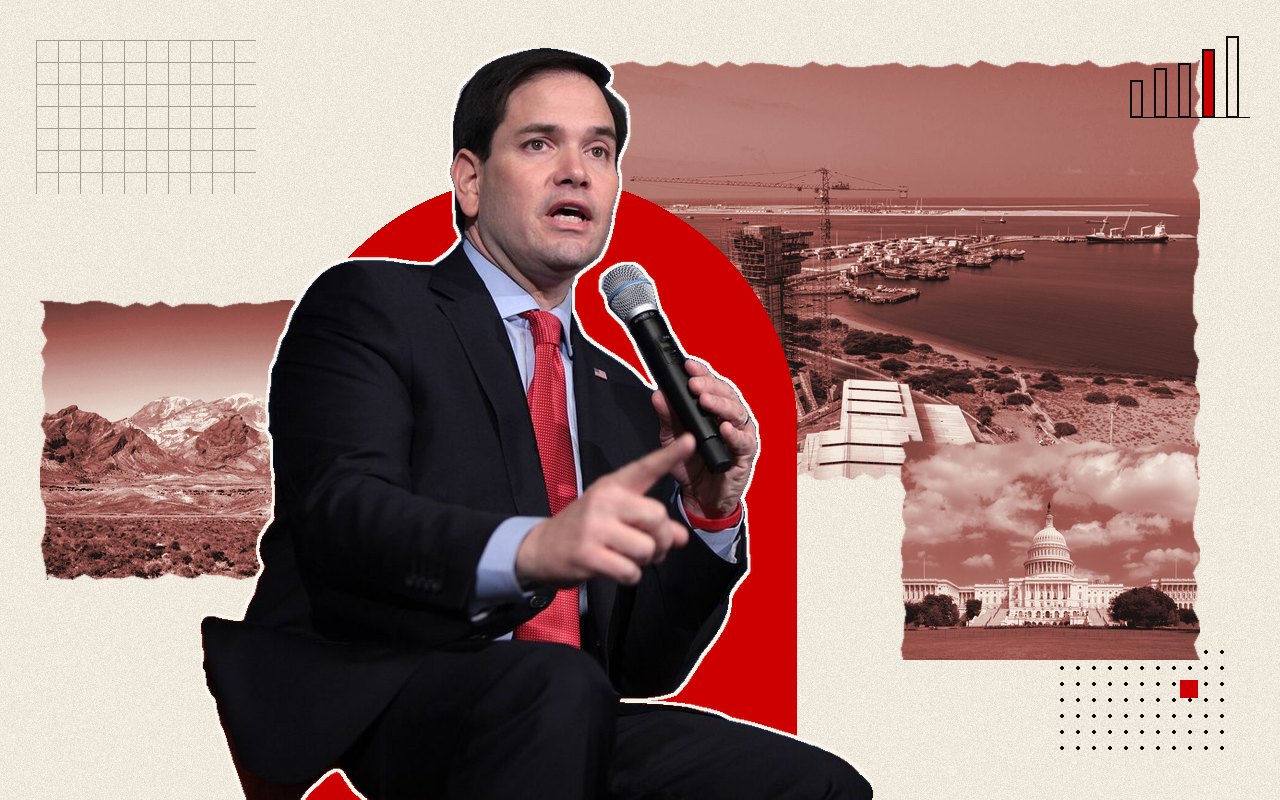
US Secretary of State Marco Rubio said on Sunday, November 8, that Iran’s demands in the peace talks are “outrageous and ridiculous, and really not realistic” and that the negotiations have produced no breakthrough, as Tehran said the mediators who carry messages between the two capitals had stopped travelling after the American midterm elections.
Speaking to reporters before flying to Paris for a meeting of G7 foreign ministers, Rubio would not say the two sides were close. “I wouldn’t say we’re on the verge of a breakthrough,” he said, adding that other countries are engaging Iran with “different ideas”. He called the Iranian demands “outrageous and ridiculous, and really not realistic” and said of the talks: “Right now, it hasn’t been very productive.”
He kept the door open. “The president would always prefer to solve this and every problem diplomatically,” Rubio said, and if there is a chance of a diplomatic solution the United States will explore it.
What Tehran said the same day
Iran’s Foreign Minister Abbas Araghchi told state television in Tehran on Sunday that mediators had stopped travelling since the midterms, which cost President Donald Trump’s Republican Party heavily. He called the result a “shock” for Washington. “We now have to see how long it will take for them to digest these results,” he said, and urged patience until the atmosphere improves.
On X he was sharper: “American voters have made their choice. Time for the White House to make its own.” He told the US to accept Iran’s earlier terms or “choose war, and see our alert and battle-hardened warriors rain down hell.”
Those terms are the ones Tehran has repeated for weeks. On November 5 a senior Iranian official said Iran had passed a nuclear proposal to Washington through Qatar but would discuss it only after the US met seven demands, including lifting sanctions, releasing frozen assets and paying war reparations. Iran’s security chief Mohsen Rezaei said that until then Iran would “neither open the Strait of Hormuz nor have negotiations”. Washington wants nuclear issues in any first round.
Trump leaves strikes open
President Trump said after the midterm vote that renewed military action “depends on whether or not they sign a very strong agreement”, adding that it is “highly unlikely it’s going to be necessary”. That is a change of tone from the days before the vote, when he said the US was “locked and loaded”.
The pressure on the ground has not eased. US forces carried out what Trump called “minor strikes” on Qeshm island, and on November 7 the US military disabled the commercial vessel M/V Huda in the Gulf of Oman for trying to run its blockade of Iranian ports. US Central Command also set up Task Force Iron Gate to extend the blockade to Iran’s land borders and the Caspian Sea. The Revolutionary Guards dismissed it as a plan that “will remain only on paper”, and said they had lifted a self-imposed limit on the range of their ballistic missiles. On Sunday the Guards said two tankers had caught fire after hitting mines near the strait, a claim Trump has called fabricated.
How the talks reached a stall
- Late February 2026The US and Israel launch the war on Iran.
- November 3, 2026Qatari mediators fly to Tehran with a draft deal as US forces strike Qeshm island.
- November 3, 2026US midterm elections are held.
- November 5, 2026Iran says it sent a nuclear proposal via Qatar, to be discussed only after seven demands are met.
- November 7, 2026CENTCOM launches Task Force Iron Gate; the US disables the M/V Huda.
- November 8, 2026Araghchi says mediators have stopped; Rubio calls Iran's demands outrageous and ridiculous.
- November 9 and 10, 2026Rubio attends the G7 foreign ministers' meeting in Paris.
Why it matters to India
India is the buyer most exposed to a failure. The Strait of Hormuz carries about half of India’s crude imports, roughly 2.5 million barrels a day of about 5 million, according to the ship-tracking firm Kpler. In the first half of 2026-27 India imported about 122 million tonnes of crude worth $90.6 billion, 46% more than a year earlier, with volumes flat, so the rise was almost all price.
Hopes of a deal have already lowered that price. Brent traded at $98.26 a barrel at 6:15 pm IST on Friday, 16% below its October 30 peak of $118, in the biggest weekly fall since 2020. Retail fuel prices are capped, and state oil companies were losing about ₹12 a litre on diesel and ₹9 on petrol in October, so every dollar off crude helps their books. Rubio’s remarks are a reminder that this relief rests on talks, not on a deal.
India has some cover. Amir Hayat Moqaddam, deputy chairman of Iran’s parliamentary national security committee, said on November 3 that ships from India, China, Qatar and Iraq are exempt from Iran’s Hormuz restrictions, with Indian vessels to pay transit fees and Iran to receive medicine from India. About 13% of the 10.23 million barrels a day of Gulf crude that passed the strait in October went to India.
The Gulf diaspora
Indians who live and work in the Gulf are close to the fighting. Saudi air defences stopped two Houthi missiles over Riyadh on Sunday, and a projectile damaged a tower in the capital’s financial district. Air India and Air India Express had halted Riyadh and Dammam flights until November 7, and Akasa Air pulled its Riyadh service until November 30. The Indian consulate in Jeddah has kept control rooms open for stranded Umrah pilgrims.
What happens next
Rubio is in Paris for the G7 foreign ministers’ meeting on Monday and Tuesday. Araghchi has said mediator travel will resume only once the mood changes, with no date given. Qatar says its mediation continues. Iran had not replied to Rubio’s remarks by early Monday morning IST.