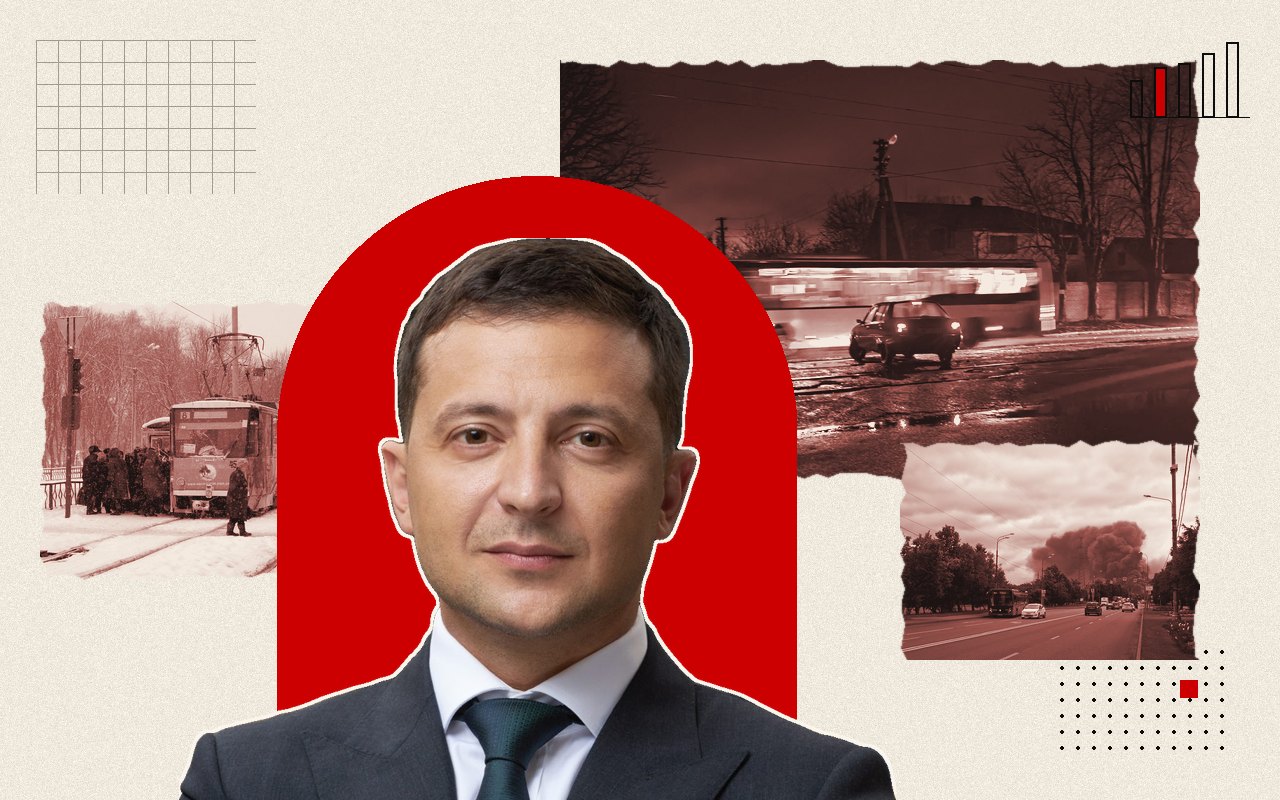
Key points
- Zelenskyy says Russian delegates claimed forces already hold about half of the Donbas land Ukraine controls, a claim his team rejected.
- He says Putin told the US Russia could take the east in one to three months, which he called untrue, and that Washington backed Kyiv's reading of the front.
- Talks resumed on Wednesday, November 11; Kyiv will push for a leaders-level meeting.
Ukrainian President Volodymyr Zelenskyy said on Tuesday, November 10, that members of Russia’s delegation in Abu Dhabi told negotiators they already control about half of the Donbas land that Ukraine still holds, a claim his team rejected on the spot. The talks resumed on Wednesday morning for a second day, and no outcome had been announced by early afternoon in India.
Speaking to journalists in Copenhagen, Zelenskyy said the claim came from military officers and Russian intelligence representatives and was made “seriously”. Ukraine’s negotiators answered with video evidence and their own personnel in the areas concerned. He put the gap down to the two sides living in different information spaces, saying it reflects how Vladimir Putin’s “reality” differs from Ukraine’s.
What Zelenskyy said about Putin
Zelenskyy said Putin had told the Americans that Russia could fully occupy eastern Ukraine within one to three months. He called that untrue and said the United States had confirmed Ukraine’s assessment of the battlefield, which he described as important. He did not say who in the US team had told him so.
The Russian side has not answered either point in anything published so far. Moscow’s long-standing demand is that Ukraine withdraw from the four regions it claimed in September 2022 but has not fully captured, Donetsk among them. Kyiv wants the front line frozen where it is.
Day one, as Kyiv describes it
On Telegram on Tuesday evening, Zelenskyy said the first day covered humanitarian steps, security guarantees and de-escalation. “The release of prisoners is a priority,” he wrote, and “real mechanisms are needed to prevent any recurrence of the war”. He called the trilateral session “constructive and quite substantive” and told his team to continue the dialogue the next day and with US and European representatives in the coming days.
The Ukrainian side began the day with meetings with European and US partners before sitting down with the Russians and Americans. Russian media reported that the session ran about four and a half hours with a 40-minute break and that no Europeans sat at the table. Our day-one report has the full account of who was in the room.
Kyiv’s delegation includes Rustem Umerov, David Arakhamia and Kyrylo Budanov, head of the presidential office. Budanov said on November 9 that prisoner exchanges “need to be intensified”. A large-scale swap is under discussion, but a claim circulating on one Telegram channel that a deal has already been agreed is unconfirmed and no details have been released.
A meeting of the two presidents
Zelenskyy said Kyiv will raise a leaders-level meeting, possibly with mediators from Europe or the United States, on the second day. He said he did not know whether Russia is ready for one. Putin has so far rejected a direct meeting, and the format follows earlier talk of three-way negotiations.
US envoy Jared Kushner said on Tuesday that Washington believes Putin is ready for peace “under the right conditions”, and that Russia is asking whether Ukraine and Europe are genuinely ready for it. Moscow’s Foreign Minister Sergei Lavrov has argued a settlement should first deal with the parameters of European security, while Kyiv and its European partners say the war must end before talks turn to that wider architecture. Deputy Foreign Minister Sergei Ryabkov said it was too early to judge the talks before the second day.
Why it matters
The two accounts of the front line are not a side issue. Any territorial formula, including the idea reported on day one that each side would cede a little land, depends on agreeing who holds what. If the negotiators cannot agree the map, they cannot agree what is being exchanged.
For readers in India, the outcome bears on oil and food markets. A settlement could let Russia sell more crude and reopen Black Sea trade routes, which feed into fuel and edible oil prices, though Ukraine’s foreign minister said on Tuesday he was not optimistic about an immediate Black Sea agreement.
What happens next
A report attributed to a US outlet says envoys Steve Witkoff and Kushner may travel to Moscow after Abu Dhabi and then to Kyiv. That is not confirmed. Prisoner-exchange details were promised for “the coming days”, and Zelenskyy said his team will meet US and European representatives after the Abu Dhabi round. No date has been set for a further trilateral session.