Key points
- Farm unions on November 12 said farmers are not the main cause of Delhi's pollution, backing the Supreme Court's focus on vehicles.
- The court's order of November 6 gives Delhi, Haryana, Uttar Pradesh and Rajasthan two weeks to file vehicle plans.
- Stubble burning was about 14% of Delhi's pollution on November 5, according to the Centre for Science and Environment.
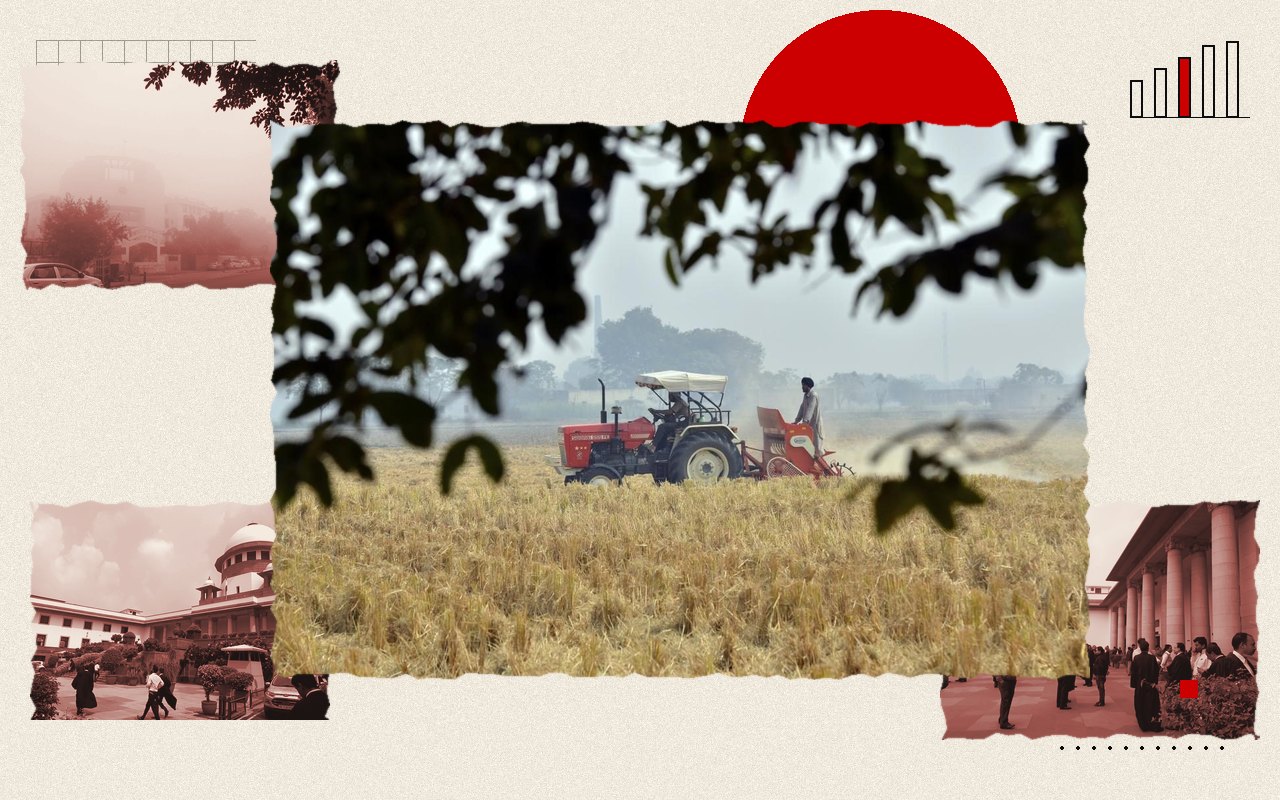
Farm unions on Thursday, November 12, said farmers are not the main cause of Delhi’s pollution and welcomed a Supreme Court push that puts vehicle emissions at the centre of the capital’s air case. The Bharatiya Kisan Sangh, an RSS-affiliated farm body, and the All India Kisan Sabha, the peasant wing of the CPI, also asked states to stop treating stubble burning as the chief culprit.
Their remarks follow an order of November 6 by a bench of Chief Justice Surya Kant, Justice Joymalya Bagchi and Justice V Mohana, which gave the governments of Delhi, Haryana, Uttar Pradesh and Rajasthan two weeks to explain how they will regulate polluting vehicles. The court is hearing the case on its own motion, as a continuing matter on air pollution in the National Capital Region.
What the court asked
The bench said stubble burning incidents have declined substantially across the region, while problems linked to vehicle emissions have risen sharply. “There can be little doubt that the issue warrants urgent and immediate intervention,” it said. It also described bumper-to-bumper traffic in Delhi-NCR as a concern, and noted that the city carries the burden of traffic that comes not only from within its own limits but from neighbouring states.
The Delhi government, the Municipal Corporation of Delhi, Delhi Police and the three neighbouring states have been told to file detailed responses on six points:
- the framework that governs the entry and movement of commercial and private vehicles, especially from neighbouring states;
- how non-compliant vehicles are identified and regulated, including enforcement of Pollution Under Control certificates;
- steps to keep over-age and end-of-life vehicles out of the NCR;
- enforcement figures, such as vehicles inspected, challaned or denied entry;
- how Delhi and its neighbours coordinate on inter-state vehicle movement;
- short and long-term measures to cut vehicle emissions.
The authorities must also reply to suggestions from the Commission for Air Quality Management and the amici curiae, and set out “specific measures proposed to strengthen the existing enforcement mechanisms, together with a time-bound roadmap for their implementation”. The amici had placed before the court compliance data on the Graded Response Action Plan for October 21 to November 3, which showed a sharp rise in issues linked to vehicle emissions.
The Centre, represented by Additional Solicitor General Aishwarya Singh Bhati, told the court that entry restrictions on vehicles below BS-VI standards are being implemented and that Pollution Under Control certificates are being linked to the place where a vehicle was checked.
Farm unions respond
According to the account of the hearing, the bench also questioned placing the whole blame on farmers. It observed that stubble burning had not fully stopped during the Covid-19 lockdown, yet Delhi had much clearer skies, which suggested that factors beyond farm fires play a decisive part.
Mohini Mohan Mishra, general secretary of the Bharatiya Kisan Sangh, welcomed the intervention. “Farmers are not the primary cause of pollution,” he said, and asked states to withdraw cases against farmers and refund fines with interest. On cars, he said: “There should be ‘family planning’ for cars with respect to the numbers owned by a family.”
Rajan Kshirsagar, president of the All India Kisan Sabha, said: “We’ve been repeatedly stressing that stubble burning is not the principal reason for pollution in Delhi and the NCR.” He alleged that “agriculture has been painted as a polluting job, while legislations are framed to support corporates.”
Both unions said solutions should be practical, incentive-based and fair, and that stubble burning should still be reduced.
What the numbers say
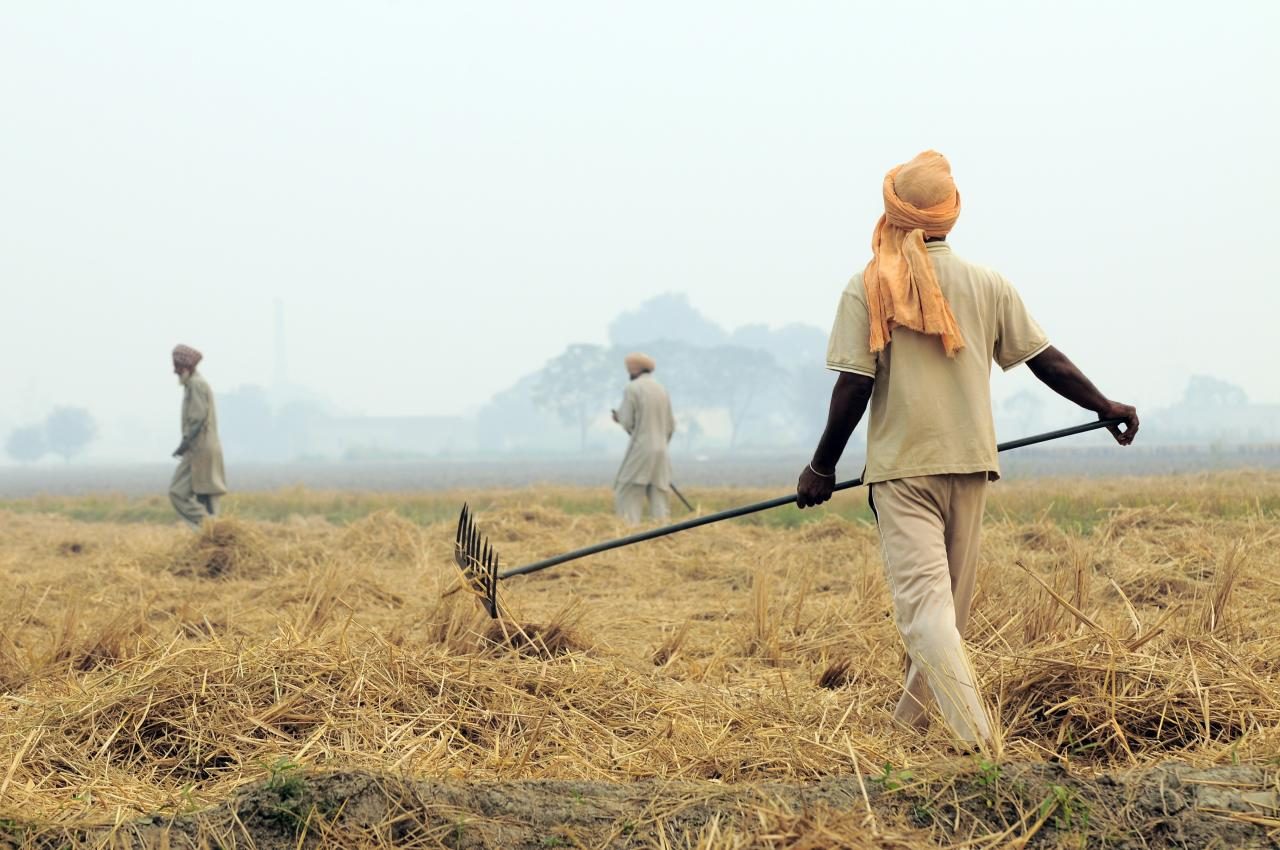
The Centre for Science and Environment says Delhi’s pollution has many sources. Stubble burning contributed about 14% on November 5, and nitrogen dioxide, a gas linked to traffic, peaked in the evening rush hour and stayed high until midnight.
The vehicle count is large. The CSE said earlier this year that 1,800 to 2,000 vehicles are added to Delhi’s roads every day and that registrations crossed 15.6 million in 2024-25, a number it compared with the combined registered vehicles of Mumbai, Kolkata and Chennai. The Economic Survey of Delhi 2025-26 recorded 643,000 additional vehicles in a single year, the largest rise in nine years.
How we got here
The Commission for Air Quality Management invoked Stage III of GRAP on November 6, the day of the court’s order, with the average AQI at 382. Under it, BS-III petrol and BS-IV diesel four-wheelers are barred in Delhi and listed NCR districts. Our explainer on GRAP lists what each stage bans, and our report from Thursday morning shows the city’s average at 319 at 6:30 am, with IIT Delhi at a severe 413 and no rain forecast before November 15.
Earlier in the case the court had called for an expert panel to look at Delhi-NCR’s air quality, asked for a joint proposal to phase out coal-based industry in the NCR, and declined to impose year-round GRAP restrictions, calling instead for long-term solutions.
Why it matters to readers
For Delhi’s commuters, the order points to more checks at the city’s borders and stricter enforcement of pollution certificates, since states must now report how many vehicles they have inspected, fined or turned back. For farmers in Punjab, Haryana and Uttar Pradesh, the unions’ demand to drop cases and return fines would, if accepted, undo penalties imposed during earlier burning seasons. No state has said it will do so.
Delhi-NCR air case: the court's calendar
- November 6Court asks four states and Delhi agencies for vehicle plans within two weeks
- November 23Vehicular emissions case listed
- November 25Solid waste, crop residue and firecracker burning
- November 26Construction, power plants and industry
- November 30Green cover
What happens next
The two-week deadline for the states’ filings runs to about November 20, and the court has listed the vehicular emissions matter for November 23. Crop residue and firecracker burning come up on November 25, which gives the farm unions the next occasion to press their case on fines and cases. Until then, the capital’s air depends mostly on the weather: the India Meteorological Department sees no rain before November 15, and Stage III curbs stay in force.
Court turns to vehicles in Delhi's smog case
- November 6Court orders vehicle plans
- November 23Vehicular emissions hearing
- November 25Crop residue, firecrackers
- November 30Green cover
Source: Supreme Court order of November 6, 2026; CSE; farm unions, November 12, 2026