PoliticsInternal security
Modi in Bastar: no CRPF jawan died on duty this year, first time in 47 years; Congress hits back over 'dimagi Naxals'
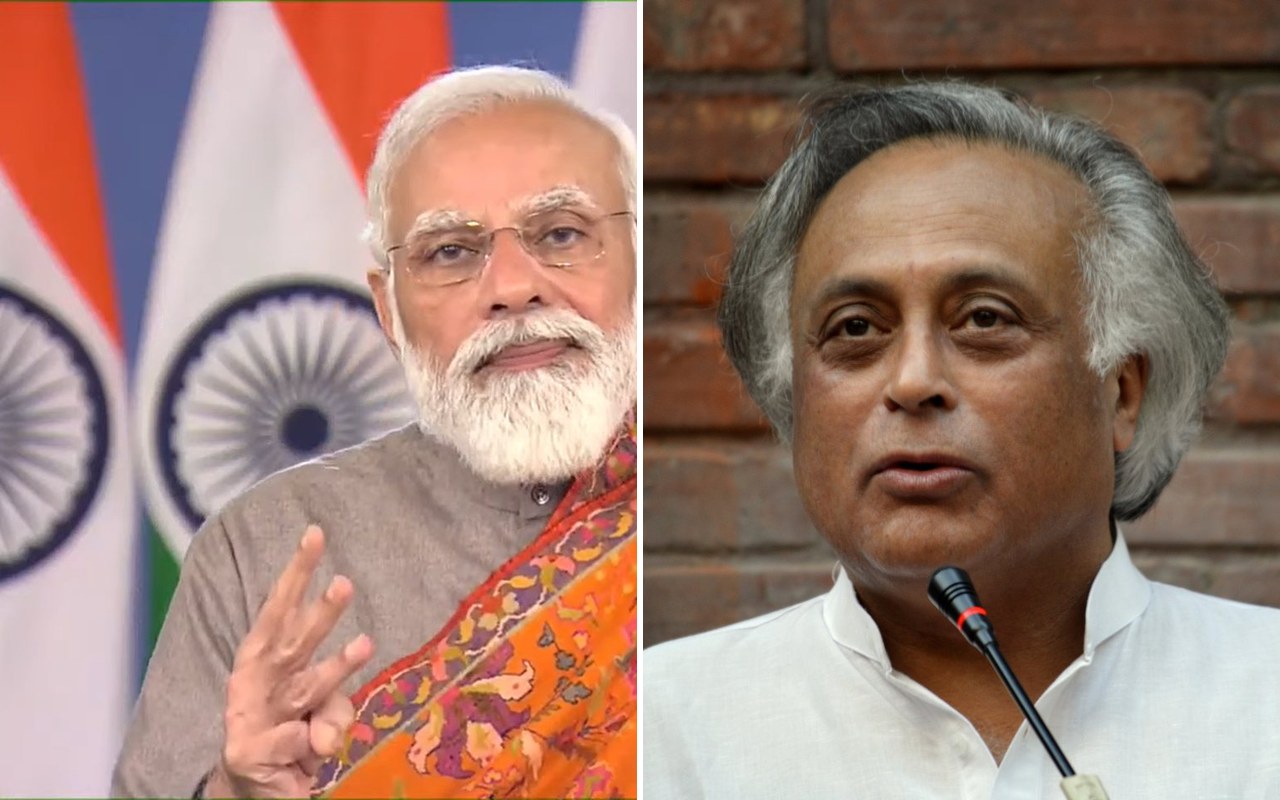
The text of the Prime Minister's Diwali address to security forces at Karanpur shows the figures behind his claim of a Naxal-free India. Jairam Ramesh said he turned a non-political festival into an attack on rivals.
Key points
- Modi said no CRPF jawan has died on duty in the past year, the first such year in 47 years.
- He listed 15,000 km of roads and 9,500 mobile towers built in Naxal-hit areas.
- Congress's Jairam Ramesh said the speech was a brazen assault on institutional norms.
Prime Minister Narendra Modi told security personnel at the CoBRA Operations Base in Karanpur, Bastar, on Diwali, Sunday, November 8, that no CRPF jawan has died on duty in the past year, which he called the first such year in 47 years. The text of the address, released by the Press Information Bureau at 2:53 pm that day, also carries the figures he used to argue that the Maoist threat is over, and an attack on what he called “intellectual Naxals” that drew a sharp reply from the Congress later the same day.
What the address says
Speaking in Hindi, Modi said he had chosen to spend the festival in Bastar, a former Naxal stronghold, with people he called part of his own family. He described this as the first Diwali in decades when the country has won its long fight and every district is free of Naxalism, a claim our earlier report covers in full. He thanked the CRPF, CoBRA, BSF, ITBP, SSB, India Reserve Battalions, state police and the Bastar Fighters, the local force recruited from the region.
The new detail is the record for the force that led the campaign. Modi said no CRPF jawan lost his life on duty in the past year, the first time that has happened in 47 years, and credited government policy, the forces’ courage and their restraint. He repeated the point for emphasis.
He then went back to the years of heaviest losses. In 2010, he said, 76 CRPF personnel were killed in one encounter in Dantewada, and that year another Dantewada incident killed 44 civilians. He said more than 1,000 security personnel died in Chhattisgarh alone, and that in every year from 2004 to 2013 more security personnel were killed than Naxalites. He criticised earlier governments for treating the problem as incurable and for showing no public grief.
The policy and the development figures
Modi said political will was restored in 2014 and the numbers began to turn. He listed four measures: giving the forces freedom to act, breaking the networks that financed Naxalites and separatists, including a counterfeit currency network, cutting off weapons supplies and restricting recruitment and movement, and curbing support from inside the system.
He then gave what had been built in the affected areas, all as his own figures:
- more than 15,000 km of roads, laid with security cover
- more than 9,500 mobile towers
- around 175 Eklavya schools for tribal children
- nearly 50 Industrial Training Institutes and around 50 Skill Development Centres
- thousands of post offices, bank branches and ATMs
- the PM JANMAN scheme for backward tribal regions, and rehabilitation schemes for surrendered Naxalites
What Modi said was built in Naxal-hit areas
- 15,000+ km roadsBuilt with security cover
- 9,500+ mobile towersConnectivity in remote villages
- 175 Eklavya schoolsFor tribal children
- ~100 ITIs and skill centresAbout 50 of each
He linked the campaign to welfare. Citing a recent World Bank report, as he described it, he said about 50 crore people in India have moved out of extreme poverty over twelve years, and argued that Naxalites had blocked schools, hospitals, vaccination, mobile towers and railways. The World Bank report was not named in the release and we have not checked it.
“Intellectual Naxals”
Modi said the armed Naxalites have left the forests but that “intellectual” Naxals have taken over many organisations and have entered political parties. Other accounts of the speech render the phrase as “dimagi Naxals”. He asked people to identify and defeat them. He closed by naming a drug-free India and a Developed and Self-Reliant India as the next goals, called the present achievements a launch pad and not a pause, and ended with Diwali greetings.
Before the address he paid tribute to CRPF personnel who died, at the camp memorial, and later the troops danced to tribal songs around him.
Congress replies
Congress general secretary Jairam Ramesh answered in a post on X at about 5 pm. “The Prime Minister has not spared the nation even on Diwali day his trademark abuse,” he wrote. “This is a brazen assault on all institutional norms, but when has that ever stopped this man?” He objected that Modi was attacking political rivals on a solemn, non-political occasion while wearing the uniform of the forces.
Ramesh also pointed to earlier shifts. He said Modi called those demanding a caste census “urban Naxals” on April 28, 2024, and announced on April 30, 2025, that a caste census would be part of Census 2027. He said Modi in September 2020 linked opponents of the farm laws to Naxal ideology, before the laws were withdrawn on November 19, 2021. “The PM is clearly distraught, disturbed and desperate,” he wrote. “Jhola-picking-up time is fast approaching.”
No reply from the BJP to Ramesh’s post was available in the sources read when this report was written.
How we got here
The speech is the end point of a campaign the Centre has been counting down. On March 30, 2026, Home Minister Amit Shah told the Lok Sabha that Naxal-affected districts had fallen from 126 in 2014 to two, a day before the ministry’s March 31 deadline. On Sunday evening Shah said on X that this is the first Diwali in five decades with the country freed from Naxalism. Modi’s remark that every district is free goes further than the two-district figure Shah gave in March. The two statements were made seven months apart and the release does not reconcile them.
Why it matters
The figures are the Prime Minister’s own and are the government’s case that a conflict which killed more than 1,000 security personnel in Chhattisgarh alone has ended. They bear directly on Bastar’s villages: the roads, towers, schools and bank branches he listed were built under armed escort, and the number of CRPF battalions the region still needs depends on whether the threat has really gone.
What next
The release sets no new date or target beyond the drug-free and developed India goals, which it names without a deadline. The political argument is likely to continue, since Congress has now answered the “intellectual Naxals” remark and the BJP is yet to respond.
The documents
- English rendering of PM's speech during interaction with the Security Forces in Bastar, Chhattisgarh (PIB release 2334105, November 8, 2026, 2:53 pm)Press Information Bureau (text as reproduced by Technology For You), November 8, 2026