PoliticsCourts
Supreme Court tells Centre to set up special cell to enforce child labour ban
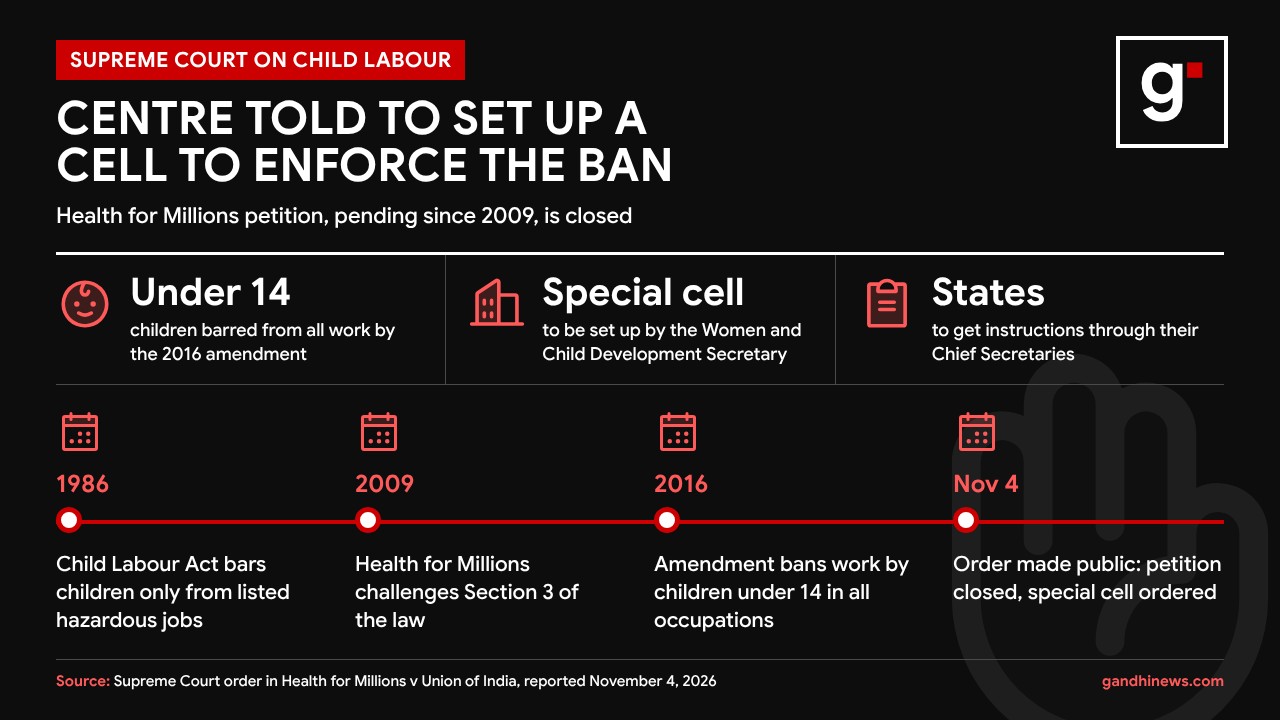
Closing a petition filed in 2009, the court asked the Women and Child Development Secretary to form a cell that will watch over the 2016 law barring children under 14 from work.
Key points
- The Supreme Court directed the Centre to create a special cell to monitor the child labour law.
- The Women and Child Development Secretary must set it up and instruct states through Chief Secretaries.
- The 2016 amendment bars children under 14 from all occupations, with limited family exceptions.
The Supreme Court has directed the Centre to create a special cell to monitor enforcement of the law that bars the employment of children, in an order made public on Wednesday.
A bench of Justices SVN Bhatti and NV Anjaria asked the Secretary of the Ministry of Women and Child Development to set up the cell to watch over the Child and Adolescent Labour (Prohibition and Regulation) Act and ensure it is strictly followed. The Centre must also issue instructions to enforcement agencies through the Chief Secretaries of the states.
The order closes a writ petition by Health for Millions, filed in 2009, which challenged the 1986 law and in particular its Section 3. At the time that section barred children only from listed hazardous occupations and processes.
Parliament changed that in 2016. The amendment brought a blanket ban on employing children under 14 in all occupations and processes, with limited exceptions. Children may still help in a non-hazardous family enterprise after school hours or during vacations, subject to the conditions in the law.
The bench held that the petition’s original prayers no longer survived after the change in the law. What remained, it said, was “giving complete and full effect to the changes introduced by way of amendment Act No. 35 of 2016”.
Additional Solicitor General Aishwarya Bhati appeared for the Union government. The court did not set a deadline for the cell to be formed in the order as reported, nor did it list the matter for a further hearing.