Key points
- The 25th IORA Council of Ministers, chaired by External Affairs Minister S. Jaishankar on November 27, 2026, adopted the Delhi Communiqué 2026 with all 23 member states.
- Ministers endorsed two India-proposed Centres of Excellence: one at CSIR-National Institute of Oceanography, Goa, and one in maritime law at Rashtriya Raksha University, Gujarat.
- India announced a grant of USD 500,000 for the association's institutional and financial capacity-building.
- The communiqué expresses concern over the undermining of maritime safety of vessels and seafarers but names no sea, route or country.
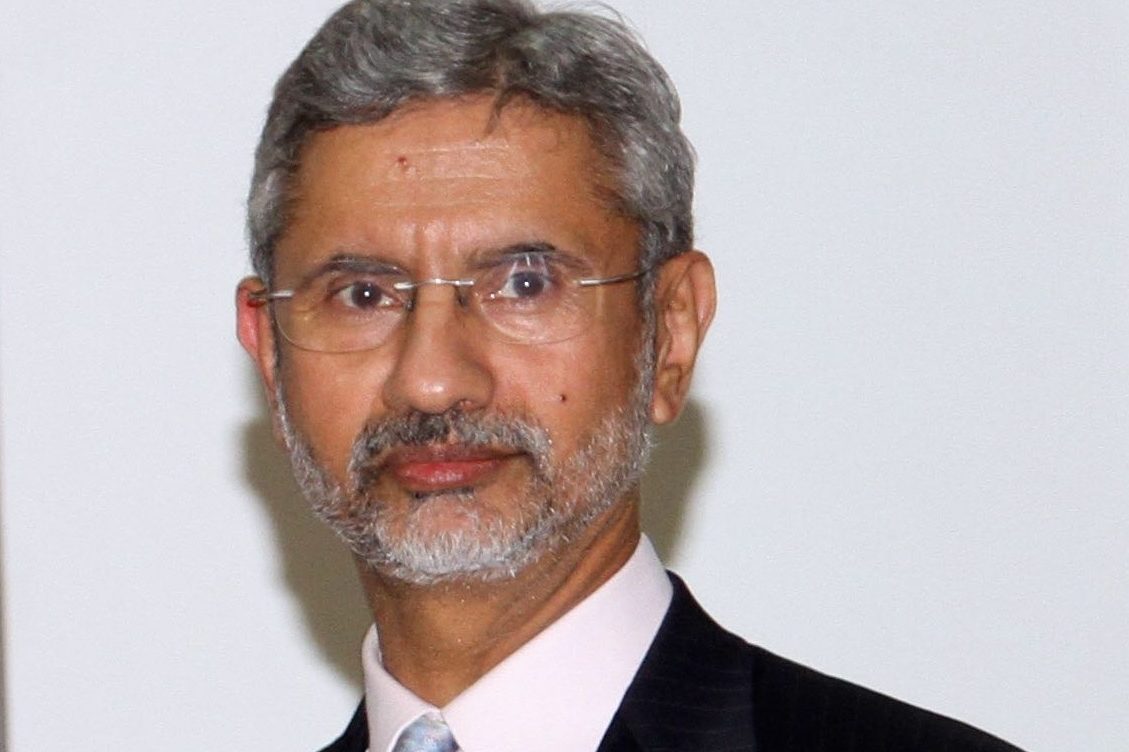
India on Friday hosted the first meeting of Indian Ocean Rim Association (IORA) foreign ministers under its chairship, and came away with two India-based Centres of Excellence endorsed by the group. External Affairs Minister S. Jaishankar chaired the 25th Council of Ministers in New Delhi on November 27, 2026, attended by delegations from all 23 member states and 12 dialogue partners.
The meeting ended with the adoption of the Delhi Communiqué 2026. India also announced a grant of USD 500,000 towards what the Ministry of External Affairs called the association’s “institutional and financial capacity-building”.
What the ministers agreed
The two centres are at existing Indian institutions. The first is at the CSIR-National Institute of Oceanography in Goa, focused on ocean sciences. The second is an IORA Centre of Excellence in Maritime Law at Rashtriya Raksha University in Gujarat, which the communiqué says “would provide a sustained institutional platform to strengthen maritime legal capabilities of IORA Member States”.
The two official documents describe the Goa centre differently. The ministry’s press release calls it an “IORA Digital Innovation Hub” whose establishment the ministers endorsed. In the communiqué, the ministers “acknowledge the designation” of the Goa institute as an IORA Centre of Excellence, “Digital Knowledge Hub”, meant to improve access to scientific knowledge, training and technical skills across the region.
The Delhi meeting in numbers
- 23member states that adopted the Delhi Communiqué 2026
- 12dialogue partners that attended
- 2India-based Centres of Excellence endorsed, in Goa and Gujarat
- USD 500,000grant announced by India for IORA's capacity-building
What the communiqué says about the sea
The communiqué commits members to “maintaining the Indian Ocean as a region of peace, stability and prosperity” and to international law of the sea, including freedom of navigation and overflight and the peaceful settlement of disputes.
Its shortest paragraph is the most pointed. “We express concern over the undermining of maritime safety and security of vessels and seafarers and call for ensuring their safety and security,” it reads. It names no sea, shipping route or country. IORA decides by consensus, and its 23 members range from Australia and Singapore to Iran, Yemen and Somalia.
On climate, the ministers noted that the High Seas Treaty (the BBNJ Agreement) has entered into force and said they look forward to its first Conference of the Parties in January 2027.
Money and the secretariat
Several paragraphs deal with IORA’s finances, which the communiqué treats as a weakness. Ministers stressed “the urgent need for enhancing the availability of financial resources for IORA” and asked for regular auditing of the secretariat in Mauritius and better closure of projects funded by dialogue partners and donors. They thanked Australia for leading a review of how annual membership contributions are set, and Bangladesh for finalising the guideline for IORA’s Special Fund.
They also welcomed a Korea-Indian Ocean Cooperation Fund, set up after IORA signed a memorandum with South Korea in December 2025, and Kenya’s role as coordinating country for the United States as a dialogue partner for 2026-28.
How India framed its chairship
India took over as chair for 2025-27, after Sri Lanka, with the theme “Innovation, Openness, Resilience and Adaptability in the Indian Ocean Region”. Mauritius became vice-chair from September 2026 and is next in line.
Opening the meeting, Jaishankar said the Indian Ocean “is central to global trade, energy security, connectivity and economic prosperity” and that IORA “must enhance its collective voice” at “a time of significant geopolitical changes”. He tied India’s approach to its MAHASAGAR doctrine (Mutual and Holistic Advancement for Security and Growth Across Regions), which builds on the earlier SAGAR policy.
Prime Minister Narendra Modi met the visiting foreign ministers and heads of delegation later on Friday and said India, as chair, was keen to work with all partners “to strengthen peace, security, stability and prosperity in the Indian Ocean Region”.
The ministerial meeting followed two days of talks among senior officials on November 25 and 26, and a workshop on November 26 organised by the Information Fusion Centre for the Indian Ocean Region in Gurugram on sharing maritime information among IORA states.
What happens next
The ministers asked for timely work on IORA’s third Action Plan for 2028-2032, which will set the group’s agenda after India’s term ends. India remains chair until 2027, when Mauritius is due to take over. The Goa and Gujarat centres will report against a new set of performance indicators that the communiqué says will now apply to all IORA Centres of Excellence.
The documents
- 25th Meeting of the IORA Council of MinistersMinistry of External Affairs, November 27, 2026
- The Delhi Communiqué: Indian Ocean Rim Association, 25th Meeting of the Council of MinistersMinistry of External Affairs, November 27, 2026
- Opening remarks by EAM Dr. S. Jaishankar at the 25th IORA Council of Ministers meeting 2026Ministry of External Affairs, November 27, 2026
- Prime Minister meets Foreign Ministers and Heads of Delegation of IORA member states in New Delhi (Release ID 2342836)Press Information Bureau, Prime Minister's Office, November 27, 2026