ExplainedDefence
The India-Japan 2+2 explained: what four ministers in one room can actually decide, and what to watch in Tokyo
Rajnath Singh and S. Jaishankar sit down with Japan's defence and foreign ministers in Tokyo today for the fourth 2+2. What the format is, what the last three rounds and the August defence talks already delivered, and what would count as real progress.
The short answer
A 2+2 puts two countries' foreign and defence ministers at one table, so that diplomacy and military planning are settled together. India holds it with the United States, Japan, Australia and Russia. The India-Japan version began in November 2019 and meets in Tokyo today for the fourth time, with S. Jaishankar and Rajnath Singh facing Toshimitsu Motegi and Shinjiro Koizumi. The August 2026 defence talks already produced a maritime security arrangement, a first equipment-transfer project and a first visit by Japanese fighters to an Indian air exercise. Today's test is whether those pledges get dates.
When India and Japan hold their fourth 2+2 in Tokyo today, nothing about the format will look dramatic: two foreign ministers, two defence ministers, a long table and a joint statement at the end. The reason it matters is the table itself. The people who decide what a navy does and the people who decide what a country says are in the same room.
What is a 2+2?
A 2+2 is a meeting of two countries’ foreign and defence ministers together. Each side brings both of its senior ministers, so a decision to hold an exercise, share a technology or back a position on a sea lane can be taken once, rather than passed between two ministries.
India holds the format with only a few partners: the United States, Japan, Australia and Russia. Japan is the one with the steadiest rhythm. Here the Indian side is Defence Minister Rajnath Singh and External Affairs Minister S. Jaishankar. Japan fields Defence Minister Shinjiro Koizumi and Foreign Minister Toshimitsu Motegi.
What have the earlier rounds produced?
The first India-Japan 2+2 was held in New Delhi on November 30, 2019. The second was in Tokyo on September 8, 2022, and the third in New Delhi on August 20, 2024.
Japan’s own record of the 2022 round shows what the format yields. The ministers agreed to start Joint Service Staff Talks between Japan’s Joint Staff and India’s Integrated Defence Staff. They committed to keep the Dharma Guardian, JIMEX and Malabar exercises going, welcomed progress in coast guard cooperation and cybersecurity, and opposed changing the status quo by force anywhere. The results are small steps, but each one creates a standing channel that the next round can build on.

What did the August defence talks already settle?
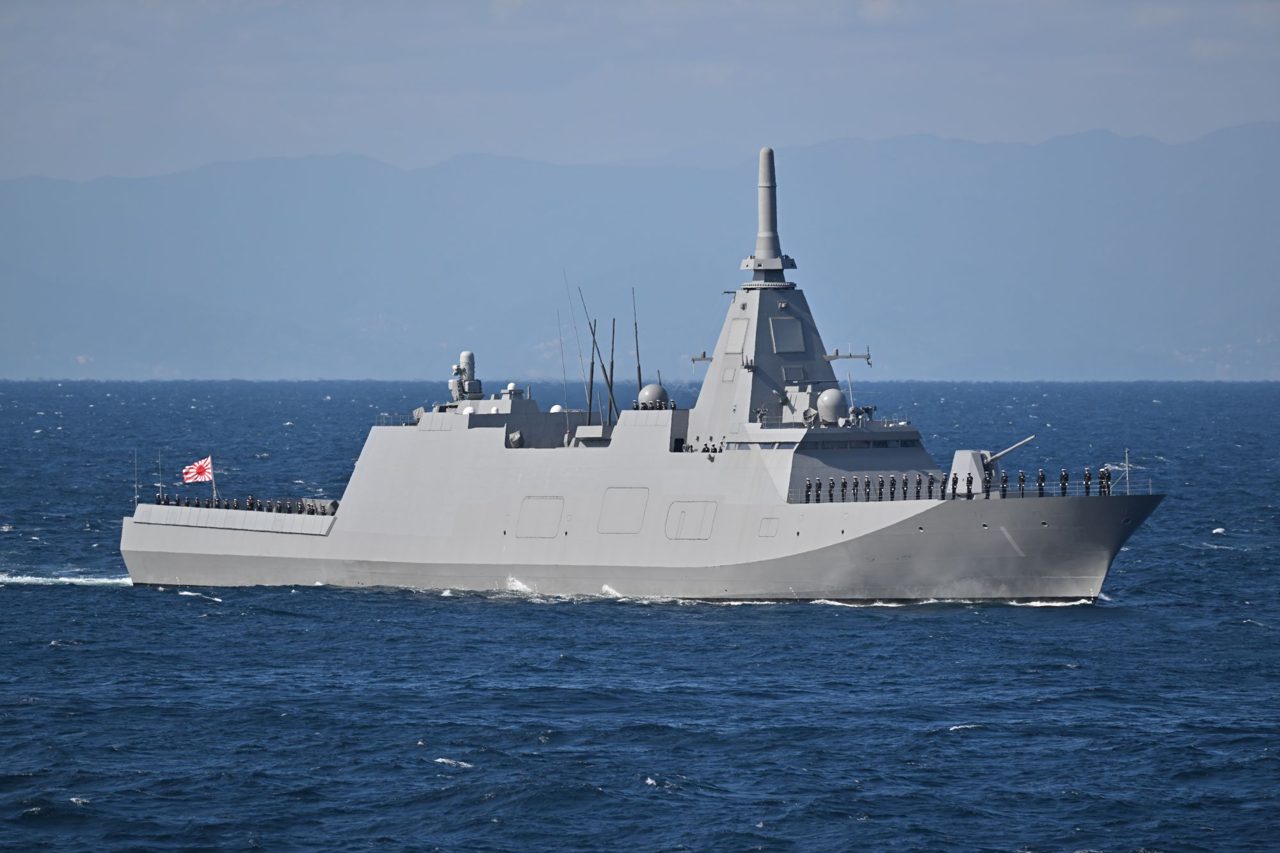
The 2+2 does not start from a blank page. On August 20, 2026, Singh and Koizumi met in New Delhi and signed a Memorandum of Arrangement on Maritime Security Cooperation between their ministries. It covers sharing of maritime domain awareness information, search and rescue, disaster relief, and protection of sea lanes through ship visits, joint exercises and logistical support, including use of ports and repair facilities.
The statement also set out a list of concrete projects:
- Equipment: the shipborne UNICORN communications antenna system is the first defence equipment transfer project between the two countries. Both sides want it realised early.
- Ships: they will explore joint naval shipbuilding and design, joining Japanese technology to Indian production capacity, and expect a ship repair arrangement “in the near future”. They also agreed to work on mine countermeasures.
- Exercises: Japanese Air Self-Defense Force fighters will join the air exercise Veer Guardian 26 in India for the first time. The two sides want more complex exercises, with unmanned systems and short-notice drills.
- Structure: a working group of director-general and joint-secretary rank to coordinate operations, intelligence, equipment and industry, and an intended Defence Industry Forum.
Singh also welcomed Japan’s recent review of its rules for transferring defence equipment and technology, which is what makes projects such as UNICORN possible.
What is different this time?
The foreign ministers are in the room. Jaishankar will also hold the 19th Foreign Ministers’ Strategic Dialogue with Motegi, and the two sides will review understandings from the leaders’ summits of August 2025 and July 2026. That lets the talks tie defence projects to economic security, energy and technology, which Jaishankar has named as priorities.
The regional backdrop is also busy. Jaishankar came to Tokyo straight from Manila, where he accompanied Prime Minister Narendra Modi to the ASEAN, East Asia and Quad meetings. The Quad leaders there agreed a joint P-8 and P-3C maritime patrol aircraft exercise for 2027, and the same maritime-awareness theme runs through the India-Japan agenda. Japan and India also held their first trilateral naval passage exercise with Indonesia in February.
What would count as progress?
The Ministry of Defence’s release speaks of “a roadmap for enhanced operational and industrial synergy”. It names no project to be signed, so dates and named programmes are the test. Four things will show whether the roadmap has substance:
- A firm timetable for UNICORN and a signed ship repair arrangement.
- A named shipbuilding or mine countermeasure project, not just an intention to explore one.
- Dates for larger tri-service exercises, including the first Japanese fighter visit.
- The first meeting of the new working group and the Defence Industry Forum.
A joint statement that only repeats a “free, open, inclusive and rules-based Indo-Pacific” would be the weaker outcome. One that attaches dates to the August list would show a partnership moving from agreed principles to shared hardware.
The documents
- Japan-India Defence Ministers' Meeting, August 20, 2026Ministry of Defense, Japan, August 20, 2026
- Second Japan-India 2+2 Foreign and Defence Ministerial Meeting, September 8, 2022Ministry of Foreign Affairs of Japan, September 8, 2022
- Raksha Mantri to attend 4th India-Japan 2+2 Ministerial Dialogue and hold bilateral talks with his Japanese counterpart in TokyoPress Information Bureau, Ministry of Defence, November 17, 2026