Key points
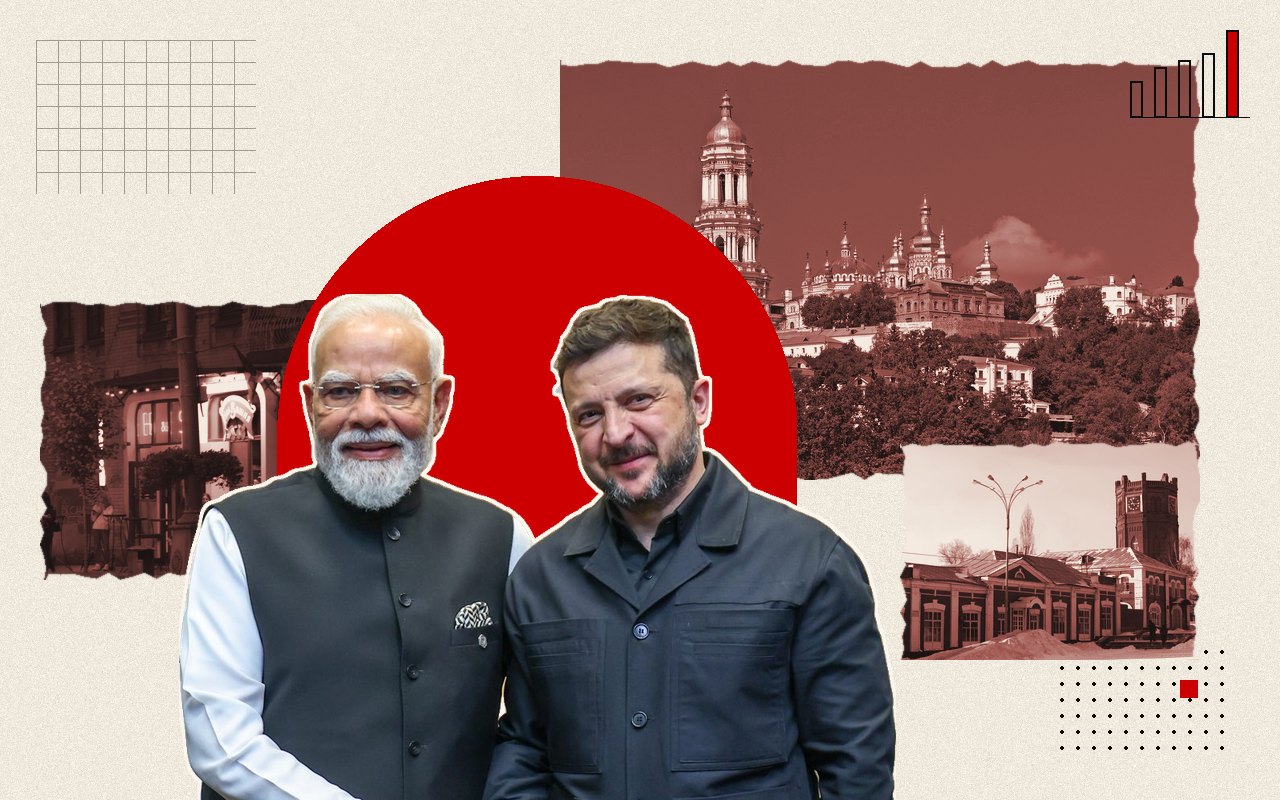
- Prime Minister Narendra Modi spoke to Ukrainian President Volodymyr Zelenskyy by telephone on Monday, November 9.
- Modi said India is ready to contribute in every possible way to a peaceful resolution, and that the conflict must be settled through dialogue and diplomacy.
- The call comes a day before US, Russia and Ukraine talks are reported to begin in Abu Dhabi.
Prime Minister Narendra Modi spoke by telephone to Ukrainian President Volodymyr Zelenskyy on Monday, November 9, and told him that India is ready to contribute to efforts for a peaceful resolution of the war with Russia. Modi said in a post on X that he was “Glad to have had a productive telephone conversation with President Zelenskyy.”
The call comes as diplomacy over the war has picked up speed. Trilateral talks among the United States, Russia and Ukraine are reported to be due in Abu Dhabi on November 10 and 11, and Donald Trump has said a deal is close.
What India said
According to the Prime Minister’s Office, Zelenskyy briefed Modi on recent developments in the conflict. Modi reiterated India’s position that the war must be resolved through dialogue and diplomacy, and reaffirmed what the PMO called India’s human-centric approach. He conveyed that India remains ready to contribute to all efforts aimed at a peaceful resolution.
In his post, Modi said he had thanked Zelenskyy for sharing his views on the humanitarian aspects of the conflict and on efforts to restore peace. He said India’s commitment to “contributing in every possible way” towards a peaceful resolution stood firm. The two leaders also reviewed bilateral cooperation across sectors and agreed to strengthen ties between the two countries.
The PMO statement does not say whether any new proposal was discussed or how long the call lasted.
How we got here
Modi and Zelenskyy last met on June 17, 2026, on the sidelines of the G7 summit in France. Before that they had spoken by phone on August 30, 2025. Modi visited Kyiv in August 2024, the first Indian prime minister to do so.
India’s role has grown more visible in the past two months. On October 3, Ukraine’s foreign minister, Andrii Sybiha, told a press briefing that Kyiv had four proposals for a truce in front of it. “The most comprehensive is India’s proposal,” he said, adding: “For the first time, India has signalled its willingness to play a role.”
The Indian plan was reported to have been carried to Kyiv by External Affairs Minister S Jaishankar in September. It was described as having three parts: a halt to attacks on energy facilities, uninterrupted grain and energy shipments through Black Sea ports, and an end to strikes on commercial shipping. India has not published the text, and the details rest on people familiar with the matter. The other proposals Sybiha referred to include an energy truce framed by the United States and a Black Sea grain initiative from Turkey and Egypt.
India and the Ukraine war
- August 2024Modi visits Kyiv, the first Indian prime minister to do so
- August 30, 2025Modi and Zelenskyy speak by phone
- June 17, 2026The two leaders meet at the G7 summit in France
- October 3, 2026Ukraine's foreign minister calls India's truce proposal the most comprehensive
- October 16, 2026India's envoy in Moscow says Delhi is in touch with Russia on dialogue
- November 9, 2026Modi and Zelenskyy speak by phone
Moscow’s view, and the diplomacy around it
Russia has welcomed India’s offers. In October Putin said that Modi raises Ukraine at every meeting and has “very good ideas” for a settlement, and Kremlin spokesman Dmitry Peskov said Moscow appreciates India’s offer to make a feasible contribution. On October 16 India’s ambassador to Russia, Vinay Kumar, said in Kazan that New Delhi remains in touch with Russian interlocutors so that dialogue and diplomacy are used to resolve the conflict quickly.
In August Zelenskyy said Kyiv counts on India’s contribution to ending the war. On October 21 he said Ukraine could accept a freeze along the current front line as a first step, after which it would seek security guarantees. Moscow has long rejected a plain ceasefire. US Secretary of State Marco Rubio has said Russia demands all of Donetsk, while Ukraine refuses to give up the roughly 11% of the region that it still holds, which includes a defensive line.
Why it matters to India
India keeps channels open to both Moscow and Kyiv, and the war touches Indians directly: 227 Indian nationals have been recruited into the Russian army, 139 of whom have been discharged and 51 have died, Foreign Secretary Vikram Misri said in September. A truce on the Black Sea and on energy infrastructure, the two areas in India’s proposal, would bear on grain, fuel and shipping costs.
What happens next
The next test is the Abu Dhabi round on November 10 and 11, with European participation reported. Trump has also said he expects to meet Xi Jinping and Putin at the APEC summit in Shenzhen on November 18 and 19, where the war is likely to feature. Modi is expected at the G20 summit in the United States in December, where a trilateral summit has also been mooted. Neither India nor Ukraine has said whether Modi and Zelenskyy will meet again before then.
The documents
- Prime Minister Narendra Modi post on X after the call with President ZelenskyyNarendra Modi (X), November 9, 2026
- PMO statement on the Prime Minister's call with President ZelenskyyPrime Minister's Office, November 9, 2026