Key points
- The Chamber of Trade and Industry wants GST on air purifiers and HEPA filters cut from 18% to 5%.
- Traders say purifier demand has risen about fivefold in recent days, with some companies out of stock.
- Delhi's air was very poor at an AQI of 351 at 8 am on Sunday under GRAP Stage III.
A Delhi traders’ body has asked Finance Minister Nirmala Sitharaman to cut GST on air purifiers from 18% to 5%, saying demand for the devices has shot up as the capital’s air stays in the very poor band. The Chamber of Trade and Industry (CTI) wrote to her on Sunday, November 15, 2026, according to reports of the letter.
CTI chairman Brijesh Goyal and general secretary Gurmeet Arora are named in the letter. Goyal said “an air purifier is no longer a luxury, it has become a necessity”, and argued that if the government can reduce GST on life-saving medicines, “it should also reduce the GST on air purifiers”.
What the letter asks for
The tax demand has three parts. Air purifiers and HEPA filters, now taxed at 18%, should fall to 5%, and CTI wants them classed as medical or healthcare devices. Replacement parts such as HEPA and carbon filters, UV lamps, motors and sensors, also at 18%, should drop to the same 5%; the chamber says filters need changing roughly every six months, so the tax is a recurring cost and not a one-time one. Raw materials for making purifiers, which the letter says are taxed at 12%, should also be brought down to 5% to support domestic manufacturing and cut imports from China.
Beyond tax, CTI has asked for a ₹5,000 crore pollution relief package for Delhi, to pay for smog towers, green belts, road washing and air quality monitoring. It wants ₹500 crore of central aid to install purifiers in government schools, hospitals and Anganwadi centres and in 100 major markets in the capital.
Traders have a separate grievance. Under the Graded Response Action Plan (GRAP), restrictions including market closures have hurt business, and CTI wants relief for them: a six-month EMI moratorium, a 2% interest subsidy and special working capital provisions.
A fivefold jump in demand
The chamber says purifier demand has risen about fivefold in recent days. Average daily sales per shop have gone from about four units to about 20, according to the letter, and some companies are running short of stock. These are the traders’ own estimates; no sales data has been published. The reports of the letter give no retail prices, saying only that the tax makes the devices expensive.
Goyal also said Delhi’s AQI has crossed 400 and claimed that doctors equate such air to smoking 20 to 25 cigarettes a day. That comparison is the chamber’s, not an official health finding.
How the air got here
The demand follows a bad fortnight. Delhi’s air was already in the very poor band when the Commission for Air Quality Management imposed GRAP Stage III on November 6, two days before Diwali. On Friday, November 13, the city’s average crossed 402 into the severe band, with IIT Delhi touching 488.
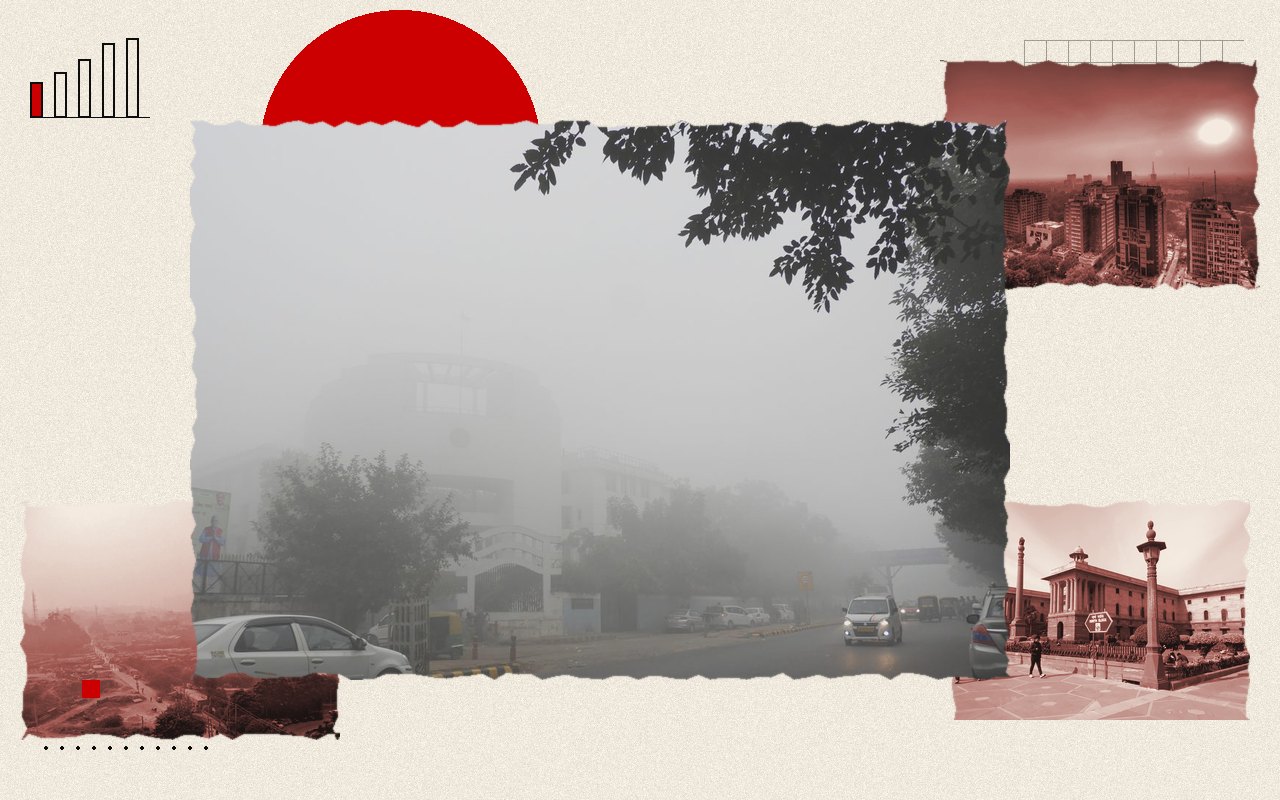
On Sunday morning the picture was a little better but not good. The Central Pollution Control Board put the average at 351 at 8 am, 17 points lower than the same hour on Saturday and in the very poor range of 301 to 400. PM2.5 was the main pollutant at 51 stations. IIT Delhi read 426, NSUT Jaffarpur 407, Pusa 403, North Campus 400 and Chandni Chowk 384. Fog, 91% humidity and wind of 3.7 km an hour were holding pollutants near the ground. Stage III curbs, including limits on construction and some vehicles, remain in force across the National Capital Region.
Why it matters to buyers
At 18%, GST adds nearly a fifth to the pre-tax price of a purifier and to every filter replacement. At 5% it would add a fraction of that. Rate changes on goods are decided by the GST Council, which is made up of the Union Finance Minister and state finance ministers, so a letter to the Finance Minister is a request and not a decision. Our explainer on GST sets out how the Council recommends rates. Neither the Finance Ministry nor the Council has responded publicly to the demand.
What happens next
Forecasters say rain could bring marginal relief in the coming days, but experts quoted on Sunday said any improvement will be temporary unless emissions from vehicles, construction dust, industry and stubble burning are curbed. The government has not said whether the GST Council will take up the purifier request at its next meeting, and no date for that meeting has been announced. Until then the 18% rate stands.