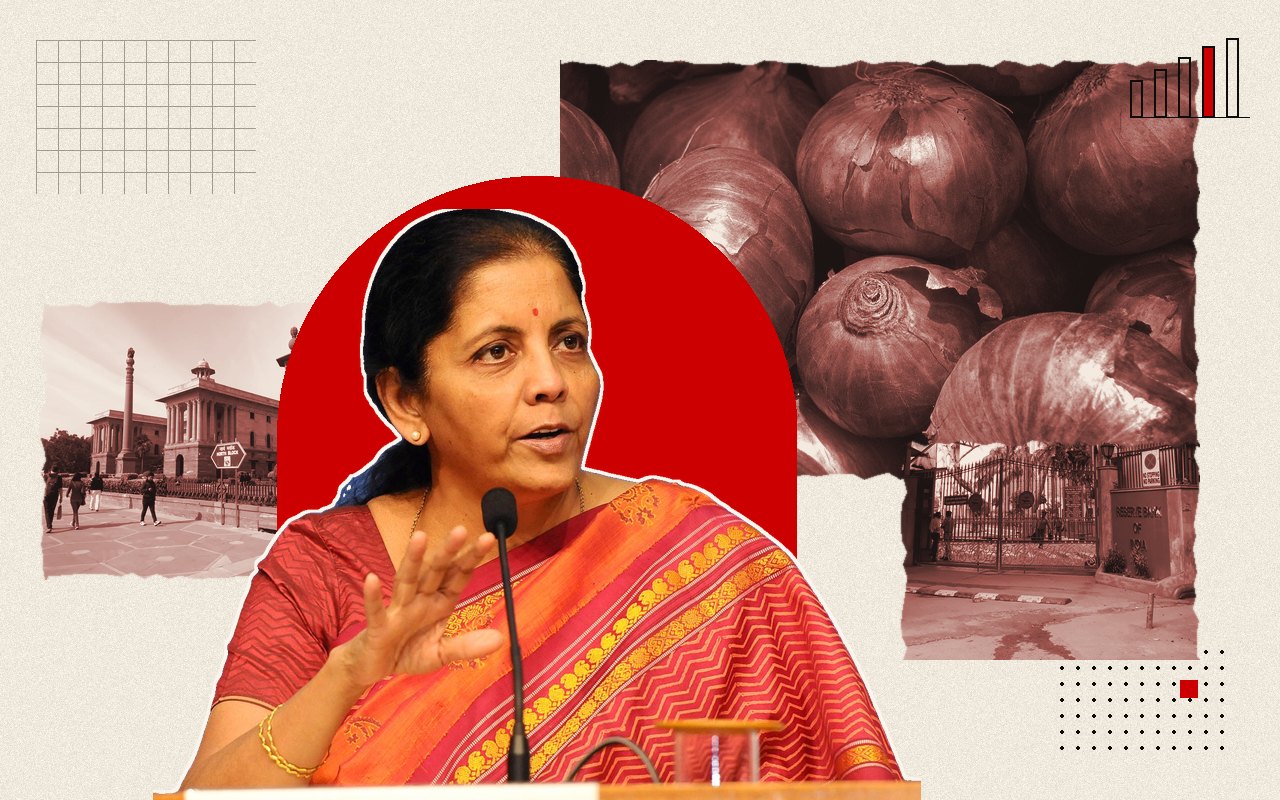
India’s retail inflation was 6.09% in October, the first reading above the Reserve Bank of India’s 6% upper limit in two years. Economists now expect a second repo rate rise in December. The instinct to answer with interest rates is natural. It is also incomplete, because the sharpest price rises are in the kitchen, and a loan rate does not grow onions.
Where the pressure sits
Food inflation was 8.94%, up from 7.74% in September. Onions cost 116% more than a year ago, garlic 61% more and ginger 48% more. Rural inflation, at 6.63%, outran urban inflation at 5.41%, so households that spend most of their budget on food feel the squeeze first, and a higher repo rate does little for them.
The honest counterpoint is that this is not only food. Eleven of the 12 broad groups showed higher inflation than in September, and ICRA expects core inflation to inch up in November. The RBI is right that it cannot wave away a rise that is spreading, and that letting expectations drift costs more later. It raised the repo rate by 25 basis points to 5.50% on October 7, and its own projection of 6% for October to December has now been met. That is a case for watching, and for explaining.
What the government said, and what happened
On August 26 the Ministry of Consumer Affairs said onion availability was “comfortable” for the coming months. Retail onion was then selling at an all-India average of ₹37.87 a kg, and the ministry was releasing buffer stock at ₹35 a kg through NAFED, NCCF, Safal and Kendriya Bhandar outlets. Eleven weeks later, onion prices are more than double those of a year ago.
The buffer itself is modest. The 2026-27 procurement target was 2 lakh tonnes, of which about 1.21 lakh tonnes had been bought by late August. Estimated production in 2025-26 was 307.37 lakh tonnes. The target is under 1% of a year’s crop. A buffer of that size can smooth a bad week in a few cities. It cannot set the price in a country that eats onions every day.
What the Centre and the RBI should do
First, the Consumer Affairs Ministry should publish buffer stock and release figures every week: tonnes held, tonnes sold, in which cities and at what price. In August it gave procurement numbers once. Households and traders cannot judge whether supply is tight without a regular figure.
Second, it should say plainly whether the 2 lakh tonne target is enough, and what it will do if prices stay high into December. A target set in the spring does not answer an October reading.
Third, the Monetary Policy Committee should separate food from the rest in its December statement. If the rise is mostly vegetables, it should say how long it expects the effect to last and why a rate hike is the right tool. If it is spreading into core prices, it should say that too. Markets and borrowers deserve the reasoning, not only the vote.
Fourth, the Finance Ministry should keep the rural gap in view. Inflation 1.22 percentage points higher in villages than in cities calls for supply in village markets, not only a policy rate set in Mumbai.
Prices of some foods are falling: potatoes are 14.24% cheaper than a year ago. That shows supply decisions work when they are made in time.
The reporting behind this view
- 6.09%retail inflation in October 2026, up from 5.54% in September (MoSPI data, as reported November 12)
- 116%rise in onion prices on a year ago, with food inflation at 8.94% (MoSPI data, as reported)
- 2 lakh tonnesgovernment onion buffer target for 2026-27, against 307.37 lakh tonnes of output in 2025-26 (PIB, August 26, 2026)
The documents
- Press release of Consumer Price Index on base 2024=100 for September 2026MoSPI, October 12, 2026
- Adequate Onion Availability; Government Undertakes Calibrated and Targeted Release of Buffer Stocks to Moderate Seasonal Price PressuresPIB, Ministry of Consumer Affairs, Food and Public Distribution, August 26, 2026