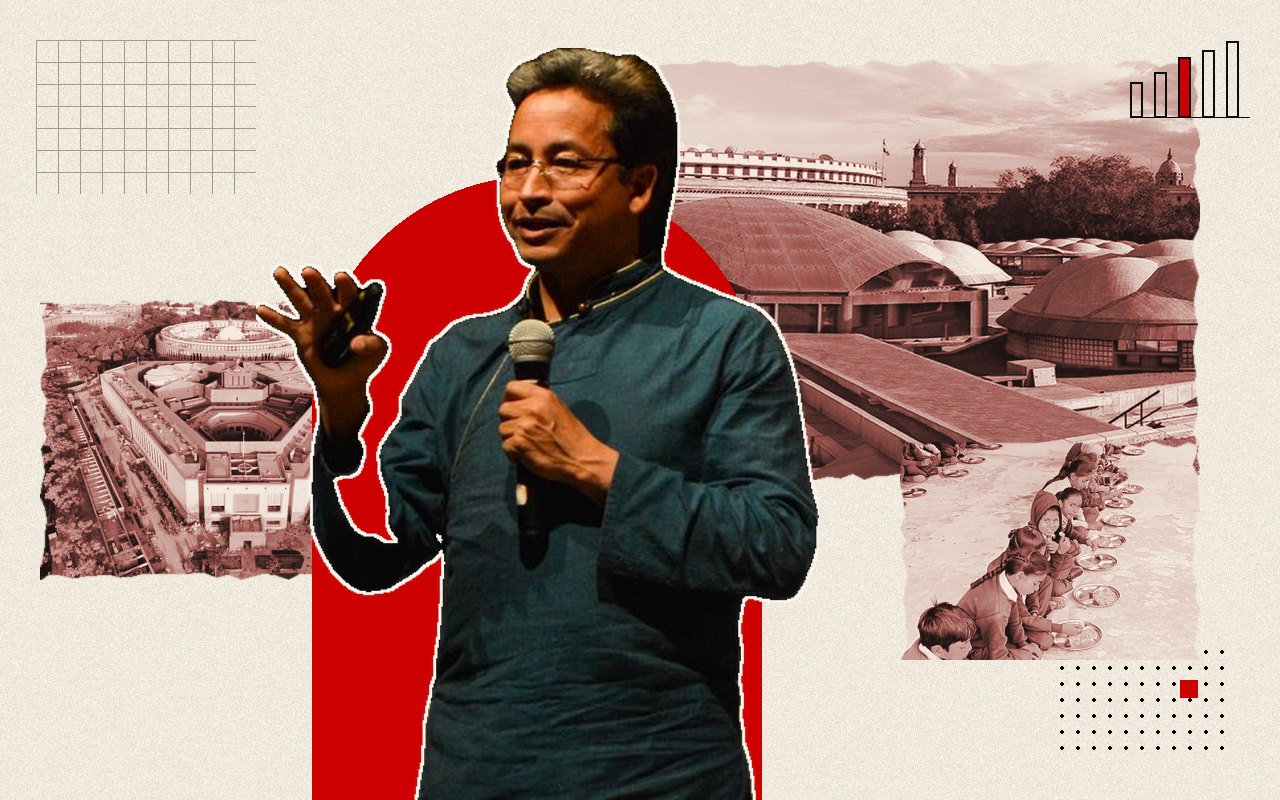
On Wednesday evening Sonam Wangchuk was escorted home by Ladakh Police from a protest site in Leh. By Thursday night he was telling the world on X: “I AM UNDER HOUSE ARREST.” The police say nothing of the kind has happened. The activist has been, in their account, advised to stay at home, and the step is preventive, taken under election-time prohibitory orders.
Both descriptions cannot be accurate at once. A man who is told where he may not go, and is watched by 20 to 25 police and paramilitary personnel outside his gate, in his own account, is a man whose liberty has been restricted. Whether that restriction is lawful is a question for a written order, and so far the public has been shown none.
What each side says
Ladakh’s police chief for the range, DIG Kaushal Sharma, says “peace is paramount” and that Election Commission guidelines bar protests inside municipal limits during the election period. He calls the barricades and deployment temporary. Reports say an order of the Additional District Magistrate dated November 11 bars Wangchuk for 60 days from organising or joining unauthorised rallies. The Kargil Democratic Alliance calls the action unjustified and says no one can be stopped from peaceful dissent.
The administration has a fair point. Hill council polls are close, a candle march is planned in Kargil on Friday, and the region remembers September 24, 2025, when police firing killed four people. An administration that wants to avoid a repeat is not acting in bad faith by keeping crowds apart.
Why the order must be public
A bar on joining a rally is one thing. It is a restriction on a rally, and it can be challenged before a magistrate. Keeping a person inside his house is another. It is a restriction on the person, and it needs its own written order, its own reasons and an end date. If the November 11 order does only the first, the guards outside the gate need another source of authority. If it does both, say so, and publish it.
Wangchuk has said he will go to a magistrate, then the High Court and the Supreme Court. He should not have to. A district administration that is sure of its ground loses nothing by releasing the paper.
The vote is part of the trouble
The dispute began with the calendar. The Chief Secretary announced on November 10 that polls to all eight Ladakh Autonomous Hill Development Councils will be held on December 4. The Leh Apex Body and the Kargil Democratic Alliance say that students and seasonal workers leave in the coldest months and would lose their vote, and Ladakh’s MP urged March or April. The administration says a December vote gives new councils three months to prepare budgets. Both are real concerns, and only one of them can be fixed by an official’s choice of date.
What should happen
First, the administration should publish every order that applies to Wangchuk, with its legal basis, its reasons and its expiry, today.
Second, if no order confines him to his residence, the police should withdraw the guards and say so.
Third, the Election Commission should say whether its guidelines permit confining a named person at home, and for how long.
Fourth, the Centre should look again at December 4. If students and migrant workers cannot vote in winter, an election that excludes them will be contested before it is held.
Ladakh does not need another autumn of mistrust. A paper that can be read in public would be a small start.
The reporting behind this view
- 20 to 25police and paramilitary personnel Wangchuk says have been outside his home since Wednesday night
- 60 daysthe reported bar on unauthorised rallies in the November 11 magisterial order
- December 4date of polls to all eight Ladakh hill councils, announced November 10