Key points
- The Supreme Court held on November 18 that prior Gram Sabha consent under Section 41(3) is mandatory when land in a Scheduled Area is acquired.
- The acquisition of 273.57 acres in Kukuda, Bihabandha and Lanjiberna in Sundargarh for Dalmia Cements Bharat Limited was set aside, with the Orissa High Court's 2024 ruling.
- Odisha is free to begin a fresh acquisition, but only in accordance with the law and the court's findings.
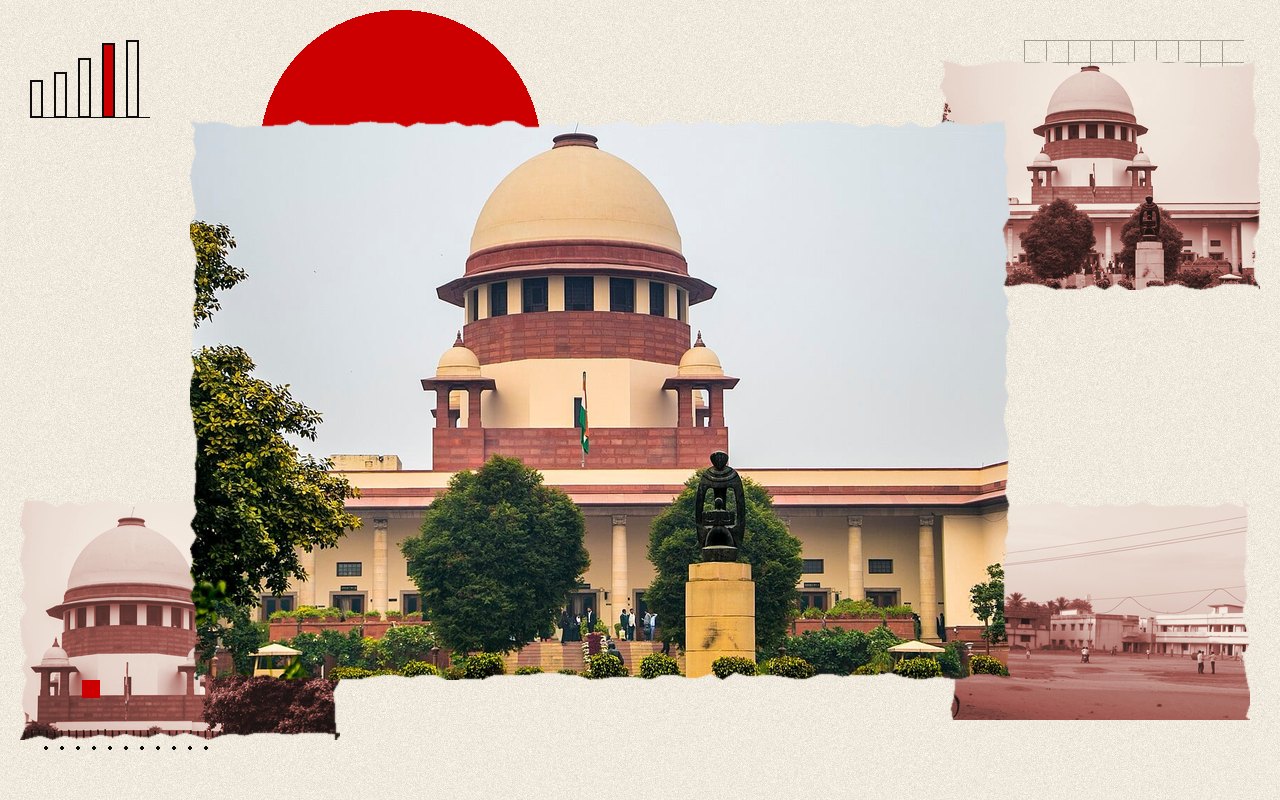
The Supreme Court has set aside Odisha’s acquisition of about 273.57 acres of farmland in three Sundargarh villages for a private cement company’s mining project, holding that the prior consent of the Gram Sabha is mandatory when land in a Scheduled Area is acquired. In a judgment dated Wednesday, November 18, 2026, a bench of Justices Dipankar Datta and Satish Chandra Sharma allowed the villagers’ appeal and also set aside the Orissa High Court’s judgment of September 2024, which had upheld the acquisition.
The land, in Kukuda, Bihabandha and Lanjiberna, was being acquired for Dalmia Cements Bharat Limited, which already holds a mining lease running to 2040 but needed surface rights over the farmland to expand. The judgment, in Bibol Toppo and Others v. State of Odisha and Others (Civil Appeal No. 8294 of 2026, 2026 INSC 1244), was written by Justice Sharma.
What the court held
The bench dealt with the case on three separate grounds, any of which would have been enough on its own to trouble the acquisition.
First, on the purpose of the acquisition. The court held that land taken to enable mining by a private company falls under Section 2(2)(b) of the Right to Fair Compensation and Transparency in Land Acquisition, Rehabilitation and Resettlement Act, 2013, not under the provision for government use. That route requires the prior consent of at least 80 per cent of the affected families, obtained along with the social impact assessment and before the government examines the proposal. The High Court had called consent a “continuing process” that could be gathered at later stages. The Supreme Court called that view erroneous and said consent obtained afterwards cannot cure the defect.
Second, and central to the headline, on Section 41(3) of the Act, which applies to Scheduled Areas under the Fifth Schedule of the Constitution. The High Court had read the section as directory, leaning on phrases such as “as far as possible” and “demonstrable last resort” in the earlier sub-sections. The bench disagreed: “We hold that the requirement of Section 41(3) of the Act is mandatory in nature,” it said. The court noted that the absence of a stated consequence for breach does not make a provision optional.
The record, it found, did not show consent even on paper. “Far from a meaningful consent, there is not even paper consent of Gram Sabha in this case,” the judgment says, adding that the High Court’s approach amounted to “reducing a mandatory statutory requirement into a paper formality.” The State had claimed consent from 482 affected families, but the court found no material showing it was obtained in the prescribed manner or at the required stage.
Third, on the safeguards around the social impact assessment. The court found no evidence that the public hearing on the draft assessment, listed for April 16, 2021, took place, and said the final report did not reflect the views of affected people. It also found that the Expert Group which reviewed the assessment included the company’s own Advisor for Land Acquisition, which compromised the group’s independence under Section 7. The bench said this rendered the group’s deliberation “a fixed match”.
The court also rejected an argument that the mining lease changes the picture. The lease, it held, governs the relationship between the State and the company; once Odisha chose to acquire land under the 2013 Act, it had to meet that Act’s safeguards. The two laws, the Mines and Minerals (Development and Regulation) Act, 1957 and the 2013 land law, operate in distinct spheres.
How the case got here
Dalmia Cements submitted its proposal for acquisition on December 9, 2015, and the State gave administrative approval on August 23, 2017, subject to the consent requirement. On January 26, 2020, the Gram Panchayats and Gram Sabhas unanimously rejected the proposal. The State nevertheless issued a fresh notification on February 24, 2020, and went on to issue preliminary notifications under Section 11 on July 6, 2021, and the final declaration under Section 19 on November 3, 2021, after the Collector rejected objections.
Twelve residents challenged the process. The Orissa High Court dismissed their petition on September 6, 2024, reasoning that the 80 per cent consent condition did not apply because title would vest in the State and that consent could in any case be collected at different stages. The Supreme Court’s judgment, delivered more than two years later, reverses each of those conclusions.
The ruling sits alongside the court’s recent work on forest and tribal land. On November 6 the court held in the Megamalai case that planned cultivation of a commercial crop is not a forest right under the Forest Rights Act, a decision that turned on residents’ actual relationship with the land. Our explainer on the Forest Rights Act sets out how Gram Sabhas fit into that law. The Sundargarh judgment rests on a different statute, but it too treats the Gram Sabha as a body whose role cannot be skipped.
What it means for villagers and companies
For the people of the three villages, the practical result is that the land stays with them unless the State starts again. The court said its decision does not bar a fresh acquisition, but any new proceeding must follow the law and the findings in the judgment. That means a social impact assessment with a real public hearing, an independent Expert Group, and consent obtained at the stage the Act requires, including from the Gram Sabha.
Beyond Sundargarh, the judgment gives a clear reading of Section 41(3) for every Scheduled Area where a State acquires land under the 2013 Act: the Gram Sabha’s consent is a condition that must be met before the acquisition proceeds, not something the State can satisfy later or treat as a courtesy. A company holding a mining lease does not get surface rights through the lease alone.
No reaction from the Odisha government, Dalmia Cements or the villagers had been published at the time of writing. The judgment does not set a date for any further step; any fresh acquisition would have to begin from the proposal stage, and the appeal has been disposed of along with pending applications.
Gram Sabha consent is not optional
- December 2015Company's acquisition proposal submitted
- January 2020Villages unanimously reject it
- November 2021Section 19 notification issued
- September 2024High Court upholds acquisition
Source: Supreme Court judgment, November 18, 2026
The documents
- Bibol Toppo and Others v. State of Odisha and Others, Civil Appeal No. 8294 of 2026 (2026 INSC 1244), judgment of November 18, 2026Supreme Court of India, November 18, 2026