Maharashtra’s government deserves credit for speed. The drought was declared in 265 talukas in September and widened to 305 of the state’s 358. On October 14 the Chief Minister, Devendra Fadnavis, promised ₹5,000 to each affected farmer before Diwali. By November 5 the state had paid ₹4,372.83 crore to 87,45,669 farmers in 304 talukas. That works out at almost exactly the promised ₹5,000 each. Relief that reaches this many accounts in three weeks is not common.
On Diwali, four ministers sat down to meals in farm homes in Solapur, Ahilyanagar, Nanded and Thane. The gesture was kind. But the day’s other number was less comfortable.
What the reservoirs say
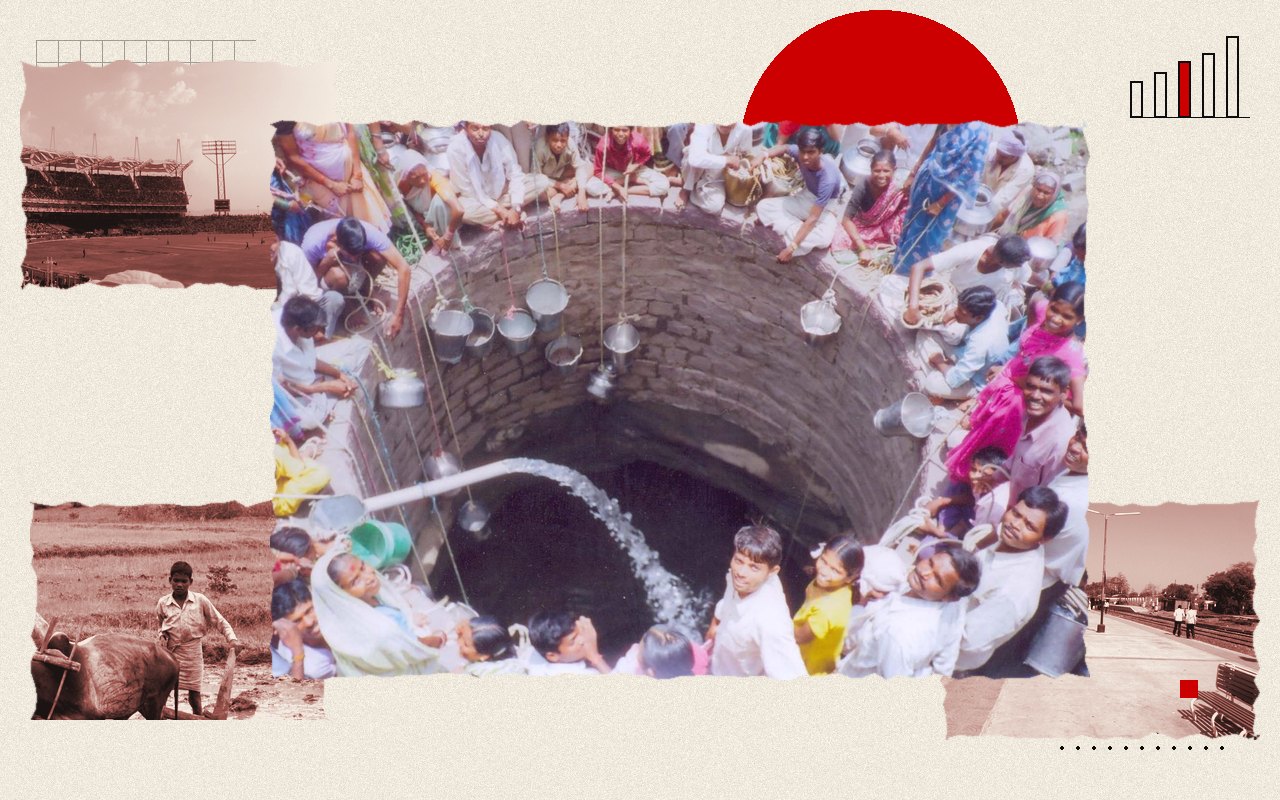
The State Water Resources Department’s report for November 8 covers 3,042 irrigation projects. Together they hold 65.79% of live capacity, against 90.67% a year ago. Every category is lower. Major projects are at 73.16%, medium at 58.43% and minor projects, the ones that serve villages and small farms, at 38.02%. The Chhatrapati Sambhajinagar division, much of Marathwada, is lowest at 38.39%. Amravati division is at 53.97%.
These are readings from early November. The dry months are still ahead, and storage only falls from here.
Why cash is not enough
₹5,000 helps a family through a festival month. It does not fill a borewell, water a rabi crop or feed a buffalo until June. The state has promised tankers tracked by GPS, fodder at the minimum support price and easier borewell permissions. All three are sensible. None can be judged today, because the public has not been told how many tankers run, to which villages, or how much fodder has been bought.
Easing borewell permissions deserves a caution of its own. In a year when storage is this low, more boring into the same falling groundwater can help one village for a season and hurt its neighbours for years. Permission should come with a record of where wells are drilled.
What the government should do
First, publish the Water Resources Department’s storage figures taluka by taluka, not only by division, every week until the monsoon. A division average can hide a village that has nothing.
Second, publish a weekly list of tankers running, the villages served and the trips made, so that a sarpanch can see whether the tanker due on Tuesday came.
Third, publish fodder purchases and camp locations with the same regularity, since cattle are usually the first thing a drought family sells.
Fourth, tell farmers whose payments stalled over bank account problems when they will be paid. The minister has said discrepancies will be fixed. A date would help more than the assurance.
The fair objection
Officials will say that weekly data creates work in the busiest months, and that figures can be used against them. Both are true. But the department already compiles reservoir figures and releases them. Extending that habit to tankers and fodder costs less than the questions that follow a failure nobody saw coming.
The ministers who visited farm homes on Diwali heard what the families needed. The state now owes those families, and the rest of Maharashtra, a regular account of whether it is getting there.
The reporting behind this view
- ₹4,372.83 crpaid to 87,45,669 farmers in 304 talukas by November 5, 2026
- 65.79%live storage in 3,042 dam projects on November 8, against 90.67% a year earlier
- 38.02%storage in minor projects; Chhatrapati Sambhajinagar division is lowest at 38.39%