Key points
- Odisha's damage assessment for Cyclone Akvan begins on Sunday, November 22, and compensation will follow it.
- Farmers will get input subsidy for damaged crops and compensation for paddy soaked in rain, under existing norms; no rupee amount has been announced.
- The state is drawing up a 100-year flood management roadmap for eight of its 11 river systems and has asked IIT Roorkee for technical help.
Odisha will begin assessing the damage from Cyclone Akvan on Sunday, November 22, Revenue and Disaster Management Minister Suresh Pujari said at a press conference in Bhubaneswar on Saturday, and compensation will follow once the count is done. On the same day he announced that the state is preparing a 100-year flood management roadmap, to cover eight of its 11 river systems in a first phase.
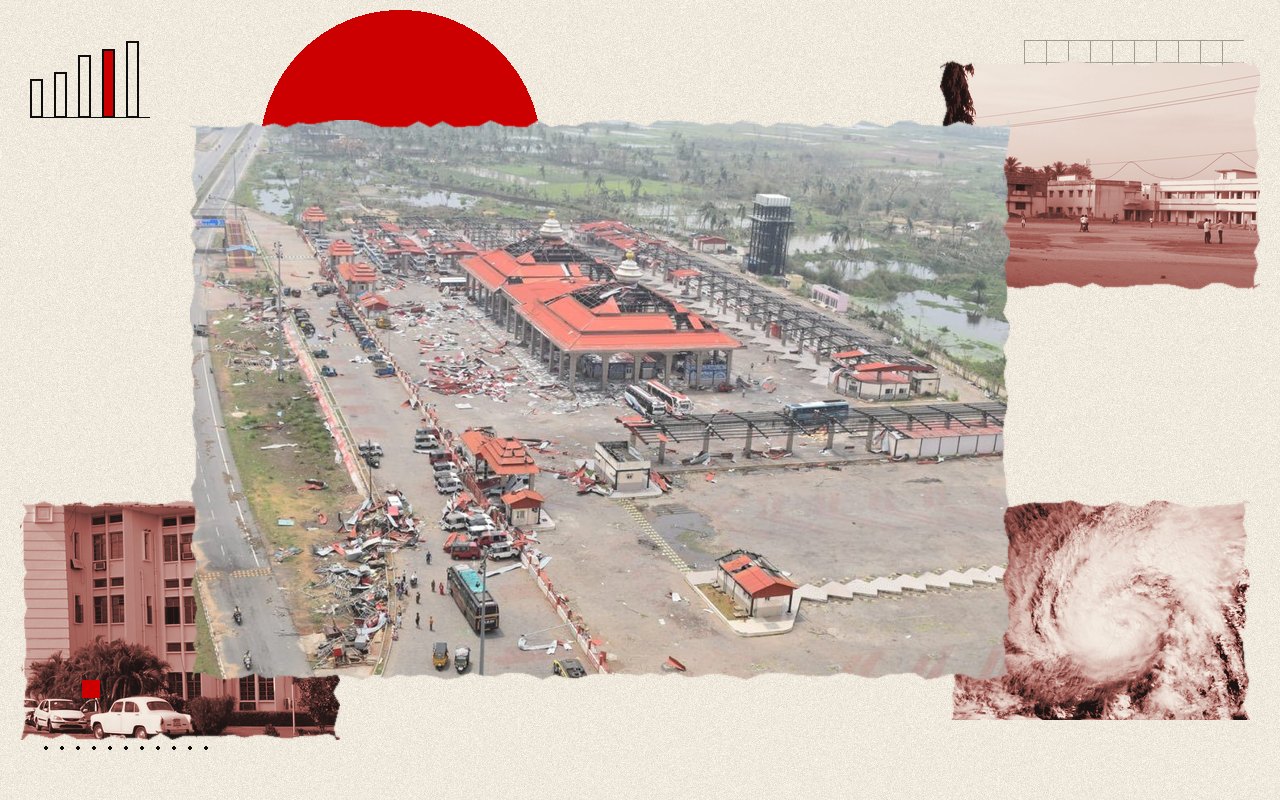
According to reports of the briefing, officials who were posted on cyclone duty across the state start returning on Sunday so that field teams can take up the work. Akvan made landfall near Gopalpur in Ganjam district on Friday, November 20, and the state has so far reported no major damage in its districts, though the minister said crops were damaged in several parts of the state and landslides were reported in some places without major damage.
What the minister said
Farmers whose standing crops were damaged will receive an input subsidy under government norms, Pujari said. Farmers whose harvested paddy was soaked by rainwater will be compensated under the prescribed guidelines. No rupee rate per hectare, and no estimate of the area affected, has been announced; those numbers will come from the assessment.
“Enough is enough,” Pujari said, according to reports. “Now, the State should have a proper flood management plan to mitigate calamities.” He said recurring floods and cyclones damage public and private infrastructure, close schools and colleges, delay development projects and leave administrators spending much of the year on relief instead of development. He said the loss of government working hours and of students’ study time should also be counted.
The 100-year roadmap
The plan, as described by the minister, covers infrastructure on eight of Odisha’s 11 river systems in its first phase. Pujari said the Mahanadi and Rengali systems are working satisfactorily and the rest need further development. The Rushikulya, whose floods did heavy damage after Cyclone Arnab, has no major flood-control infrastructure, and several other rivers in the southern districts lack it too.
The government has begun work on Detailed Project Reports for the long-term works and has asked IIT Roorkee for technical assistance. A comprehensive note on the state’s river systems is being prepared. Pujari also called landslides an emerging challenge. A state team that went to Uttarakhand to study how that state deals with them is due back on November 23 and will submit its report, and further measures will depend on it.
Special Relief Commissioner Rajesh P Patil described the response to Akvan as a whole-of-government effort, with protecting lives the first aim. “Back-to-back floods and cyclones have created a need for a long-term mitigation plan,” he said. He said Akvan’s impact was felt mainly in Ganjam, and to a lesser extent in Puri, Kendrapara and Jagatsinghpur.
How the state got here
Akvan changed its projected path on November 18. It had first been forecast to cross the Andhra Pradesh coast; it instead finished crossing near Gopalpur by about 11:20 am on November 20, with winds of 70 to 80 km/h, weaker than the 90 to 100 km/h forecast. Odisha moved 3.72 lakh people to shelters, 1,54,290 of them in Ganjam, and had reported no deaths by about 1 pm that day. Our report on the landfall has the full count.
The plan follows three successive cyclones, according to reports of the briefing. Cyclone Arnab hit on October 28; its rain set off the Ghidipabali landslide in Ganjam and floods on the Rushikulya, and killed 11 people in Odisha. On November 5 the state asked a central team for ₹2,526 crore for Arnab and flood damage and a further ₹10,000 crore for long-term flood measures, as we reported in Ganjam landslide toll rises to seven. The 100-year roadmap is the longer version of that second request.
What it means for farmers and for the budget
For farmers in Ganjam, Puri, Kendrapara and Jagatsinghpur, the first thing that matters is the assessment itself. The minister said input subsidy and compensation will follow the assessment, so the field count is what sets the amounts. Standing crops and soaked harvested paddy are treated under separate norms, as he described them.
The roadmap matters for money in the longer run. Odisha has already asked the Centre for ₹10,000 crore for flood measures, and works on eight river systems will need Detailed Project Reports before any sanction can be sought. Our earlier report on five in-stream storage projects worth ₹625.47 crore shows the kind of scheme the state already funds for water security.
The weather office has also advised farmers in Odisha, Bengal and Jharkhand to drain fields and hold rabi sowing after Akvan, which we covered in IMD tells farmers to drain fields.
What the Relief Code requires
The state has not given an end date for the count, but its own rulebook sets one. The Odisha Relief Code, issued by the Special Relief Commissioner, says damage to crops, houses and property after a cyclone is to be assessed “forthwith” (para 115), on the same lines as after a flood. The Tahasildar must report to the Sub-Collector and Collector “within 24 hours of the occurrence of cyclone”, followed by “a more detailed report within three days” (para 105).
For the full count, the code applies its flood procedure to cyclones (para 116). Heads of Departments send preliminary damage reports “not later than two weeks” from the end of the event, the Special Relief Commissioner compiles them “within a week” of receiving them, and the final report in the prescribed formats must reach the Board “not later than one month” from the date the disaster abates (paras 76 and 77). The Collector also assesses damage to private property “as speedily as possible” (para 75). Akvan crossed the coast on November 20, so by the code’s own clock the final report on Odisha’s losses is due by about December 20, and that report is what any request to the Centre will rest on.
What happens next
The Uttarakhand team’s report is due on November 23. Under the Relief Code, preliminary department reports on Akvan’s damage are due within two weeks and the final report within a month. The state has not said when compensation will be paid. The roadmap has no timeline either; the next steps are the river-systems note and the first Detailed Project Reports.
Odisha begins Akvan damage count
- October 28Cyclone Arnab brings the Ghidipabali landslide in Ganjam
- November 5Odisha asks the Centre for ₹2,526 crore
- November 20Akvan crosses the coast near Gopalpur
- November 22Damage assessment begins
Source: Statements of Odisha Minister Suresh Pujari and Special Relief Commissioner Rajesh P Patil, November 21, 2026
The documents
- Odisha Relief Code (cyclone and flood chapters: damage reporting and assessment, paras 75 to 77, 105, 115 and 116)Special Relief Commissioner, Government of Odisha, November 22, 2026