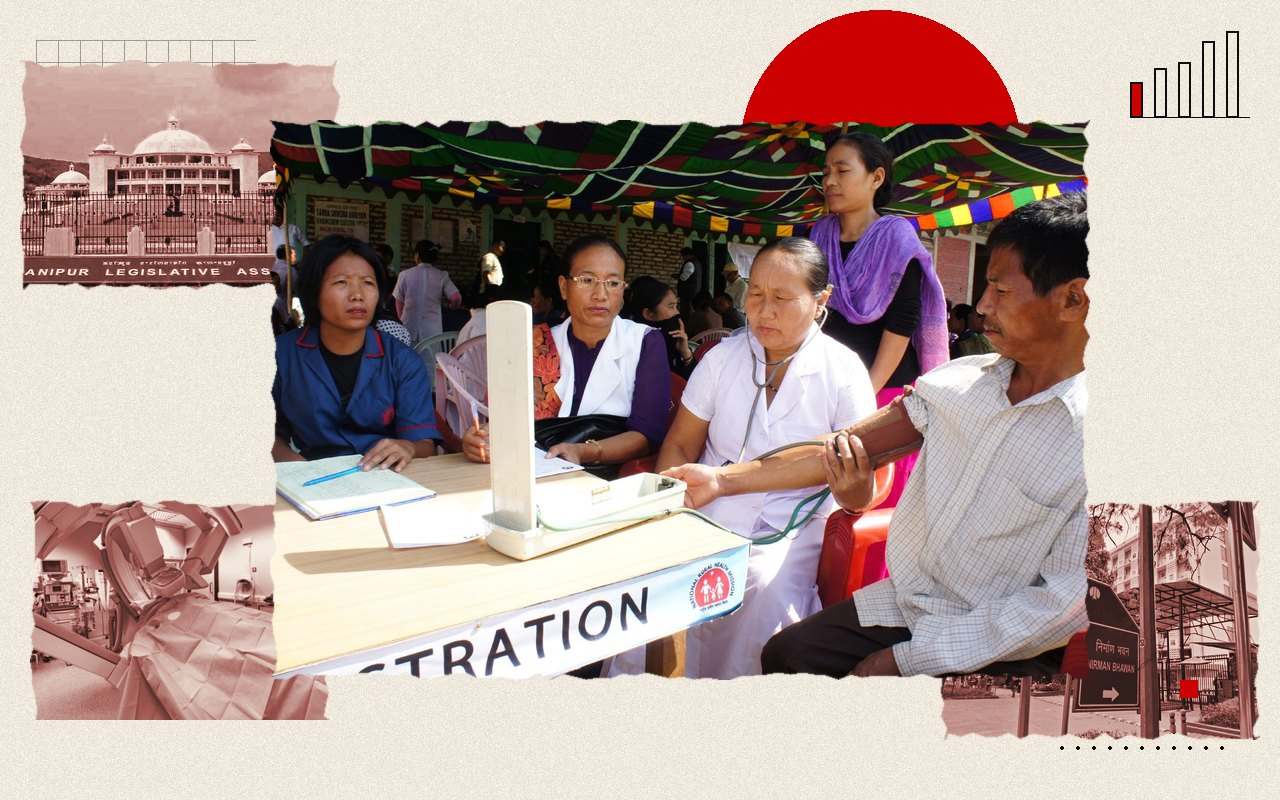
On November 15 the first people fell ill in Sugnu, in Manipur’s Kakching district. By Saturday, 16 were dead, nine in the Chandel hills and seven in Sugnu, and more than 370 had been admitted to hospitals in Imphal. Doctors suspect methanol, an industrial alcohol that blinds and kills in small amounts. The lab has not yet said so.
Chief Minister Y Khemchand Singh visited Shija and Babina hospitals on Friday and promised that “the government will conduct an enquiry, and the culprits will be punished”. That promise has begun to be kept. Six people have been arrested on suspicion of involvement in the supply network, and a high-level committee has been told to report within one month. Both steps are right. Neither is enough.
The crackdown came after the dead
The Excise Commissioner, Hungyo Worshang, has said 48 cases were registered and 2,419 litres of illicit liquor seized since November 17, 1,967 litres of it on Saturday alone. That is a great deal of liquor to find in five days. It was there before the first funeral.
Manipur has had a prohibition law since 1991. In September 2022 the cabinet partly lifted it, allowing sales at district headquarters, tourist spots and larger hotels. Minister Letpao Haokip said the aim was to curb unregulated liquor that damages health. Four years on, the poisoned drink was reportedly bought at Sugnu and carried to hill villages. Police say it was not brewed in Chandel. The law changed on paper, and the grey market stayed.
The fair objection
There is a real difficulty. Where licensed liquor is scarce or dear, poor households buy what is sold cheaply, and a crackdown can fall on the village brewer and the drinker rather than the wholesaler. Traditional brewing by tribal communities is legally protected and culturally old. Nobody should punish a family for a drink its grandparents made.
That is exactly why the target must be precise. The question is who put an industrial chemical into a bottle and who sold it on. The sellers are the ones to charge, with offences that match the deaths, not a drinker or a brewer who did nothing of the kind.
What Manipur should do
First, publish the laboratory result on the seized samples within days, not weeks. Families and doctors need to know whether it is methanol, because the treatment differs.
Second, publish the committee’s report when it comes, and say which officials were responsible for checking the supply routes in Kakching.
Third, pay for the treatment and announce ex gratia for the families, a demand the Anal Naga Union has already made along with a special investigation team.
Fourth, give Chandel what it lacks. The union says the district has too few specialist doctors, nurses and equipment, so patients travel hours over mountain roads to Imphal. Some were carried there already critical, and some died on the way. Every district hospital in a region where cheap liquor is common should hold methanol antidotes and be able to refer a patient for dialysis fast.
Finally, test the market. Excise and food safety teams should sample liquor at shops and stalls in every district every month and publish the results, as they did in a rush this week.
A promise to punish the culprits is easy to make in a hospital corridor. It will be believed when the seller is named in court, the report is on a public page and the next village does not have to drive to Imphal to live.
The reporting behind this view
- 16deaths from November 15 to 21: nine in Chandel and seven in Sugnu, Kakching district
- 2,419 litresof illicit liquor seized in 48 cases since November 17
- 1 monthdeadline given to the high-level inquiry committee, with six arrests so far
The documents
- Statement of Chief Minister Y Khemchand Singh on the Chandel liquor deaths, November 20 and 21, 2026Chief Minister of Manipur, November 21, 2026