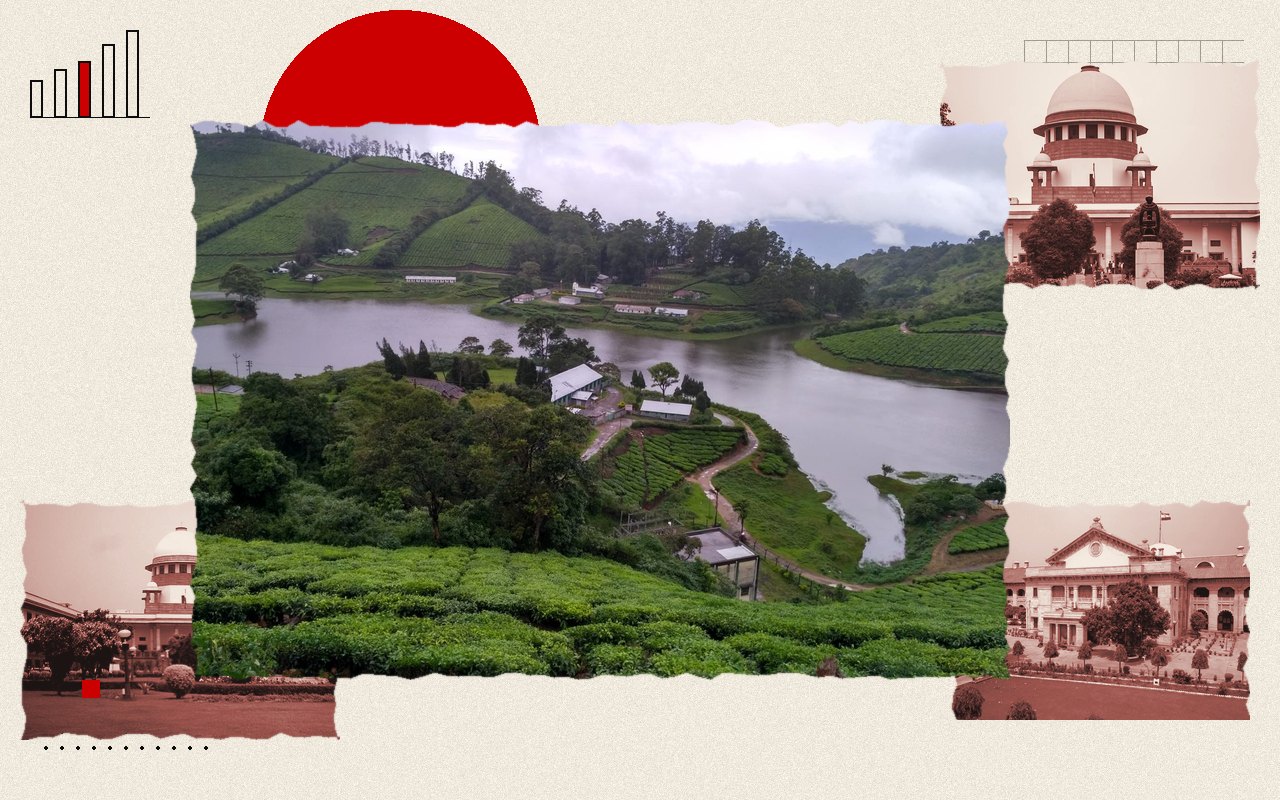
The Supreme Court has said something that needed saying. In an order on November 6, 2026, it held that planting a commercial crop in a forest is not a forest right, however long the crop has been there and whoever encouraged it. The Forest Rights Act, 2006, protects people who live in the forest and live off it. It was not written to hand title to a plantation inside a tiger reserve.
The facts of the Megamalai case make the court’s line easy to defend. The state’s own affidavit described silk cotton as a planned plantation introduced from the 1930s. Of 4,594 occupants on 5,072.64 hectares, 2,767 live outside the forest altogether. The bench found it hard to believe that such cultivators work without someone financing and facilitating them, and sent that question to the Central Empowered Committee.
Where the ruling is right
A law meant for the poorest and oldest forest communities should not be stretched to cover absentee growers. Every acre won by a non-resident cultivator through the Act makes it harder, politically, to defend the claims of people who do live there. The court was right to exclude 2,999 occupants who live outside the forest or only temporarily in it, and right to treat a critical tiger habitat as something that must come first.
Where the work begins
The danger now lies in what follows. The order does not exclude the 1,595 permanent residents who cultivate inside the forest. Their claims continue. They also sit in a case that began with a May 2026 order for time-bound eviction, rehabilitation and restoration of the whole landscape. A family that has farmed there for generations should not learn that the broader order has moved faster than its own claim.
There is a fair objection to this. The Act asks an Other Traditional Forest Dweller to show three generations, or 75 years, of residence before December 13, 2005, and many forest families have no papers, only memory and the testimony of neighbours. Conservationists will say that this opens the door to invented histories. Both worries are real. The answer is a process that takes evidence seriously from both sides, not one that treats every claim as suspect or every claimant as a victim.
That process has so far been slow, and the court says the state is mainly to blame. The state was primarily responsible for the delay in forming gram sabhas, the first tier of the claims system. Only about 40 have been formed, with roughly 1,600 claims received, and one month of a three-month claims window gone. Tamil Nadu now has 30 days for the rest and five months to decide the claims.
What should happen
First, the state should treat the 30-day deadline as final. A second extension would punish residents for the state’s own delay.
Second, the Special Committee headed by former Chief Justice B R Gavai should report in a form people can read. Its report goes to the court in a sealed cover. A summary of how many claims were accepted, how many rejected and on what ground should be public, with reasons given to every rejected claimant in writing.
Third, the questions about money should be answered in the open. Who financed 2,767 people to farm a forest they do not live in? The court has also asked the state for details of action against 118 government servants identified as encroachers. Their cases should not quietly end while the small cultivator is the one removed.
Fourth, no eviction of a permanent resident should happen before that person’s claim has been decided.
Forests need protecting from plantations, and the people who have always lived in them need protecting from being mistaken for plantation owners. The ruling does the first. The state’s next five months will show whether it can do the second.
The reporting behind this view
- 2,999occupants of Megamalai excluded as forest dwellers by the Supreme Court on November 6, 2026
- 1,595permanent residents not excluded, whose claims go on
- 118government servants identified as encroachers, per the court record
The documents
- A. John Kennedy and Others v. State of Tamil Nadu and Others, Civil Appeal Nos. 6395-6397 of 2025 (2026 INSC 1204), order of November 6, 2026Supreme Court of India, November 6, 2026