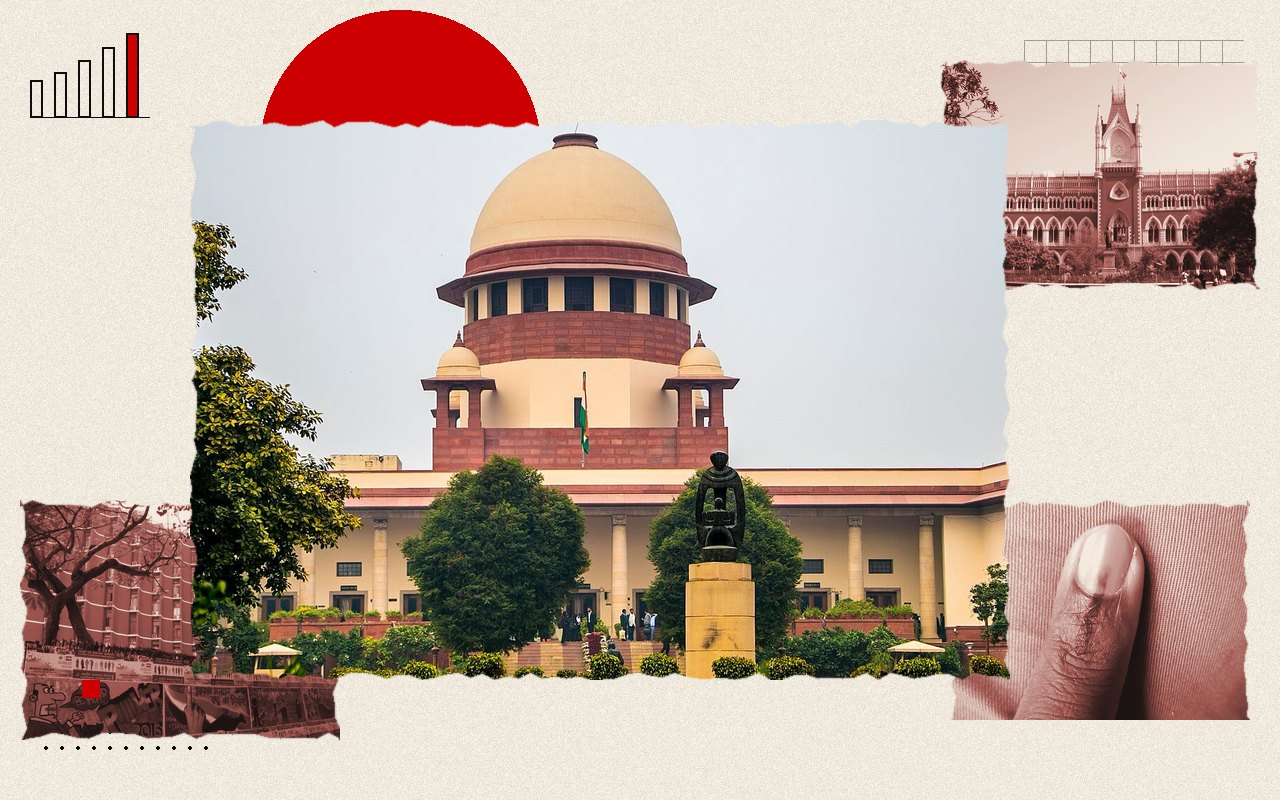
The Supreme Court did the sensible thing on Monday. Faced with 38.31 lakh appeals in West Bengal’s Special Intensive Revision (SIR), the Election Commission’s own figure, it told the Commission to add tribunals, asked it to find more premises in Kolkata and ordered that appeals by deleted voters be heard before challenges to other voters’ inclusion. That sets the order of the queue. It does not say how long the queue is, or how fast it moves.
Why the speed matters
The tribunals were set up in March, 19 of them, led by former High Court judges. In April the court was blunt about what an appeal is worth: a pending appeal does not entitle anyone to vote. Only a decision restores a name. So for a deleted voter, every week in the queue is a week off the roll, and a civic election, once notified, will be decided by whoever has been heard by then.
Of the 38.31 lakh appeals, 22.21 lakh seek restoration of deleted names and 16.10 lakh challenge inclusions. The petitioners’ counsel told the court that of the just over one lakh appeals decided so far, 93% went in favour of the deleted voter. That is counsel’s figure, not a finding, but if it is even roughly right it says something uncomfortable about the exercise that removed these names.
The Commission’s best argument
The Commission can fairly say that the work is huge, that tribunals need judges of standing and that these cannot be conjured overnight. It can say that deferring inclusion appeals is the court’s call, and that the Commission is acting within a framework the court itself approved. All of that is true.
It is also an argument for transparency, not against it. A body that says it is working at its limit should have no difficulty showing the work.
What the Commission should publish
First, a weekly public count: appeals filed, decided and pending, for each of the 19 tribunals, split into restoration and inclusion appeals, with the number decided in favour and against. Today the public hears the totals when a court asks for them. A voter in Kolkata should be able to see whether her tribunal is deciding 200 cases a week or 2,000.
Second, a stated target. The Commission should say how many tribunals it will add after consulting the Chief Justice of the Calcutta High Court, where they will sit and by what date they start hearing cases. The court asked for more premises across the city so that appellants can reach a bench. A date makes that order checkable.
Third, an honest answer on the Chief Electoral Officer’s appeals against inclusions. Counsel argued that under Rule 23 this makes the Commission, in effect, an appellant before its own officer. The bench left the question open for a final order. Until then the Commission should say plainly how many such appeals the state’s officer has filed.
Fourth, a bar on notifying the Kolkata civic poll until the appeals of Kolkata voters are substantially cleared. The Calcutta High Court has already barred notification while ward delimitation is challenged. That gives the Commission time. It should use it to clear the queue, not to wait for the hearing to end.
What it comes to
Nobody disputes that rolls must be clean. A roll that excludes the right voters and cannot be repaired in time is not clean, only smaller. The court has ordered the queue to be fairer. The Commission should now make it visible, so that the 22 lakh people waiting to be put back can see where they stand.
The reporting behind this view
- 38.31 lakhappeals before West Bengal's SIR tribunals, as the Election Commission told the Supreme Court on November 23, 2026
- 22.21 lakhof them seek restoration of deleted names; 16.10 lakh challenge inclusions
- 19appellate tribunals notified by the Commission on March 21, 2026
The documents
- Order of April 13, 2026, Mostari Banu v. Election Commission of India, W.P.(C) 1089/2025Supreme Court of India, April 13, 2026
- ECI sets up 19 appellate tribunals in West Bengal for voter roll appealsNews On AIR, March 21, 2026