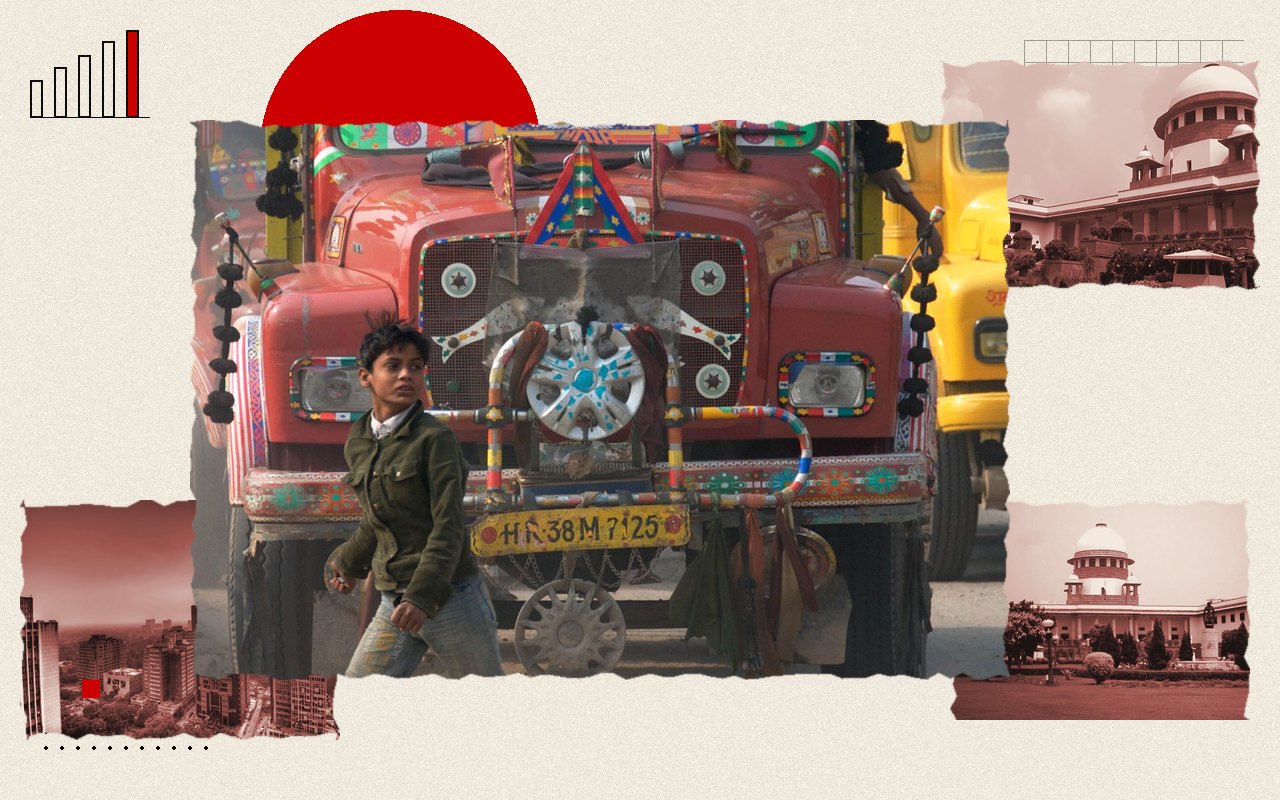
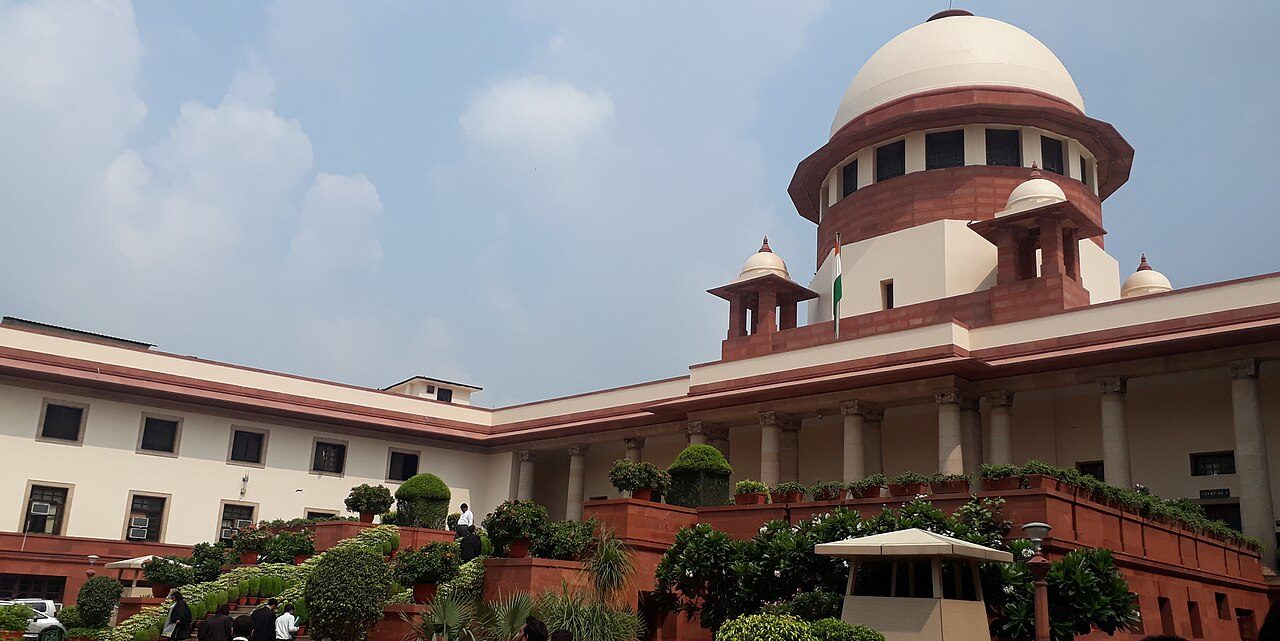
The Supreme Court said on Monday what many in Delhi have long wanted to hear. A bench led by Chief Justice Surya Kant remarked orally, “We are clear we will allow only BS-VI vehicles in Delhi, if not NCR.” It also asked how commercial vehicles can be kept out of the city altogether.
The goal is right. The way it has been announced is not yet enough. No direction was passed on Monday, and everything that matters, the dates, the area covered and the fate of the trucks, is still to be written.
Why the aim is sound
Delhi’s winter air is bad every year, and the court’s own record shows the shape of the problem. At the hearing on November 6, the amici curiae put before the bench data from October 21 to November 3 that showed a substantial fall in stubble burning but a sharp rise in problems tied to vehicles. The order recorded that traffic in Delhi comes in large volume from Uttar Pradesh, Haryana and Rajasthan.
Trucks are a big part of that traffic. A study launched on June 29, 2026, by the Air Pollution Action Group, IIT Delhi and TERI found that about 16,900 heavy trucks enter Delhi every day. They account for 23% of the city’s transport emissions, and 61% at night. A rule that favours BS-VI engines, which in diesel vehicles permit far less nitrogen oxide and soot than BS-IV, goes straight at that source.
What a remark cannot do
Delhi has had rules like this before, and they show how much depends on the text. On November 1, 2025, the Commission for Air Quality Management barred goods vehicles registered outside Delhi unless they were BS-VI, CNG, LNG or electric. BS-IV goods vehicles got a transitional window until October 31, 2026. From November 1 this year, outside-registered BS-IV and older vehicles are barred under a Delhi government order. Each rule came with a date, a list of exemptions and an enforcement method. A bench’s remark has none of these.
The bench itself said the commercial vehicle idea, with trucks unloading at border warehouses and goods moving in on battery-operated vehicles, may not be possible “this year” or “next year”. That candour is welcome. It also means the written order has to say what happens in the meantime.
The fair objection
A sudden ban would hurt people who followed the law. Many small transporters bought vehicles that were legal on the day of purchase, and a truck is a livelihood. Delhi’s markets depend on goods that arrive from outside. A BS-VI-only rule for Delhi alone would push older trucks to idle, reroute or unload just across the border, and the pollution would move to Noida, Ghaziabad, Gurugram and Faridabad with them. The bench seems alive to this, since it said “if not NCR”.
That is a reason for a careful order, not for delay.
What the written order should contain
First, phase dates for each class: cars, buses, light goods vehicles and heavy trucks, with the commercial rule last, as the bench itself implied.
Second, an NCR-wide scope, so that a ban at the Delhi line does not become a ban only in name.
Third, the border hubs. If goods are to be transferred at warehouses on the city’s edge, the order should name who builds them, on whose land, and by when, with the Delhi government and the three neighbouring states bound to report progress. Haryana, Punjab and Uttar Pradesh have already been asked for status reports.
Fourth, a plan for the operators: loans or scrappage support for owners of BS-IV trucks, and a clear route to electric or CNG freight.
Fifth, published enforcement data. The November 6 order asked for numbers on vehicles inspected, challaned and turned back. Those numbers should be public, so the public can see whether number-plate cameras are doing the work.
The Chief Justice said the court is looking for both short-term and long-term measures. The test will be the first written order. A clean-air rule that people can read, plan around and be held to will do more than a bold sentence in court.
The reporting behind this view
- 16,900heavy trucks enter Delhi daily, 23% of transport emissions (APAG, IIT Delhi and TERI study, June 2026)
- Nov 62026 order that asked Delhi and three states for enforcement data and a time-bound roadmap (Supreme Court)
- 5 yearshorizon floated by the bench for keeping commercial vehicles out of Delhi, November 23, 2026
BS-VI-only Delhi needs a dated order
- November 1, 2025CAQM bars non-BS-VI goods vehicles from outside Delhi
- November 6, 2026Court seeks enforcement data and a roadmap
- November 23, 2026Bench says it will allow only BS-VI vehicles in Delhi
Source: Supreme Court order, November 6, 2026; CAQM direction; APAG, IIT Delhi and TERI study
The documents
- Order of November 6, 2026, In re: Curbing Air Pollution in the National Capital Region, Suo Motu Writ Petition (Civil) No. 11 of 2026Supreme Court of India, November 6, 2026