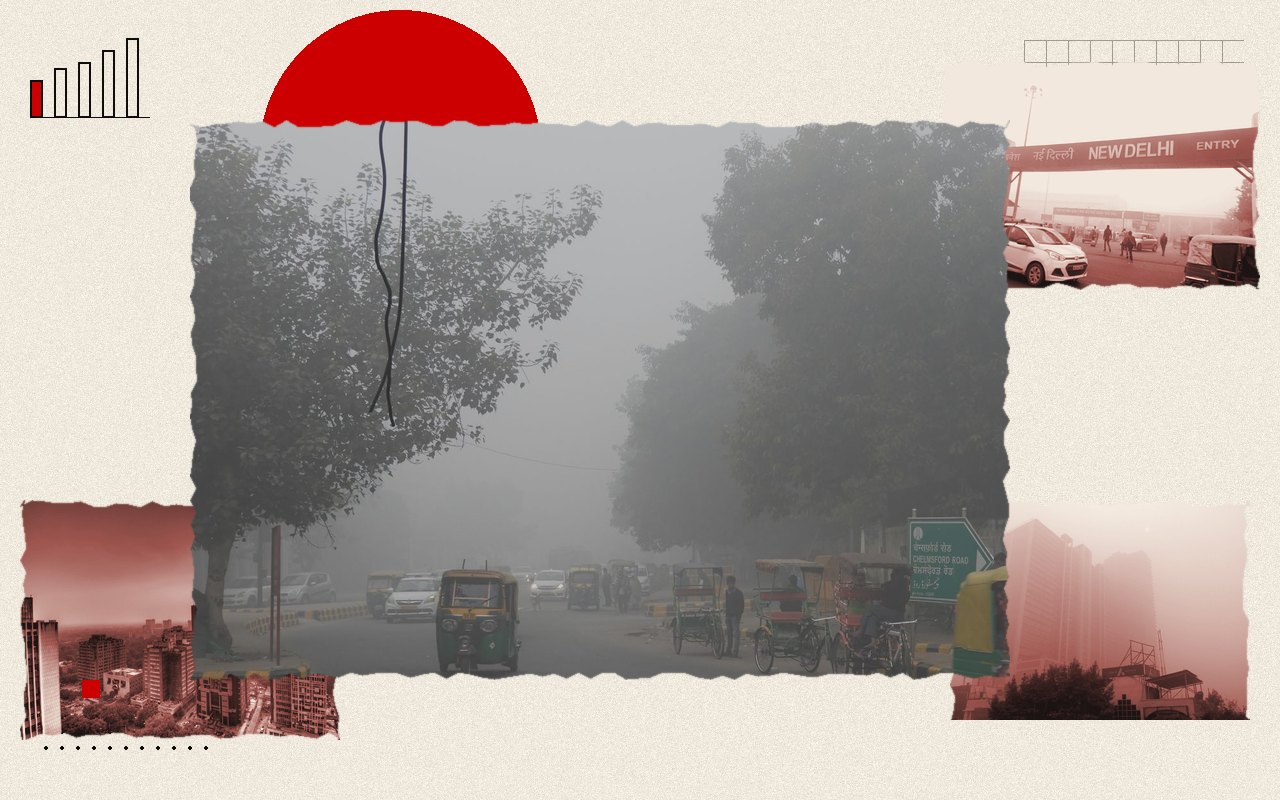
On Diwali night, when Delhi’s air was at its worst, the screens that are supposed to show it went dark. By Monday morning 36 of the 59 stations run by the Central Pollution Control Board were blank, with 125 station-hours missing. The hourly readings from the Delhi Pollution Control Committee, published at about 8 pm on Monday, showed why that mattered. PM2.5 reached 3,744 micrograms per cubic metre at Mundka at 2 am, more than 60 times the national daily limit of 60.
Nobody can say the pollution was hidden. The Delhi committee’s own monitors were working and the data came out in the end. But a record that arrives the next evening, after residents have already made their choices about school, travel and a walk, is not much use as a warning.
A number that stops at 500
The gap in the records is one problem. The scale is another. The Air Quality Index tops out at 500, a level reached once PM2.5 passes about 420. A reading of 3,744 and a reading of 500 are the same on the number most people check. Counting the restored hours, the 24-hour AQI to 9 am on Monday rises to about 384, against the 370 that was published. Those figures are provisional, since the new values were not yet in the board’s records on Monday evening.
A resident deciding whether a child with asthma should go out sees “severe” and cannot tell a bad night from a hazardous one. For hours on Diwali night the air was several times past the ceiling.
What is not known
The political row that followed has produced more heat than facts. The Aam Aadmi Party’s Delhi president, Saurabh Bharadwaj, said “the government’s data is based on fraud”, and alleged that stations were shut overnight, that 20 new stations were placed in green areas and that water is sprayed around monitors in polluted spots. The authorities have not said any station was shut deliberately. An official blamed technical glitches. The BJP, for its part, turned the question toward Punjab’s farm fires.
Both sides are arguing about motives. The public needs the evidence, and only a system built to be checked can supply it.
The fair objection
Monitors do fail. Dust, heat, power cuts and ageing sensors are routine problems anywhere, and an instrument that reads 3,744 may sometimes be wrong. Some will say that real-time publication of raw data would feed panic and rumour. It would also feed accountability, and the lesser risk is the second. Residents who see a flagged gap can ask a question. Residents who see nothing can only suspect.
What should change
First, the raw hourly reading from every station, whether run by the central board, the Delhi committee or anyone else, should sit on one public page in real time. A gap should be shown as a gap, with the time it began and the reason given when known.
Second, any station-hours missing should be filled from other agencies’ monitors within 24 hours, and the daily index revised openly when that is done, instead of a quiet correction.
Third, the index should say plainly when a reading is beyond its scale, so that “severe” does not stand in for 3,744.
Fourth, the monthly share of hours each station reports should be published, so that a station that is blank on the worst nights can be spotted before the worst night.
Fifth, an independent audit should check where the stations stand, how they are maintained and whether any have been moved or screened. That would settle the allegations without anyone having to take either side’s word.
Delhi’s winter response rests on numbers: stage three curbs, hybrid classes up to Class 5, calls for wider closures. If the numbers go missing at the moment they matter most, no plan built on them can be trusted.
The reporting behind this view
- 3,744peak PM2.5 at Mundka at 2 am on November 9, 2026, against a daily limit of 60
- 36 of 59central board stations in Delhi blank overnight
- 384approximate 24-hour AQI to 9 am once restored hours are counted, against 370 published
The documents
- Air Quality Index bulletin, Central Pollution Control BoardCPCB, November 9, 2026