Key points
- Bhupender Yadav said India's climate approach is rooted in collaboration among government, industry and academia.
- LeadIT, launched by India and Sweden in 2019, now has 19 countries and 33 companies, up from 18 and 27 a year ago.
- Members asked for more support for pilot projects, pre-competitive project preparation and capacity building.
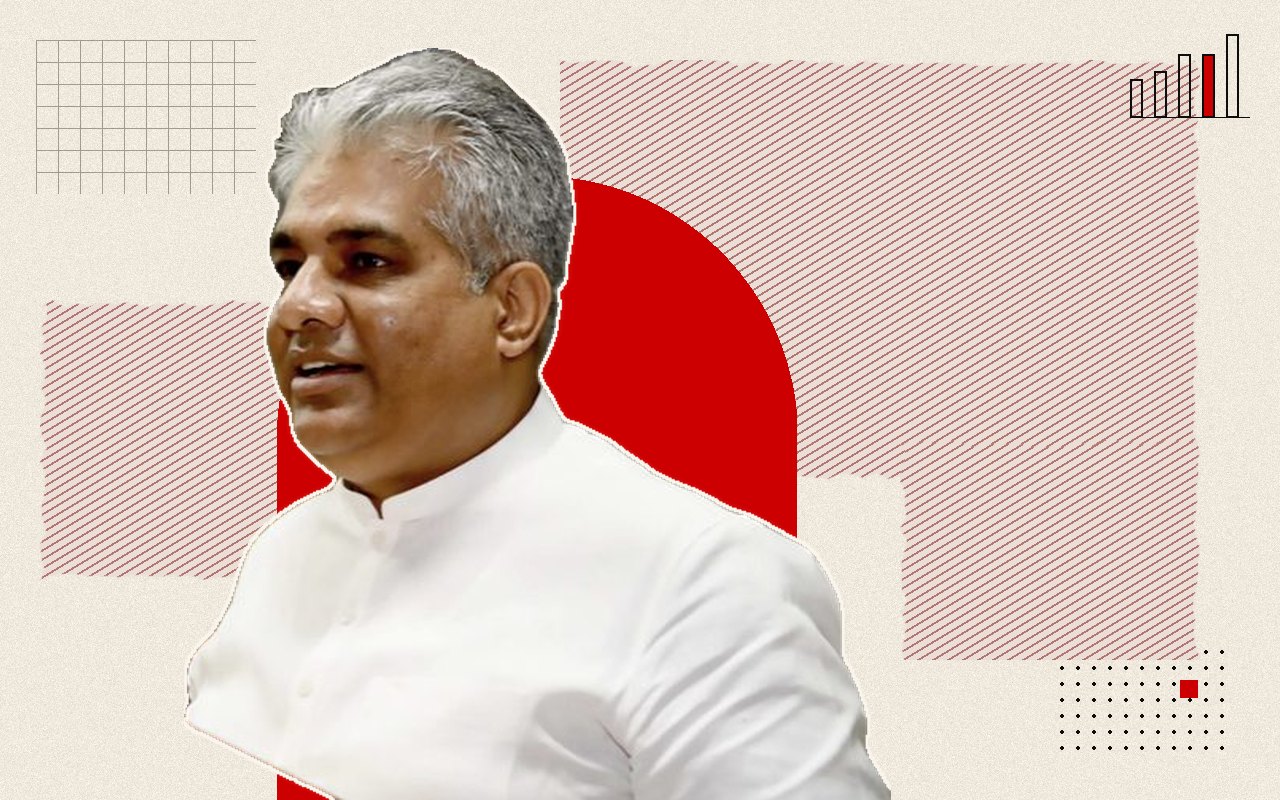
Environment Minister Bhupender Yadav said on Thursday that India’s approach to climate action “is firmly rooted in the power of collaboration among government, industry, and academia”, at a meeting in New Delhi with members of the Leadership Group for Industry Transition, known as LeadIT. The group now counts 19 countries and 33 companies, according to a Union Environment Ministry statement.
The interaction brought together representatives of the hard-to-abate sectors, steel, cement and transport, along with academic and research institutes. It took place as the UN climate conference, COP31, enters its fourth day in Antalya, Turkey. Yadav, who is India’s lead voice at such talks, was due to join the Indian delegation there in the second week, according to an official of the ministry.
What the ministry said
LeadIT was launched in 2019 by the governments of India and Sweden as a platform where governments and companies working to take heavy industry to net-zero emissions can share technology and plan projects together. The ministry statement lists these Indian members: Tata Steel, JSW Steel, SAIL, Synergy Advanced Metals, Adani Ambuja Cement, Dalmia Cement, JK Cement, JSW Cement, UltraTech Cement, Volvo Group and SpiceJet.
Members told the minister that the platform had helped them form project partnerships, assess whether technologies are feasible and share knowledge. They also asked for further support in three areas: pre-competitive project preparation, pilot projects and capacity building. The statement does not say whether the ministry has agreed to any of these requests or attached money to them.
How the group has grown
When Yadav opened a LeadIT roundtable at COP30 in Belem, Brazil, in November 2025, the group had 18 countries and 27 companies. The count has since risen by one country and six companies. At that meeting he said “we now have to move from goal setting to implementation” and said India reduced the emission intensity of its GDP by 36% between 2005 and 2020.
The same week, Yadav and Sweden’s then Climate and Environment Minister, Romina Pourmokhtari, announced that Indian and Swedish companies had been paired and shortlisted for pre-pilot steel and cement projects under the India-Sweden Industry Transition Partnership, which was launched in 2023 and is co-led by the two environment ministries.
The projects were to look at four areas: creating value from industrial by-products and gases, carbon capture and use, artificial intelligence for optimising production, and electrification and hydrogen for industrial heating. A technical workshop in New Delhi on December 8, 2025, co-organised by the Swedish Energy Agency and India’s Department of Science and Technology, was to give further details. Pourmokhtari said then that she looked forward to progress updates at COP31. LeadIT’s own website carries an October 2026 update on seven steel and cement projects under the partnership and a note, dated October 24, that it will be present in Antalya.
Where India stands at COP31
At a briefing on November 3, Yadav said India would pursue solution-oriented and equitable climate action for the Global South and work with the G77 and China, the Like-Minded Developing Countries and the BASIC group. India’s first priority is a decision launching the Climate Finance Work Programme. Yadav said finance is a developed-country obligation that “must be predictable, largely public and concessional”. Our report on the opening of the conference sets out the full position, and the conference’s other stories include the India health scorecard and the Global Carbon Budget, which showed India’s fossil emissions up 4.4%.
LeadIT is where the industrial side of that position gets tested. Steel and cement are among the hardest industries to decarbonise because the emissions come from the chemistry of the process as well as from the fuel burned. For Indian producers, the question members have put to the ministry, who pays for pilots before a technology can be sold, is the one that decides whether projects like those under the Swedish partnership leave the drawing board.
What happens next
COP31 runs until November 20, and India’s engagements in Antalya include a LeadIT 3.0 event with Sweden, according to the ministry’s earlier briefing. The ministry has not said when that session will be held or what it will announce. Whether the members’ requests for pilot-project support turn into a funded programme, and whether the Antalya meeting names new member companies, are the points to watch.
The documents
- LeadIT at COP31 Antalya, TürkiyeLeadership Group for Industry Transition, October 24, 2026
- India and Sweden advance industrial transition cooperationGovernment of Sweden, November 18, 2025