Key points
- The USS Theodore Roosevelt entered US Central Command's area on November 15, giving Washington three carrier strike groups against Iran.
- Iran's deputy foreign minister Kazem Gharibabadi said Tehran will not wait for the US to attack first and accused Washington of using talks to buy time.
- India took 2.1 million barrels a day from the Gulf this month, so any strike on Iran or a longer closure of Hormuz reaches Indian fuel costs.
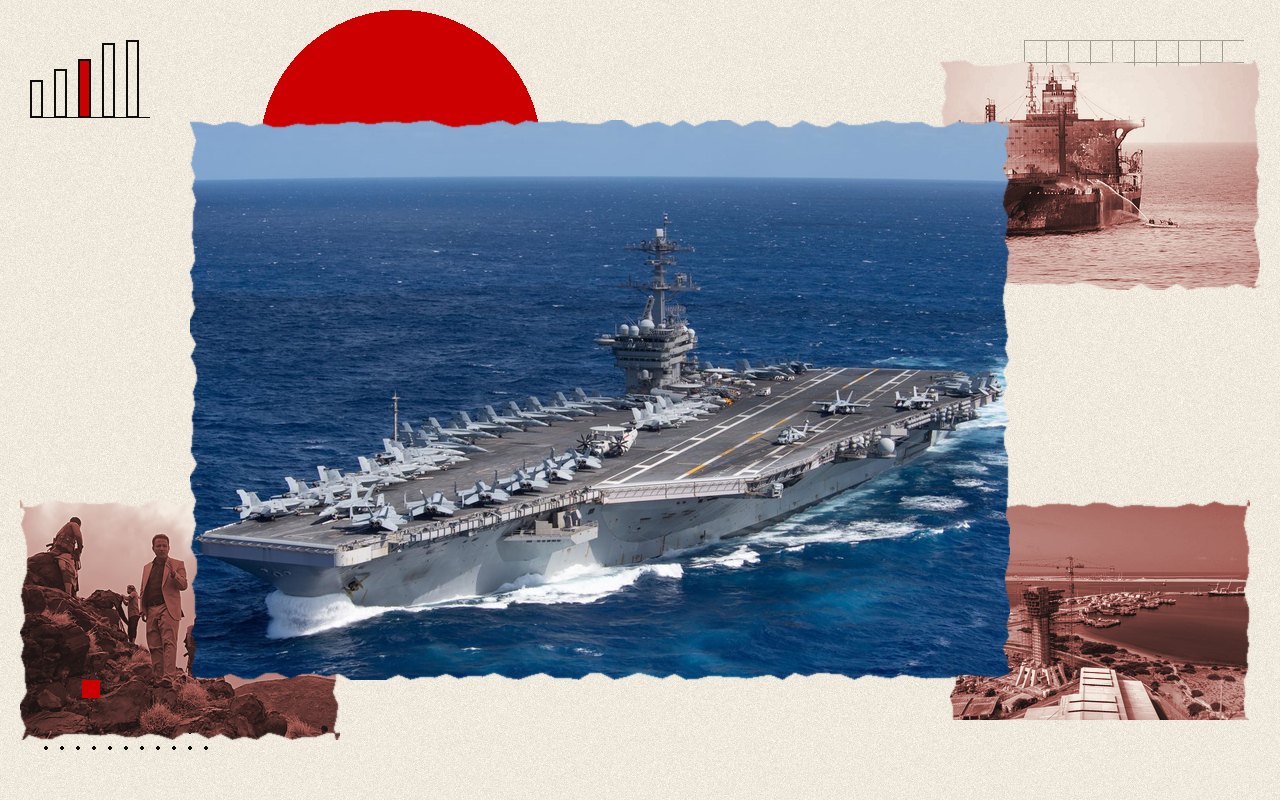
A third US aircraft carrier has reached the waters off Iran, and Tehran has said it will not wait for the United States to attack first. The USS Theodore Roosevelt strike group entered the area run by US Central Command on Sunday, November 15, according to a US official quoted by reports, joining the USS George H.W. Bush and the USS George Washington, both believed to be in the Arabian Sea. Within hours Iran’s deputy foreign minister, Kazem Gharibabadi, told Iranian state media that Iran would not sit back while Washington prepared another assault.
What each side said
The carrier’s arrival strengthens the forces that enforce the US naval blockade of Iranian ports, which has been in place since April 13, and the wider deployment includes more than 20 Navy vessels, according to the reports. The Roosevelt left Singapore in early November and crossed the Strait of Malacca. Its strike group carries roughly 5,000 personnel. It is not yet clear whether the Pentagon means to keep three carriers in the region or whether the Roosevelt will relieve one of the others, and the reports leave that question open.
Gharibabadi said late on Sunday that Tehran “will not wait for the US to attack first”, and accused Washington of using negotiations to buy time for a new military operation. He said the Revolutionary Guards will not give the International Atomic Energy Agency access to Iran’s nuclear sites until Iran’s conditions are met and the war is permanently ended, and that the United States must first provide guarantees. He said Washington had shown “bad faith” at least three times in the past year and a half.
Foreign Minister Abbas Araghchi, writing on X in reply to Secretary of State Marco Rubio, quoted the line “Don’t quote laws to men with swords” and noted that the Roman general who is credited with it ended his last campaign in defeat. The US has not formally answered Gharibabadi’s statement.
Plans for strikes
According to a report on Sunday citing US officials, the United States and Israel have drawn up plans for renewed strikes that would most likely target Iran’s energy infrastructure and other economic assets. The same report described a months-long military deadlock and said air-defence interceptor stocks have reportedly been run down. None of this has been confirmed by Washington.
Treasury Secretary Scott Bessent, for his part, has warned of a “historic economic collapse” in Iran and predicted its economy will shrink by about 25 per cent over the coming year under the blockade and the sanctions the administration calls “Economic Fury”. Tehran has said it wants the blockade lifted and sanctions relief before talks resume.
How we got here
The war began on February 28, when US and Israeli strikes hit Iran. The blockade followed on April 13 after nuclear negotiations collapsed. This month the pressure has been rising on several fronts. Iran has claimed a string of tanker fires from mines in and around Hormuz, as we reported on the three tankers of Saturday, and on Sunday it fired six drones at a US radar in Bahrain, its second such attack in three days. The United Arab Emirates condemned that attack “in the strongest terms” as a flagrant violation of Bahrain’s sovereignty, and the US Embassy in Bahrain told Americans to stay highly vigilant and warned of possible flight cancellations and airspace closures.
Late on Sunday Iran’s navy said one more oil tanker had hit a mine and caught fire east of the Strait of Hormuz, saying the ship was in a restricted area with its tracking systems switched off. It named no vessel or flag and gave no casualty figure, and the claim has not been independently confirmed.
Diplomacy has barely moved. President Donald Trump said last week that renewed strikes were “highly unlikely” if talks progressed, as in our account of that statement, and then said “We don’t need a deal with Iran”. Rubio has said there is no need for major combat and that the economic campaign is the main tool, as we reported from the G7 meeting in Paris.
Why it matters to India
The Gulf is where India now buys much of its crude. According to the ship-tracking figures we reported earlier this month, India took 2.1 million barrels a day from the Gulf in November so far, ahead of the 1.8 million from Russia, after flows had fallen to 247,000 barrels a day in April. A strike on Iranian energy sites, or Iran’s promised response to one, would put those cargoes, their insurance and their crews at risk. The Ministry of External Affairs says 23 Indians, 15 of them seafarers, have died in the West Asia conflict.
Prices have so far held below the peaks of the war. Brent settled at $95.89 a barrel on Friday, against about $72 in late February, and Brent is the benchmark for the crude India buys, so a jump when trading resumes on Monday would flow into import costs and the rupee. The pressure is not only at Hormuz: Yemen’s government forces pulled out of the Bab el-Mandeb area on Sunday, handing the Houthis the Red Sea’s southern gate, as in our report on the withdrawal, which puts Indian trade with Europe on the Suez route at risk as well.
Leaders at the ASEAN meetings in Manila, where Prime Minister Narendra Modi is due after leaving Delhi on Monday, are meeting with the Gulf war as the backdrop.
What happens next
The first test is Monday’s oil price when trading resumes, followed by whether the Pentagon says the Roosevelt will stay alongside the Bush and the Washington or replace one of them. Washington has yet to reply to Gharibabadi’s statement, and Iran’s insistence that the IAEA stays out until its conditions are met leaves the nuclear question where it was. Bahrain’s request that the UN Security Council enforce Resolution 2817 is also awaited. No date has been set for the next round of talks.
Three US carriers now off Iran
- February 28US and Israeli strikes on Iran begin the war
- April 13US blockade of Iranian ports starts after nuclear talks collapse
- November 15USS Theodore Roosevelt enters US Central Command's area
- November 15 nightGharibabadi: Iran will not wait for the US to attack first
Source: US official as relayed by reports; Iranian state media, November 15-16, 2026