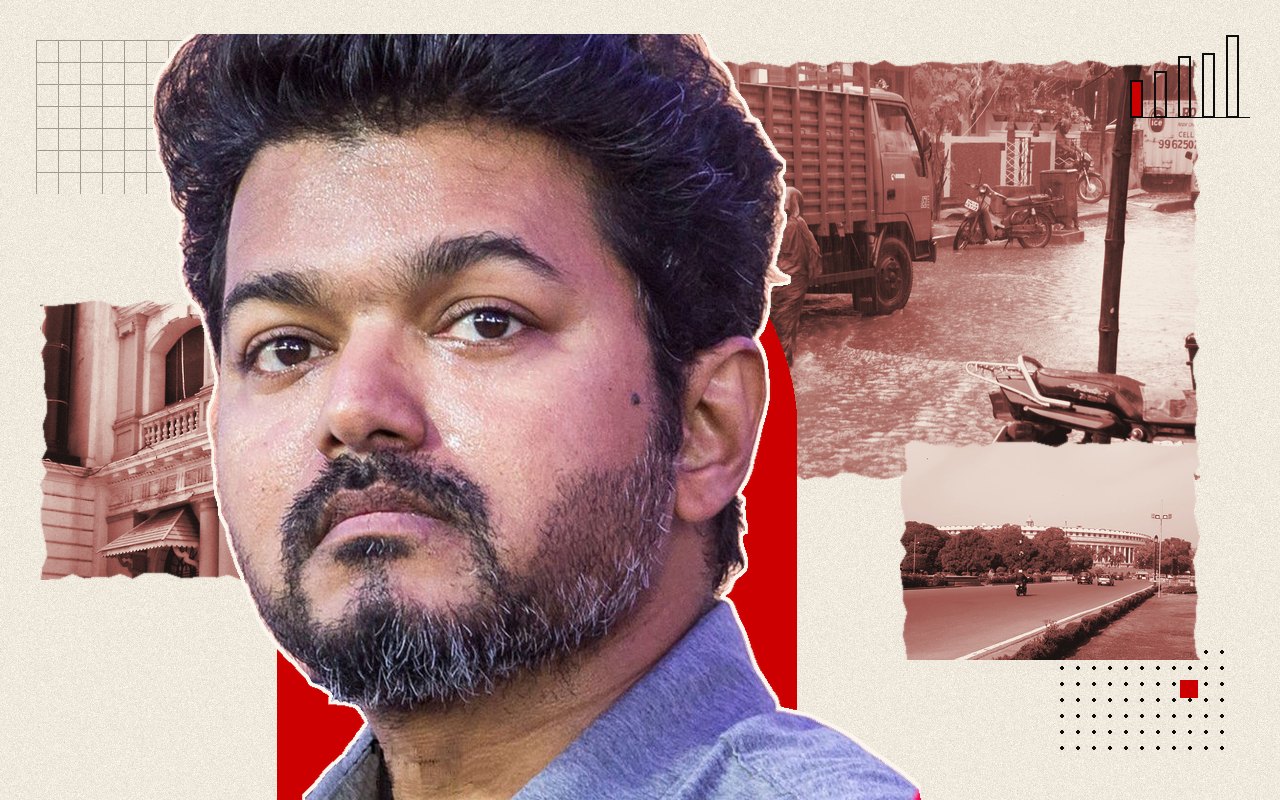
On the night of Diwali and in the hours after, people were killed across Tamil Nadu. The government counts eight deaths, the opposition ten or eleven, the BJP nine. Special Sub-Inspector K. Senthil Kumar, 56, was beaten in Theni after telling youths to stop letting off firecrackers on a road, and died the next day. Chief Minister C. Joseph Vijay, who also holds the Home portfolio, has met the police chiefs two days running and ordered a crackdown on rowdies.
Then came the part that matters for the rest of the country. According to reports, the Union Home Ministry has asked Governor Rajendra Arlekar for a report on the state’s public order. Nothing official has confirmed it, and nothing official has been said about what the report will contain.
The state’s failure is real
None of this is an argument for looking away. A policeman beaten to death for asking people to clear a road is a failure of the state, and the count itself is unsettled: a government that cannot say how many people were killed on its own streets in one night has not yet done the first job. Mr. Vijay should publish a district-wise list of the deaths, with the cause, the arrests and the status of each case.
But order is a state subject
Police and public order are on the State List. Under Article 355 the Union has a duty to protect every state against internal disturbance, and that is a duty of support, not supervision. The Governor acts on the advice of the state’s council of ministers in most matters, and a report sent over the head of an elected government, to a Home Ministry run by a party that is attacking that government, is a step with consequences whatever its intent. The BJP’s spokesperson has been among those condemning the state’s handling.
Indian federalism has been here before. The Supreme Court in S R Bommai (1994) held that the use of the Centre’s emergency power over a state is open to judicial review, and that the material behind it must be real. A confidential report is exactly the kind of material that later cannot be tested. Nobody is saying President’s rule is being considered; the point is that a request like this should never be able to do its work in the dark.
What should happen now
First, the Home Ministry should confirm whether it asked for a report and say what it asked. Second, Governor Arlekar’s reply should be published, with the Tamil Nadu government’s response alongside it, so that readers can compare the Centre’s reading with the state’s. Third, the death count should be reconciled by the police in public, case by case, because a number that moves with the speaker’s politics tells us nothing.
For residents, the questions are plain: how many officers were on the roads on Diwali night, how fast the youths who blocked a road and attacked a policeman were arrested, and what the state will do before the next festival. Those answers belong to the Chief Minister, and no report from Raj Bhavan can substitute for them. If the Centre has a concern, it can put it on the record. If the state has an answer, it can do the same.